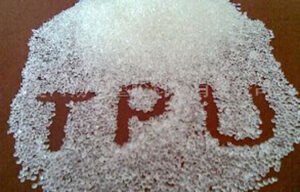









1. Polyurethane Elastomers: Core Applications, Performance Metrics & Market Landscape
Polyurethane (PU) elastomers stand as a pinnacle of material engineering, offering a remarkable balance of elasticity, durability, and versatility. Unlike their rigid foam cousins used in construction insulation, PU elastomers are engineered for high resilience, wear resistance, and energy absorption, enabling their use as dynamic components across diverse industries. Their success hinges on an extensive application portfolio, a wide spectrum of tunable performance metrics, and a robust, evolving global market landscape.
- Core Applications Across Industries
PU elastomers have moved far beyond traditional uses, establishing themselves as critical materials in sectors demanding superior mechanical performance and reliability.
Medical Devices & Healthcare
PU elastomers are indispensable in biomedical engineering due to their excellent mechanical properties, tailorability, and biocompatibility.
- Key Applications:
- Cardiovascular: Artificial hearts and pacemaker coatings, artificial blood vessels, components for hemodialysis machines, and catheters (cardiac, urinary).
- Surgical & Implantable: Expandable stents (using shape memory PU), suture lines, orthopedic implants, and bone cement.
- Specialized Biotech: Fluorescent and magnetically labeled PU-based Janus particles for bio-imaging.
- Biocompatibility Imperative: Materials must induce no inflammation or toxic reactions. They require surface characteristics balanced between hydrophilic and hydrophobic groups, resistance to protein adsorption (crucial for blood-contacting devices like stents), and stability after sterilization.
Automotive Engineering & Transport
From enhancing comfort to ensuring durability, PU elastomers are a cornerstone of modern automotive design and function.
- Key Applications:
- Interior Comfort: High-resilience (HR) and slow-recovery foam for seats, self-skinning semi-rigid foam for steering wheels, and instrument panel padding.
- Exterior & Structure: Parts produced via Reaction Injection Molding (RIM), such as bumpers and body panels (doors, spoilers), offering high dimensional stability and lightweighting.
- Dynamic Components: Microcellular PU for vibration dampers, buffer blocks, engine mounts, and suspension bushings, prized for their low endogenous heat build-up and high rebound.
- Functional Parts: Solid tires for forklifts, sealing rings, dust covers, fuel lines (using oil-resistant TPU), safety airbag films, and underbody coatings.
Footwear & Consumer Goods
In the competitive footwear market, PU elastomers provide a winning combination of performance, comfort, and design freedom.
- Core Technology: Two-component liquid reaction molding (RIM/PU) is the primary process.
- Key Advantages:
- Lightweight: Microcellular PU shoe soles can achieve densities as low as 0.3-0.4 g/cm³, significantly lighter than rubber (~1.2 g/cm³).
- Superior Wear & Comfort: Excellent abrasion resistance combined with cushioning from the microcellular structure.
- Manufacturing Flexibility: Enables production of soles with complex designs, multiple densities (e.g., dual-density sports soles), and multiple colors. Direct-attach technology allows for seamless, one-shot molding of the sole to the upper.
- Material Systems: Formulations often use liquefied MDI, polyether or polyester polyols, and water as a blowing agent. High-end solutions may use NDI-based or aliphatic isocyanates for extreme performance or non-yellowing properties, respectively.
Industrial Machinery & Components
In harsh industrial environments, PU elastomers replace metals, conventional rubber, and plastics, delivering dramatically extended service life and reduced maintenance costs.
- Mining & Material Handling: Screens/decking with a wear life 3 to 5 times longer than steel, reducing noise and improving screening quality. Also used for slurry pump parts, conveyor linings, and solid tires.
- General Mechanical Parts: Rollers, bearings, gears, and seals benefit from high load-bearing capacity, resistance to oils, and excellent dynamic properties.
- Tooling & Molding: Polyurethane tooling for concrete mold liners or as press brake dies, offering longer life and better finish for medium-batch production runs compared to traditional materials.
- Electrical: Potting compounds for PCBs and connectors, providing insulation, waterproofing, and shock resistance.
Noted on Building Insulation
It is important to distinguish that, according to available data, rigid PU foam is the primary material for building insulation, offering low thermal conductivity and waterproofing. Polyurethane elastomers are not a mainstream material for structural wall or roof insulation, being instead optimized for dynamic, load-bearing, or sealing applications.
- Compelling Performance Advantages
PU elastomers outperform competing materials in several key areas, justifying their premium positioning in demanding applications.
Performance Dimension | Key Advantage | Comparative Benchmark |
Abrasion resistance | Abrasion-resistant rubber | Abrasion resistance 2–10 times higher than natural rubber, with even greater superiority under wet or oily conditions. |
Mechanical Properties | Widely tunable hardness & high strength | Hardness range from Shore A 10 to Shore D 80+; tensile strength up to 50–60 MPa; superior tear strength to PVC and most rubbers. |
Environmental Tolerance | Excellent resistance to oils, fuels, and chemicals | Polyester-based types exhibit superior resistance to oils and non-polar solvents (gasoline, petroleum). |
Dynamic Performance | Low heat build-up & high rebound elastici | Essential for vibration dampers and dynamic components; NDI-based systems offer exceptionally low compression set. |
Processing flexibility | Low-cost tooling & design freedom | Low-pressure processes (RIM, casting) enable use of inexpensive resin tooling, ideal for prototypes and complex geometries. Metal molds are not required, drastically reducing lead time and cost. |
- Global Market Structure & Dynamics
While precise data for 2024 is elusive, the well-established structure and trends provide a clear market landscape.
- Macro-Application Landscape: The broader PU market (a reference for elastomers) is dominated by Buildings (~26%), Furniture (~22%), Automotive (~17%), and Electronics/Appliances (~14%). Automotive and Footwear are the two most significant, mature markets specifically for PU elastomers, with industrial, medical, and consumer niches representing high-value growth areas.
- Regional Dominance: The Asia-Pacific region, spearheaded by China, is the largest and most dynamic producer and consumer market globally, forming a “three pillars” structure with Europe and North America. China not only accounts for a massive share of global consumption (representing ~40% of global TPU consumption as early as 2009) but is also a central hub for manufacturing and innovation.
- Growth Drivers: The market is propelled by the persistent need for lightweight, durable materials in automotive manufacturing; the demand for comfort and performance in footwear and sports equipment; and the expansion into high-tech sectors like new energy (e.g., TPU films for solar panels), advanced medical devices, and intelligent industrial components.
- Future Outlook & Strategic Direction
The trajectory of PU elastomers is being shaped by powerful megatrends that redefine their value proposition.
- Sustainable Chemistry & Circularity: The push for “greener” materials is accelerating. Bio-based PU elastomers (e.g., with ≥60% renewable content from plant oils) are commercializing, offering performance parity with fossil-based grades. Simultaneously, chemical recycling, particularly advanced split-phase glycolysis, is advancing to recover polyols from post-industrial and specific post-consumer waste streams for reuse in new formulations.
- Smart Manufacturing & Digitalization: The adoption of IoT, AI, and predictive analytics is transforming production. Smart control systems (e.g., APPC, FOAMATIC-IoT) enable real-time parameter adjustment, predictive maintenance, and significant reduction in material waste (documented savings of 10-15%) and energy consumption (10-30%). This enhances product consistency, operational efficiency, and cost competitiveness.
- High-Performance Specialization: Demand continues to grow for elastomers engineered for extreme conditions, such as high-temperature resistance (up to ~135°C continuous use with PPDI systems) or exceptional dynamic endurance for demanding industrial and automotive applications. This specialization creates high-value segments and drives R&D investment.
The polyurethane elastomer market is thus characterized by deep-rooted strength in traditional industries, fueled by continuous material innovation, and strategically pivoting towards a more sustainable, intelligent, and high-performance future. Its core value proposition—delivering a unique combination of elasticity, toughness, and process adaptability—remains the keystone of its widespread adoption and promising growth path.
2. Low-Pressure Foaming Machines: Working Principles, Specifications & Elastomer Compatibility
Building on the diverse application requirements for polyurethane elastomers outlined previously, the manufacturing equipment becomes pivotal. For the majority of elastomers produced via Reaction Injection Molding (RIM) or casting techniques, low-pressure foaming machines (LPFMs) serve as the cornerstone technology. This section delves into their core operational logic, technical capabilities, and inherent suitability for characterizing and producing the wide spectrum of PU elastomer parts.
- How It Works: The Low Pressure Circulation & Mechanical Stir Mixing Principle
At the heart of every low-pressure foaming machine lies a cyclic, two-phase operation designed for precise control and efficient material processing. Unlike high-pressure systems which rely on impingement mixing, LPFMs operate through a combination of continuous pre-conditioning and mechanical agitation.
- Standby (Circulation) Phase:
- A material (polyol component, or “white side”) and B material (isocyanate component, or “black side”) are stored in separate, thermostatically controlled tanks equipped with heating/cooling jackets and low-speed agitators to maintain homogeneity and prevent filler settling.
- Each component is continuously circulated from its tank through its dedicated circuit—passing through a gear pump or screw pump (for high-viscosity materials), filters, supply lines, and the recirculation channels within the mixing head—before returning to its respective tank.
- This ongoing circulation maintains both materials at the exact processing temperature (e.g., 35–45°C for MDI-based systems to prevent crystallization), keeps them degassed, and ensures that the entire supply path is primed and ready for instant dispensing.
- Dispensing (Mixing) Phase:
- Upon receiving a dispense command, the pneumatically actuated material valves in the mixing head shift, redirecting the flow from the recirculation path into the mixing chamber.
- Simultaneously, a high-speed stirrer motor (typically spinning at 3,000–12,000 rpm, often 4,000–6,000 rpm in practice) is activated. The A and B components, still under the relatively low system pressure, are introduced into the chamber.
- The key mixing action is achieved by the high-shear forces generated by the rapidly rotating mechanical stirrer, which thoroughly blends the two streams into a homogeneous reaction mixture. This method is demonstrably effective for elastomer viscosities, with the technology capable of handling materials up to 40,000 mPa·s.
- The mixed material then flows from the open mixing head into the awaiting (typically open) mold. After the shot is completed, the valves return to the standby position, and the system reverts to circulation.
- Deconstructing the Core Components: An LPFM Anatomy
A low-pressure machine is a system of integrated subsystems, each with a specific function essential for consistent elastomer production. While structures may vary, key components are universal.
Core components | Características principales | Key Points in Elastomer Production |
Material Tank and Temperature Control System | Storage, heating, and homogenization of raw materials | Precise and uniform temperature control (e.g., jacketed + coil) is essential to eliminate temperature dead zones, serving as the lifeline for preventing localized crystallization/blockage of isocyanates like MDI. |
Measurement and Conveying Systems | Provide precise, fixed-ratio and fixed-quantity raw materials | Component A (often containing fillers/high viscosity) typically uses screw pumps, while Component B commonly employs precision gear pumps. Driven by variable-frequency motors, they enable stepless proportional adjustment (typically 1:1 to 1:4, with wide-range models achieving 1:5 to 5:1). |
Mixing and Pouring Head | Achieve material mixing and pour into the mold | The pneumatic directional valve controls the cycle/pouring switchover. The core component is the high-speed mixing head, whose designed rotational speed and shear force determine the uniformity of mixing. |
Cleaning System | Clean residual reaction products from the mixing chamber | Typical low-pressure machine procedure: Utilizing solvents such as dichloromethane combined with compressed air for atomized spray washing and purging. This is a necessary maintenance step, but it also results in consumption, VOC emissions, and minor waste of raw materials. Further optimization can be achieved using Haifeng's solvent-free cleaning solution. |
Control System | Automated control of all process parameters | Modern equipment comes standard with a PLC + touchscreen HMI for setting/storing recipes (temperature, pressure, ratio, pour volume/time), serving as the brain that ensures process repeatability. |
- Key Technical Specifications: The Numbers That Define Performance
Understanding the operational envelope of LPFMs is critical for matching a machine to specific elastomer production needs. The following parameters are derived from industry-standard equipment and documentation.
Technical Specifications | Typical Range/Indicator | Guidance for Elastomer Production |
Work pressure | 0.3–0.8 MPa (primary reference range) | The defined “low-pressure” core is suitable for use with lower-cost resin molds, avoiding mold deformation caused by high pressure or the formation of “impact bubbles” on complex thin-walled parts. |
Output Flow Rate | Mass flow rate: 7 – 300 kg/min Volume flow rate: 0.3 – 240 L/min It can be customized. | Covering applications from micro-flow precision casting (e.g., sealing ring potting) to large-scale continuous production (e.g., sheet materials, high-volume shoe soles). Equipment selection must align with production cycle times and individual part weights. |
Mixing ratio range | 1:5 to 5:1 (referrence) | Offers exceptional formulation flexibility, accommodating systems ranging from polyether-based to polyester-based, as well as polyol systems utilizing different chain extenders (MOCA, BDO), enabling rapid product changeovers. |
Mixing accuracy | Target: ±1% | Core Quality Metric. Insufficient precision directly impacts the final physical properties of products, such as hardness, strength, and elasticity, with particularly stringent requirements in medical-grade or high-performance automotive components. Equipment must maintain stable performance at this level. |
Stirring speed | 3,000–12,000 rpm | Rotational speed directly impacts mixing quality. For fast-reacting elastomer systems, sufficient rotational speed is crucial to ensure uniform mixing is completed before the cream time, thereby preventing internal defects in the finished product. |
- A Natural Fit: Why LPFMs Are the Workhorse for Elastomers
The fundamental design and operating parameters of low-pressure foaming machines align synergistically with the production demands of polyurethane elastomers, making them the dominant, practical choice in the market.
- Unmatched Cost-Performance Ratio: The simple structure, lower manufacturing precision requirements, and significantly reduced energy consumption (30-50% lower than high-pressure machines) translate directly into a lower initial investment and operational cost. This makes the technology accessible and economically viable for a vast range of manufacturers, from specialized job shops to high-volume producers.
- Superior High-Viscosity & MDI-System Compatibility: Elastomer formulations, especially those based on liquefied MDI, can have high viscosity and are temperature-sensitive. Low-pressure circulation is inherently gentler on the material and provides better control over the thermal profile of the entire path, effectively managing the risk of crystallization that could clog a high-pressure system’s fine nozzles.
- Process Flexibility & Adaptability: The ability to handle a wide mix ratio range and ease of modifying shot sizes and recipes via the PLC makes LPFMs ideal for the customized, small-to-medium batch production character of many elastomer parts. This supports the agile manufacturing of diverse products like industrial rollers, custom wheels, and specialized seals on the same platform.
- Fact-Based Dominance in Key Applications: The gathered data conclusively positions LPFMs as the primary equipment for cornerstone elastomer products. They are the established solution for producing microcellular shoe soles, industrial rollers and liners (for mining screens, etc.), solid and microcellular wheels (for forklifts, skates), and a vast array of automotive components (bushings, seals, steering parts).
Acknowledged Challenges:
While a natural fit, the technology has recognized trade-offs. The mechanical stirring method, while effective, may achieve slightly lower mixing homogeneity compared to ideal high-pressure impingement mixing. More operationally significant is the dependency on cleaning solvents (like dichloromethane), which introduces ongoing consumable costs, requires handling of VOC emissions, and causes trace material waste. This contrasts with the potential “self-cleaning” or mechanical purge advantages of some high-pressure designs, though the latter face other hurdles in elastomer processing.
- Conclusion: The Pragmatic Foundation for Versatile Elastomer Manufacturing
Low-pressure foaming machines are not a one-size-fits-all solution for all polyurethane processing; they are, however, the technologically and economically optimized solution for the vast majority of cast and RIM elastomer applications. Their working principle of low-pressure circulation and mechanical mixing, when paired with precise temperature and ratio control, directly satisfies the core processing requirements derived from elastomer chemistry and performance needs. By offering a balance of precision, flexibility, and compelling cost-effectiveness, LPFMs form the reliable, scalable backbone for producing the high-performance, durable components across footwear, automotive, industrial, and medical sectors. Their specifications define a practical production window within which countless successful formulations are transformed into functional parts, as evidenced by their widespread, documented global installation base.
3. Case Studies: Real-World Production Lines, Process Parameters & ROI Benchmarks
Moving from theoretical advantages to tangible business outcomes, real-world applications best illustrate the synergy between polyurethane elastomer performance and low-pressure foaming machine (LPFM) technology. This section delves into concrete case studies across key industries, detailing specific production setups, precise process windows, and quantifiable returns on investment.
- Case Study 1: High-Volume Microcellular PU Sole Production
Enterprise & Solution: Zhejiang Haifeng Automation Equipment Co., Ltd. – 1XCXD2-60 Molding Production Line and PU20H-R Pouring Foaming Machine.
Product Instance & Production Scale:
- Products: Microcellular polyurethane soles for sports shoes, casual shoes, safety shoes, and insoles.
- Theoretical Capacity: A typical 60-station production line, with a cycle time (pouring → molding → demolding) of 3–5 minutes, can achieve a theoretical daily output of 28,800 pairs and an annual capacity of approximately 10.5 million pairs. This demonstrates the scalability of LPFM-based lines for mass production.
Detailed Process Parameters & Equipment Configuration:
The process is meticulously controlled, with key parameters derived from thePU20H-Rmachine specifications:- Raw Material Preparation:
- Component A (Polyester Polyol): Heated and melted at 65°C for over 12 hours.
- Component B (Liquid MDI): Heated and melted at 65°C (or 88°C per another specification) for over 16 hours.
- Molding Temperature: Mold temperature is maintained at around 45°C.
- Machine Core Specifications:
- Component A Tank: 220L volume, stirring motor (0.75 kW, 40 rpm).
- Component B Tank: 160L volume, stirring motor (0.55 kW, 24 rpm).
- Component A Metering: Single-screw pump (
G25-2), speed 130–180 rpm, displacement 8–30 L/min. - Component B Metering: Precision gear pump (
K60), speed 40–160 rpm, displacement 2.4–9.6 L/min. - Mixing Head: Stirring motor 3 kW, speed 4000–6000 rpm, ensuring homogenization for elastomer formation.
- Temperature Control Unit: Working range from ambient to 80°C.
- Reaction & Demolding: Gel time within the mold is 4–8 minutes to achieve sufficient demolding strength.
- Raw Material Preparation:
Quality Standards & Control:
Success hinges on stringent quality control throughout the process:- Physical Properties: Final product density is controlled between 0.5–0.7 g/cm³, balancing lightweight and mechanical strength (abrasion resistance, tensile strength, elasticity).
- Visual Inspection: Products must be free from defects like bubbles, color difference, blurred patterns, or surface voids.
- Process Monitoring: Pre-production cup-test (free foam test) verifies reactant mixing and gelation. The integrated system uses temperature/pressure data acquisition and remote monitoring for real-time quality assurance.
- Metering Accuracy: High-precision metering pumps are critical, with errors potentially less than ±0.3%, ensuring consistent NCO index and final properties.
ROI Benchmarks & Economic Benefits:
Haifeng’s solution claims significant, quantifiable improvements for adopters:- Equipment lifespan extended by 3 times.
- Hazardous waste treatment cost reduced by 85%.
- Overall cost decreased by nearly 40%.
- Production efficiency increased by 30%.
- Material Savings: The optimized mixing head technology reportedly reduces material waste by over 50% compared to traditional shoe machines.
- Labor & Flexibility: The automated conveyor reduces manual labor. The digital enables quick changeovers for small-batch, multi-variety production, enhancing market responsiveness.
- Case Study 2: Industrial Polyurethane Roller Manufacturing
Enterprise & Technology Providers: This case highlights the ecosystem of specialized equipment and process knowledge. Key providers include Zhejiang Haifeng Automation Equipment Co., and Industry-standard casting systems, which supply the core LPFM systems for roller production.
Product Instance & Application:
- Products: High-wear industrial rollers for printing, wire drawing, paper making, and high-abrasion sieve plates/screens for mining. The performance advantage is clear, with PU sieve plates offering 3–5 times the service life of steel screens and reducing noise by 10–15 dB.
Process & Technical Highlights:
While detailed, singular client case data is scarce in the provided materials, the collective technical approach is well-defined:- Specialized Process – Rotational Pouring (Ribbon Flow): A key mentioned technology for roller manufacturing. It allows for molding rollers without a traditional closed mold, leading to energy savings and high efficiency.
- Material Adaptability: LPFMs are favored for handling the high-filler, high-viscosity Component A systems (up to 40,000 mPa·s) common in these durable goods, using screw pumps for reliable transport.
- Precision Requirements: Metering accuracy of ±1% is critical to ensure consistent hardness, abrasion resistance (targeting DIN abrasion <50 mm³), and compression set properties.
Quality & Commercial Backing:
- Enterprise Certification: Leading equipment providers like Heng Hui hold ISO9001:2000 International Quality System Certification, assuring the reliability of their production systems.
- Commercial Credibility: Providers cite their global installed base and service to major industrial clients as testament to the solution’s success and ROI through extended part life and reduced downtime.
- Case Study 3: Sealing Component Fabrication
Three-Dimensional Sealing Strip Pouring Machine.
Product Instance & Application:
- Products: Complex 3D shaped sealing strips and gaskets for automotive, machinery, and construction applications.
- Machine Specification: The
PU20F-ARoffers a pouring capacity range of 0.5~15 kg/min, suitable for varied production scales.
Critical Process Parameters & Challenges:
Manufacturing high-quality, dense seals presents distinct challenges:- Density Control: Seals typically require high density (minimal foaming). This demands precise inhibition of the water-isocyanate reaction that generates CO₂.
- Bonding Technology: For metal-composite seals, processes like metal surface treatment (roughening, sandblasting, degreasing), primer coating, pre-heating, and controlled pouring/clamping are essential to prevent bubbles and ensure adhesion strength.
- Mold Design: Critical for final quality. For example, a Y-ring seal mold must have its parting line set at the lip to ensure a flash-free sealing edge and proper venting.
- Cleaning Consideration: As with other elastomer applications, the cleaning process (using dichloromethane) adds to operational cost and VOC management.
Quality Standards & Market ROI:
- Performance Standards: Seals must meet specific hardness (Shore A/D), tensile strength, elongation, and resistance to oil, compression set, and hydrolysis.
- System Certification: Solutions like Haifeng’s sealing production systems are designed to meet UL/CE safety norms and MIL-STD-167 vibration resistance and EN50298.
- Market ROI: The Reaction Injection Molding (RIM) capability of LPFMs allows direct, one-shot foaming of complex 3D seals from liquid, eliminating pre-pelletizing and melting. This enables efficient, medium-to-high-volume production of high-performance seals, reducing labor and enhancing product reliability for end-users.
4. Comparative Advantage: Low-Pressure vs. High-Pressure Systems in Elastomer Manufacturing
Selecting the appropriate foaming equipment is a critical decision that directly impacts production economics, product quality, and operational flexibility in polyurethane elastomer manufacturing. While both low-pressure and high-pressure machines can produce elastomers, their inherent technological differences create distinct advantages and trade-offs.
- Core Technological & Economic Comparison
The fundamental divergence lies in the mixing principle and system pressure, which cascades into differences across cost, energy use, and material handling.
Comparison Dimension | Low-Pressure Foaming Machine (LPFM) | High-Pressure Foaming Machine (HPFM) | Primary Document Reference & Implication for Elastomers |
Working Pressure | 0.3 – 0.8 MPa | 5 – 10 MPa, with hydraulic pressure 10-15 MPa | 10-15 MPa The lower pressure defines LPFM’s simpler system architecture. |
Capital Investment | Lower. Simpler structure, lower material grade and manufacturing precision requirements lead to significantly reduced initial cost. | Higher. Complex design with high-pressure components (pumps, valves, injectors) increases manufacturing cost. | Document states: “In terms of cost-performance, low-pressure casting machines currently hold a comparative advantage". |
Energy Consumption | Lower. Documented to be 30–50% lower than high-pressure systems. | Higher by 30–50%. High-pressure pumping and hydraulic systems demand more power. | A direct operational cost advantage for LPFM, crucial for cost-sensitive elastomer production. |
Mixing Principle | High-speed mechanical stirring (3,000 – 12,000 rpm). Relies on shear force within a mixing chamber. | High-pressure impingement mixing. Components collide at high velocity in a small chamber for instantaneous mixing. | HPFM offers superior mixing homogeneity. However, for elastomers, LPFM mixing is often “sufficient” while HPFM “currently faces certain difficulties.” |
Viscosity & Material Compatibility | Excellent adaptability to high-viscosity systems (up to 40,000 mPa·s). Gentle circulation is suitable for shear-sensitive or crystallizing systems like liquefied MDI. | Challenging with high viscosity. Narrow nozzles are prone to clogging with viscous or crystallizing MDI; high pressure can cause localized overheating. | This is a key advantage for LPFM in elastomers, as MDI-based systems are common. LPFM handles them “without difficulty.” |
Cleaning Requirement | Requires solvent cleaning (e.g., dichloromethane) + compressed air after each shot. Leads to solvent consumption, VOC emissions, and minor material waste. | Potential for mechanical self-cleaning (e.g., piston purge) in some designs, approaching solvent-free operation. | A significant operational drawback for LPFM, adding consumable cost and environmental handling. HPFM’s cleaning advantage is noted but not detailed for elastomers. |
Process Flexibility | Wide ratio range (typically 1:5 to 5:1). Easily adapts to small, medium, and large batch production changes. | Ratio adjustment can be more complex due to fixed orifice designs. | LPFM supports the diverse and often customized nature of elastomer product portfolios (wheels, rollers, seals). |
- Strategic Fit for Elastomer Production
When these technical differences are applied to the specific demands of CPU (Castable Polyurethane Elastomer) manufacturing, a clear picture of strategic fit emerges.
1. Cost-Driven Production & ROI: The Low-Pressure Advantage
For the vast majority of industrial elastomer applications—shoe soles, industrial wheels, conveyor rollers, mining screens, and general-purpose seals—the total cost of ownership is paramount. Here, LPFM dominates. The lower initial investment dramatically reduces the financial barrier to entry and shortens payback periods. Coupled with 30-50% lower energy costs, it directly enhances profitability. Documented case studies (e.g., from Zhejiang Haifeng) show comprehensive cost reductions of ~40%. When using lower-cost resin molds (another elastomer advantage), the entire production line investment is minimized, making LPFM the default choice for high-volume, cost-competitive elastomer goods.
2. Material Suitability: Handling the Elastomer Workhorse (MDI)
Elastomers often rely on liquefied MDI pre-polymers or systems, which are prone to crystallization if temperature control falters. LPFMs, with their gentle, continuous low-pressure circulation (0.3-0.8 MPa) and precise temperature control (35-45°C), are inherently better suited to maintain these materials in a stable, processable state without causing localized shock or blockages. The documented assessment is clear: “Low-pressure casting machines have significantly lower cost and present no difficulty for casting elastomers or rigid foam”. In contrast, forcing high-viscosity, temperature-sensitive MDI through high-pressure nozzles poses technical risks.
3. The High-Pressure Niche: When Homogeneity is Paramount
The superior mixing uniformity of high-pressure impingement mixing is its undisputed technical merit. For elastomer applications where ultimate physical properties, consistency in very high hardness formulations, or optical clarity are critical, HPFM holds a potential quality advantage. However, this comes with major caveats for elastomers: higher cost, greater energy use, and the documented observation that “High-pressure casting machines currently still face some difficulties with elastomer casting”, primarily related to cleaning and thermal management. Therefore, HPFM’s role in elastomers is typically confined to specialized, high-performance segments where premium quality justifies the premium cost and technical hurdles are solved.
- Balancing the Trade-offs: A Practical Decision Framework
The choice between LPFM and HPFM is not about which technology is universally “better,” but which is optimal for a specific production scenario.
Choose Low-Pressure Foaming Machines when:
- Primary drivers are cost (CAPEX & OPEX), ROI, and production flexibility.
- Manufacturing mainstream industrial elastomers (shoe soles, rollers, wheels, sheets).
- Using high-viscosity or crystallizing MDI-based systems.
- Operating in environments where solvent handling for cleaning is manageable.
Evaluate High-Pressure Foaming Machines when:
- Ultimate mixing quality and consistency are the top priorities, overriding cost concerns.
- Producing high-value, precision elastomer components where minor inconsistencies are unacceptable.
- Solvent-free operation is a mandatory environmental or regulatory requirement.
- Technical challenges with elastomer formulations (e.g., fast systems) have been specifically overcome with high-pressure equipment.
In summary, for the elastomer manufacturing landscape defined by performance, durability, and cost-effectiveness, low-pressure foaming technology delivers the most compelling balance. It provides sufficient mixing quality for the vast majority of applications, exceptional compatibility with key elastomer materials, and a decisive economic advantage that translates directly to competitive product pricing and strong operational returns. While high-pressure systems offer a quality edge in theory, their economic and practical barriers solidify the low-pressure machine’s position as the dominant, pragmatic workhorse for the global polyurethane elastomer industry.