








1. Introduction: The Art of Contradiction
In the high-performance leather market, consumers often face a seemingly contradictory demand: the material must block water like a raincoat while allowing moisture to escape like human skin. This “waterproof breathability” is actually a delicate art of balance.
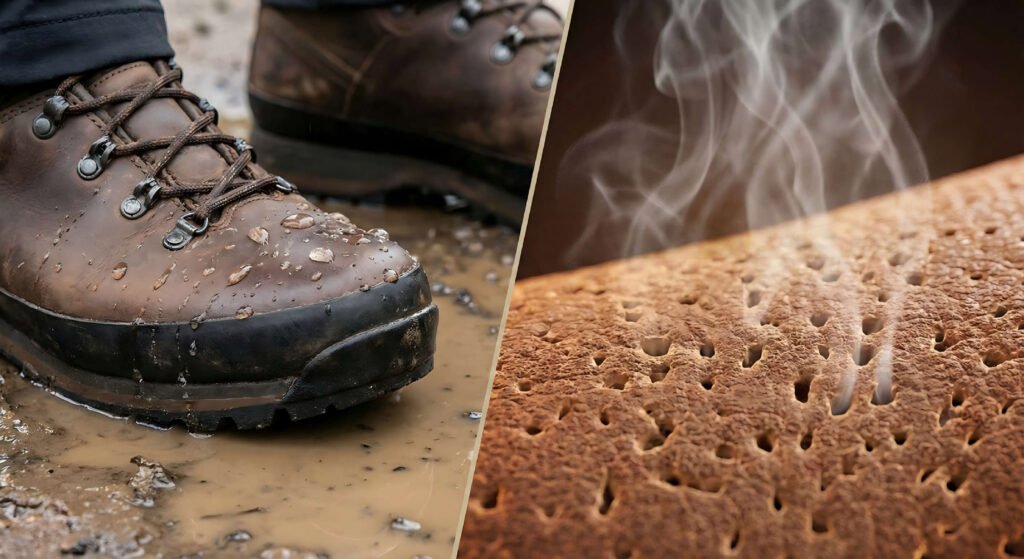
For modern tanners, achieving this is not magic, but a systematic engineering feat built on Chemical Modification and Precision Coating.
2. Dual Defense: Engineering Logic of Hydrophobicity & Micropores
To achieve superior performance, we must construct two lines of defense:
Internal Defense: Hydrophobic Fatliquoring
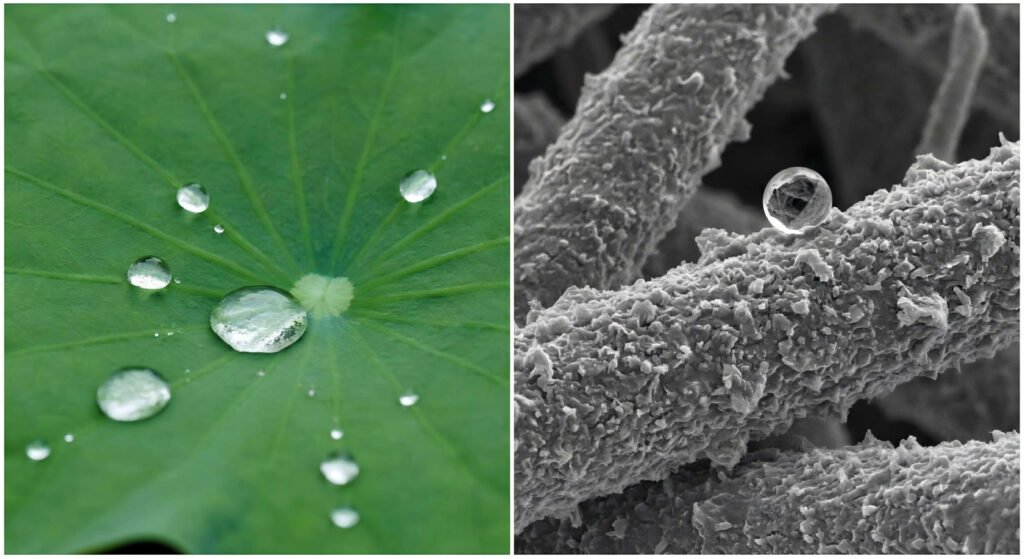
By using organic fluorine or silicone materials to coat the collagen fibers, we significantly reduce the surface energy. This makes the internal fiber network act like a lotus leaf, allowing water droplets to roll off while retaining the air channels between the fibers. (Core Principle: Repellency)
External Defense: Microporous Coating Technology
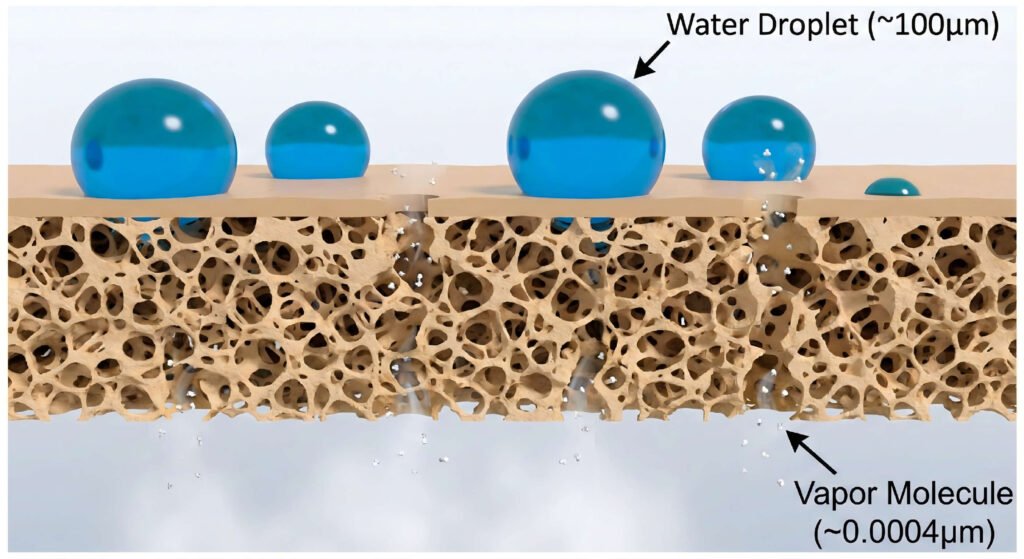
This is the most critical step. Through the wet coagulation or foaming process of Water-based Polyurethane (WPU), countless micropores are formed on the surface.
Micropore Diameter: Smaller than liquid water droplets (~100μm), yet larger than water vapor molecules (~0.0004μm).
3. Production Challenges: Expert Q&A and Solutions
Based on industry pain points, we have focused on solving three key technical challenges in our equipment development:
Q1: How to solve "pinholes" and "blisters" during Water-based PU drying?
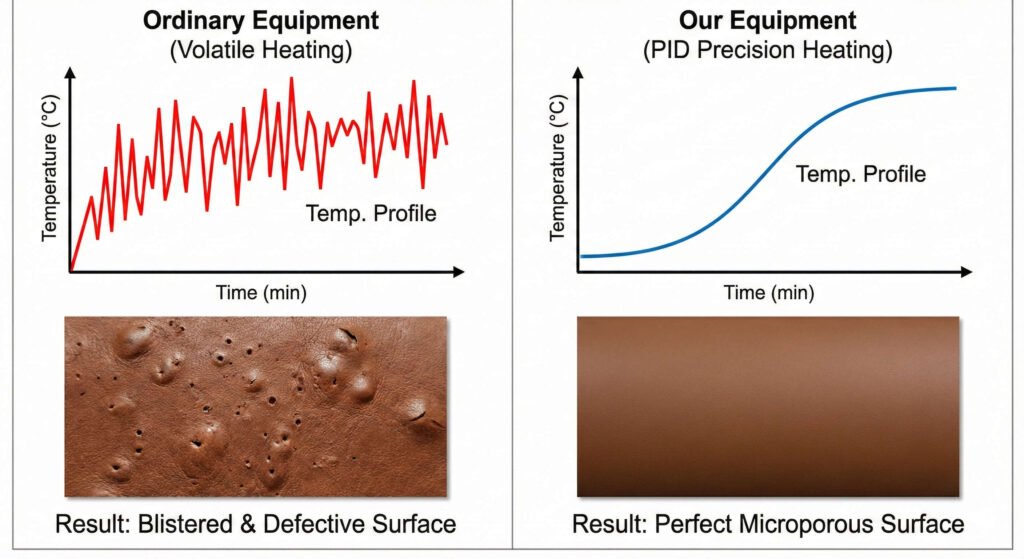
The Pain Point: Water-based slurries have high latent heat and evaporate slowly. If the temperature rises too quickly, the surface will skin over, trapping moisture inside and causing the microporous structure to collapse. Our Solution: PID Micro-computerized Multi-zone Temperature Control. Our equipment utilizes a multi-stage oven design that precisely controls the heating curve, ensuring moisture evaporates smoothly from the inside out, forming a uniform “open-cell” structure.
Q2: How to improve breathability (WVTR) without sacrificing waterproofness?
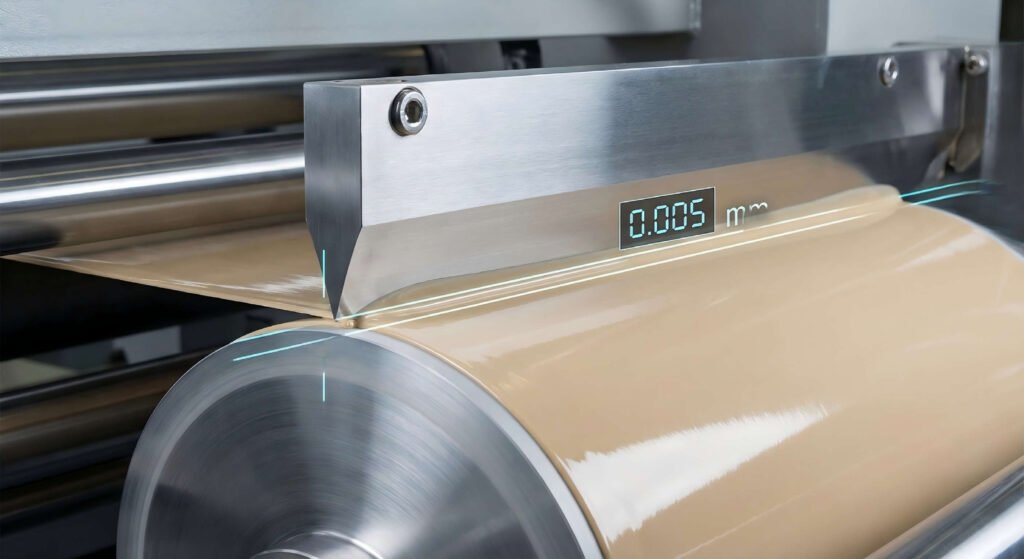
The Pain Point: Tiny fluctuations in coating thickness (over ±0.01mm) can lead to blocked breathable channels or insufficient hydrostatic resistance. Our Solution: Micron-level Precision Coating System. Equipped with an Auto-jump blade and Automatic Mixing System, we control coating thickness errors to within ±0.005mm, ensuring uniform micropore distribution.
Q3: How to avoid insufficient peel strength in dry lamination?
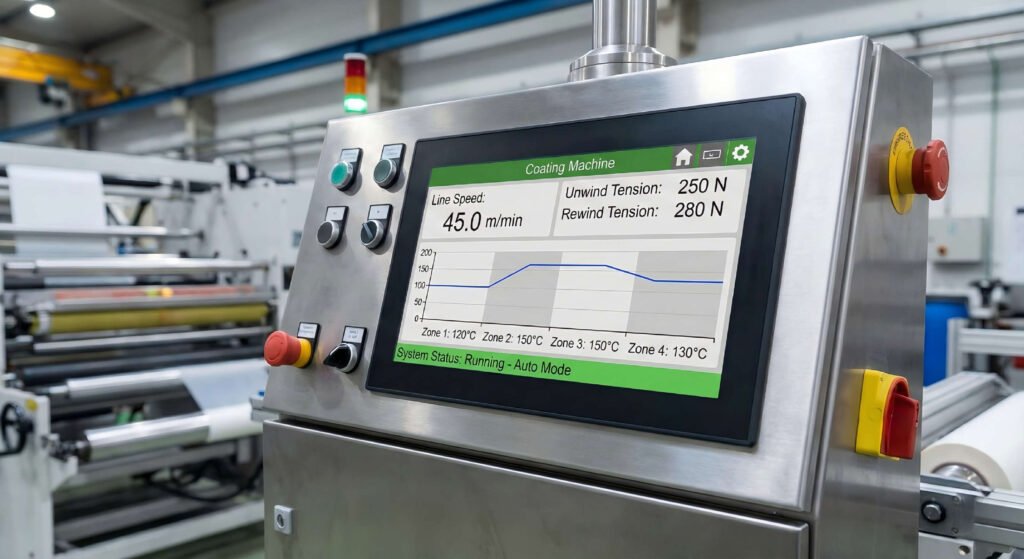
The Pain Point: Breathable membranes are fragile. Excessive tension during lamination stretches the membrane, destroying the pore structure and causing lamination failure. Our Solution: Full-line Inverter Closed-loop Tension Control. From unwinding to rewinding, the inverter linkage control ensures the base fabric bonds with the film under a “zero-stress” state.
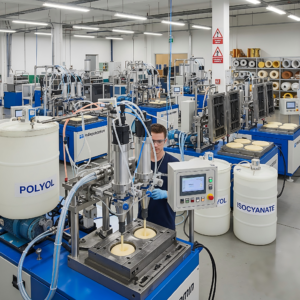
4. Our Solution: Precision Water-Based PU Production Line
Our production line is designed to resolve the contradictions above, integrating high-precision mechanical control with energy-saving thermodynamic design.

Precision Coating Unit: Equipped with auto-jump blade and auto-mixing system.
Smart Oven: High-temp thermal oil/steam heating with PID micro-computer control for precise uniformity.
Constant Tension Winding: Inverter-controlled dual motors with dual-shaft center turret winding.
User-friendly & Eco-efficient: Easy operation and maintenance; low energy consumption design effectively reduces production costs.
5. Technical Specifications
Parameter Specifications
Line Speed 0 – 60 m/min (High-Speed Model) / 0 – 40 m/min (Standard Model)
Roller Width 1700mm – 2200mm (Customizable)
Coating Precision ± 0.005 mm
Control System Inverter Linkage Control (PLC)
Heating Method Thermal Oil / Steam
Temperature Control PID Micro-computer Auto-calculation
6. Conclusion
The production of waterproof breathable leather is a systematic engineering feat, the essence of which lies in “repelling water without blocking pores.”
Only with high-precision mixing and coating equipment can excellent water-based PU formulations be transformed into perfect microporous structures. We provide a one-stop solution from formula debugging to equipment installation, helping you seize the initiative in the high-end market.