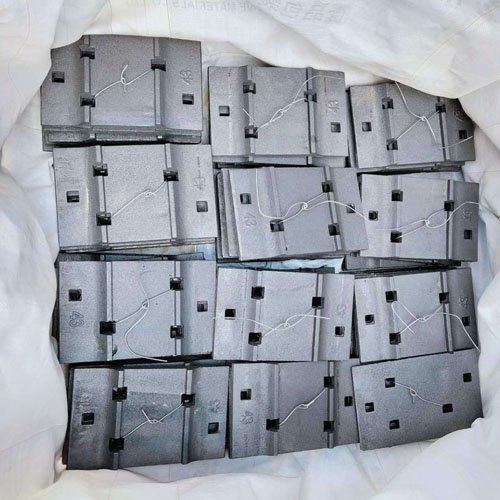
Automation and Low-Carbon Transformation Project of a Rail Pad Factory under a Jiangsu Group
Customer Background
As a backbone manufacturer in China’s rail accessory industry, the rail pad factory under the Jiangsu Group has long focused on the R&D and manufacturing of rail pads for high-speed trains and EMUs. Its products are widely used in the construction of many key railway trunk lines across the country. As a crucial supporting link in the high-speed rail supply chain, the enterprise adheres to the original aspiration of “ensuring rail safety and supporting transportation construction”. With stable product quality and large-scale production capacity, it has long provided core supporting services for numerous railway construction projects. With the advancement of the national “dual carbon” strategy and the continuous improvement of requirements for product quality and delivery efficiency in high-speed rail construction, the original traditional production mode can no longer meet the development needs, and technical upgrading is urgently required to break the bottlenecks.
Project Overview
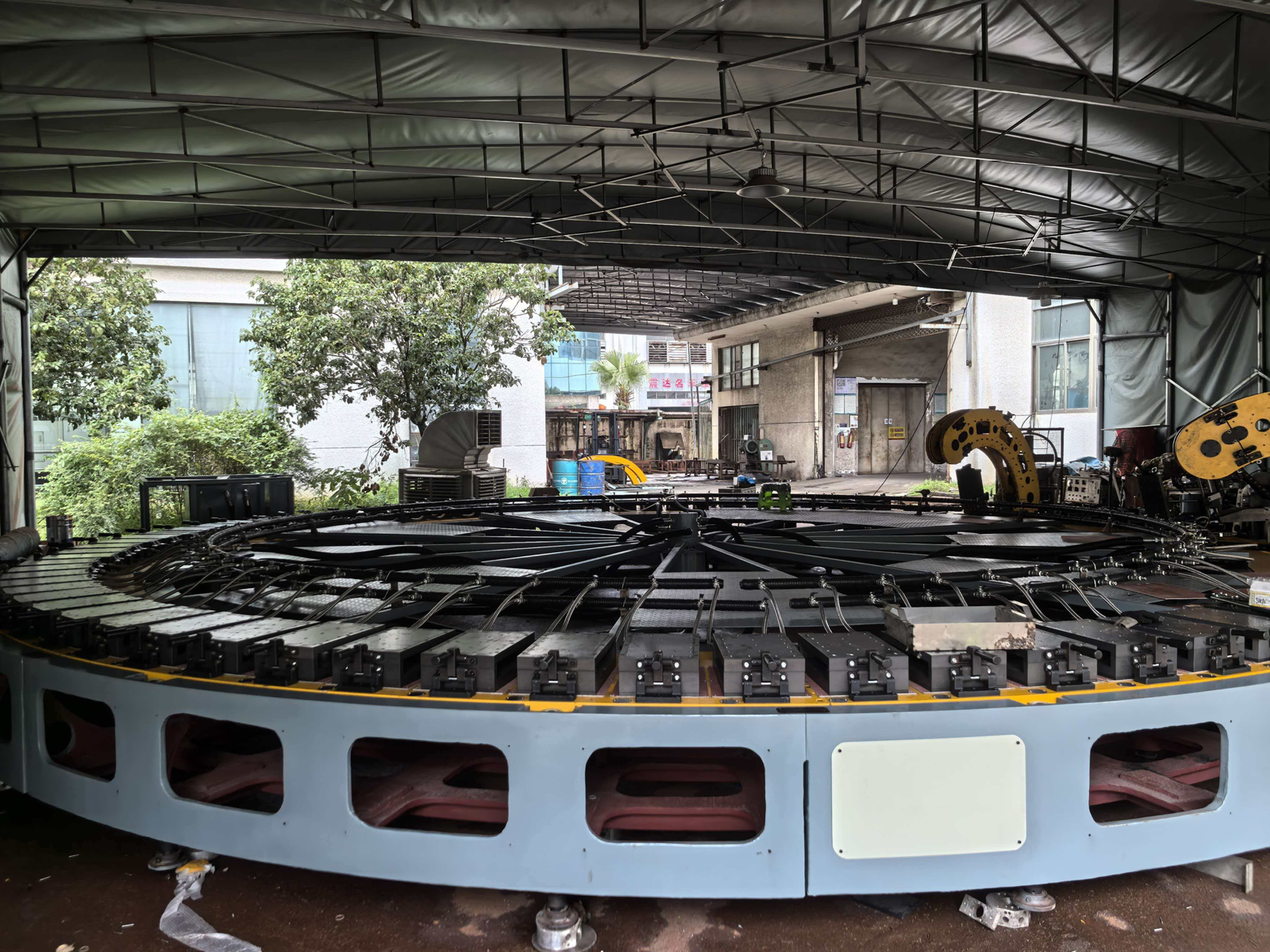
Targeting the core issues of fragmented processes, excessive energy consumption, and data disconnection in the traditional production mode of a rail pad factory under a Jiangsu Group, the Haifeng team has tailored a comprehensive solution of “full automated closed-loop + low-carbon transformation + digital management”. By building an intelligent integrated production line, upgrading low-carbon production technologies, constructing a full-process digital management system, and expanding capacity with reserved upgrade space, the project helps the enterprise break through development bottlenecks, achieve all-round improvements in production efficiency, cost control, quality management, and industry competitiveness. Ultimately, it fulfills the goal of high-quality development and consolidates the enterprise’s core supporting position in the high-speed rail supply chain.
Core Customer Pain Points
01
Fragmented Processes with Poor Connection, Leading to Delayed Delivery Efficiency
The production line is divided into five independent links: batching, pouring, curing, testing, and packaging. Each link relies on manual transfer and connection, which not only consumes labor costs but also results in low connection efficiency. A single rail pad undergoes multiple rounds of manual handover and waiting from material input to finished product, leading to a lengthy production cycle. It cannot meet the “large-batch, fast-delivery” construction rhythm of high-speed rail projects. Delayed deliveries have repeatedly affected project progress, posing hidden risks to customer cooperation.
02
Persistently High Energy Consumption, Overlapping Cost and Compliance Pressures
The core process of “curing” adopts traditional electric heating curing ovens, which have high power and significant electricity consumption. The annual electricity fee for the curing link alone accounts for more than 60% of the enterprise’s total electricity bill, significantly increasing production costs. Meanwhile, with the tightening of the national “dual carbon” policy and increasingly strict environmental compliance requirements, the high-energy-consuming production mode is not in line with the direction of green development. It also exposes the enterprise to environmental audit pressures and may even affect the renewal application of high-speed rail supplier qualifications.
03
Data Disconnection and Difficult Traceability, with Loopholes in Quality Control
The entire production process lacks a unified data collection and management system. Key production data such as batching dosage, curing temperature, curing time, and product hardness all rely on manual recording, resulting in delayed, error-prone, and easily lost data. In the event of product quality issues, it is impossible to quickly locate the source of the problem, requiring several days to investigate each link. This not only slows down the problem-solving efficiency but also may lead to unqualified products entering the market, posing potential risks to the enterprise’s brand reputation and the operational safety of high-speed rail tracks.
Haifeng's Solutions
01
Build an Intelligent Integrated Production Line to Unblock Process Connection Bottlenecks
Centered on the core goals of “reducing costs, improving efficiency, and cutting labor”, an intelligent integrated production line of “full automatic batching – robotic pouring – constant temperature curing – online testing – automatic packaging” has been designed and built. Seamless connection between various links is achieved through conveyors and intelligent transfer equipment, with no manual intervention throughout the process, enabling 24/7 continuous and stable operation. At the same time, flexible parameter adjustment interfaces are reserved to quickly switch production models, efficiently respond to multi-batch and multi-specification orders, and completely solve the problems of “fragmentation, slowness, and chaos” in traditional processes.
02
Upgrade Low-Carbon Production Technologies to Reduce Energy Consumption and Costs from the Source
Traditional high-energy-consuming electric heating curing ovens are fully phased out, and Haifeng’s independently developed “polyurethane reaction heat recovery curing system” is introduced. This system fully utilizes the waste heat released by the reaction of production raw materials (polyurethane) to provide a stable heat source for the curing link, eliminating the need for additional large-scale electricity consumption. A supporting waste heat recycling device is installed to recover excess waste heat for workshop heating or other auxiliary production links, realizing cascade utilization of energy. This reduces energy waste from the source, helps the enterprise implement the concept of green production, and responds to the national “dual carbon” strategy.
03
Construct a Full-Process Digital Management System to Achieve Controllable and Traceable Quality
Focusing on solving the pain points of data disconnection and difficult traceability, an intelligent data management platform is built. Key process parameters such as raw material ratio, pouring pressure, temperature, and time are automatically collected and recorded every 5 seconds, establishing an exclusive “digital identity file” for each rail pad. With the help of cloud storage and big data analysis technologies, full-life-cycle control and traceability of product quality are realized. In case of problems, the root cause can be quickly located, providing solid data support for quality control.
04
Expand Capacity for Efficiency and Reserve Upgrade Space to Ensure Long-Term Stable Development
On the basis of solving existing problems, multiple additional automated production lines are synchronously added to significantly increase production capacity and ensure the ability to meet large-batch orders for high-speed rail projects. Interfaces for intelligent warehouse connection and application ports for digital twin technology are reserved in advance, laying the foundation for subsequent upgrades such as “production-warehousing” integrated management and virtual simulation optimization of production lines. This effectively avoids cost waste and production interruptions caused by secondary transformations.
Project Achievements

Closed-Loop Processes with Doubled Efficiency, Full Compliance of Delivery Capacity
The intelligent integrated production line realizes seamless connection between various links, completely replacing manual transfer and handover. The production cycle of a single rail pad is shortened by more than 40%. The production line can operate continuously 24/7, and the delivery cycle for large-batch orders is halved compared with before, fully meeting the core demand of “large-batch, fast-delivery” for high-speed rail projects. Since the project’s implementation, there has been no single case of delayed delivery, customer cooperation satisfaction has been significantly improved, and long-term cooperative relationships have been consolidated.
Remarkable Results in Low-Carbon Transformation, Dual Relief of Cost and Compliance Pressures
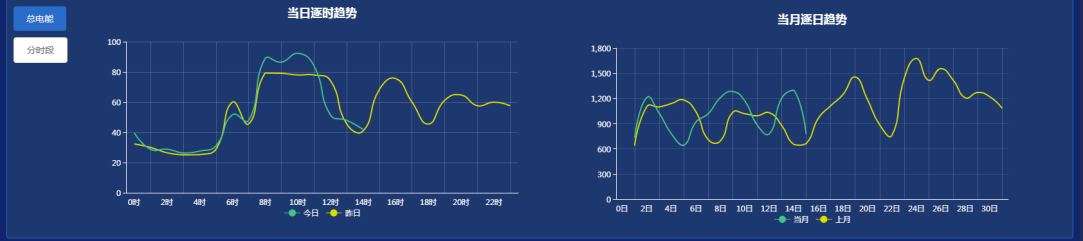
Through the polyurethane reaction heat recovery curing system and waste heat recycling technology, the energy consumption of the curing link is reduced by more than 65%, and the enterprise’s annual total electricity expenditure is decreased by 30%, resulting in a significant reduction in production costs. Meanwhile, the enterprise’s carbon emission intensity is significantly lowered, fully complying with the national “dual carbon” policy and environmental compliance requirements. It has successfully passed the renewal application for high-speed rail supplier qualifications, completely getting rid of compliance risks caused by high energy consumption.
Effective Implementation of Digital Management, Comprehensive Quality Control
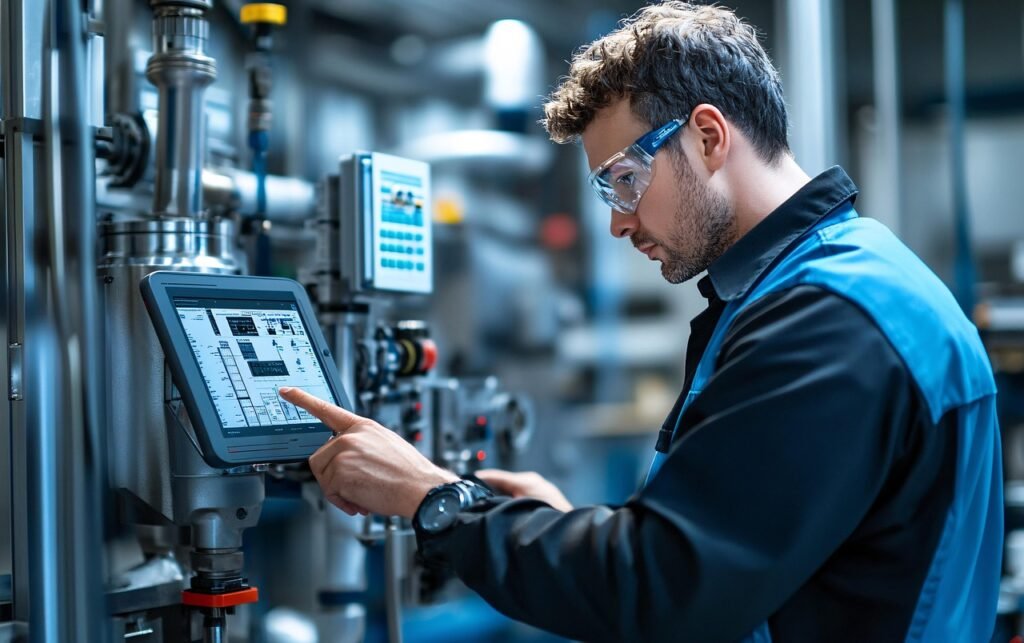
The full-process digital management system realizes automatic collection, real-time upload, and cloud storage of key production data, with a data recording accuracy of 100%. The “digital identity file” of each rail pad supports full-life-cycle traceability, reducing the time to locate quality problems from several days to within 1 hour. The product qualification rate has been increased to over 99.8%. The comprehensive upgrade of quality control capabilities has further consolidated the enterprise’s core supporting position in the high-speed rail supply chain.
Capacity Expansion with Reserved Upgrade Space, Enhanced Resilience for Long-Term Development
After adding multiple automated production lines, the enterprise’s production capacity has increased by 120% compared with before, enabling it to easily undertake ultra-large-scale batch orders and significantly enhancing its market acceptance capacity. The reserved upgrade spaces such as intelligent warehouse connection interfaces and digital twin technology application ports lay the foundation for the enterprise to develop higher-level intelligent applications such as “production-warehousing” integration and virtual simulation optimization. This effectively reduces the cost of secondary transformations and greatly improves the stability and competitiveness of the enterprise’s long-term development.