
Semi-Automation Upgrade and Standardized Production Project of a Small and Medium-Sized Rail Pad Factory in Hebei
Customer Background
As a long-established local small and medium-sized enterprise, the rail pad factory has long served local railway maintenance projects of surrounding railway bureaus. Most of the orders it undertakes are scattered small-batch maintenance orders, and it has always been hesitant to take on large-batch orders. The factory premises consist of only two rows of old workshops, resulting in cramped production space. Additionally, the enterprise is not financially well-off, and the owner’s primary concern is that “large-scale workshop renovations will be costly and may disrupt production progress due to work stoppages”. Currently, the rail pad industry is facing increasingly fierce competition with a growing number of similar manufacturers. At the same time, workers’ salaries are rising year by year, making it difficult to recruit skilled technical personnel. On the other hand, customers’ requirements for product quality are continuously improving, and entire batches of products will be returned if sampling inspections fail. The original fully manual production mode not only increases labor costs but also fails to ensure product stability, making it difficult to adapt to market changes. The enterprise urgently needs a lightweight upgrade plan that “requires low investment, no large-scale workshop renovations, and can be quickly implemented” to break through development bottlenecks and expand order scale.
Project Overview
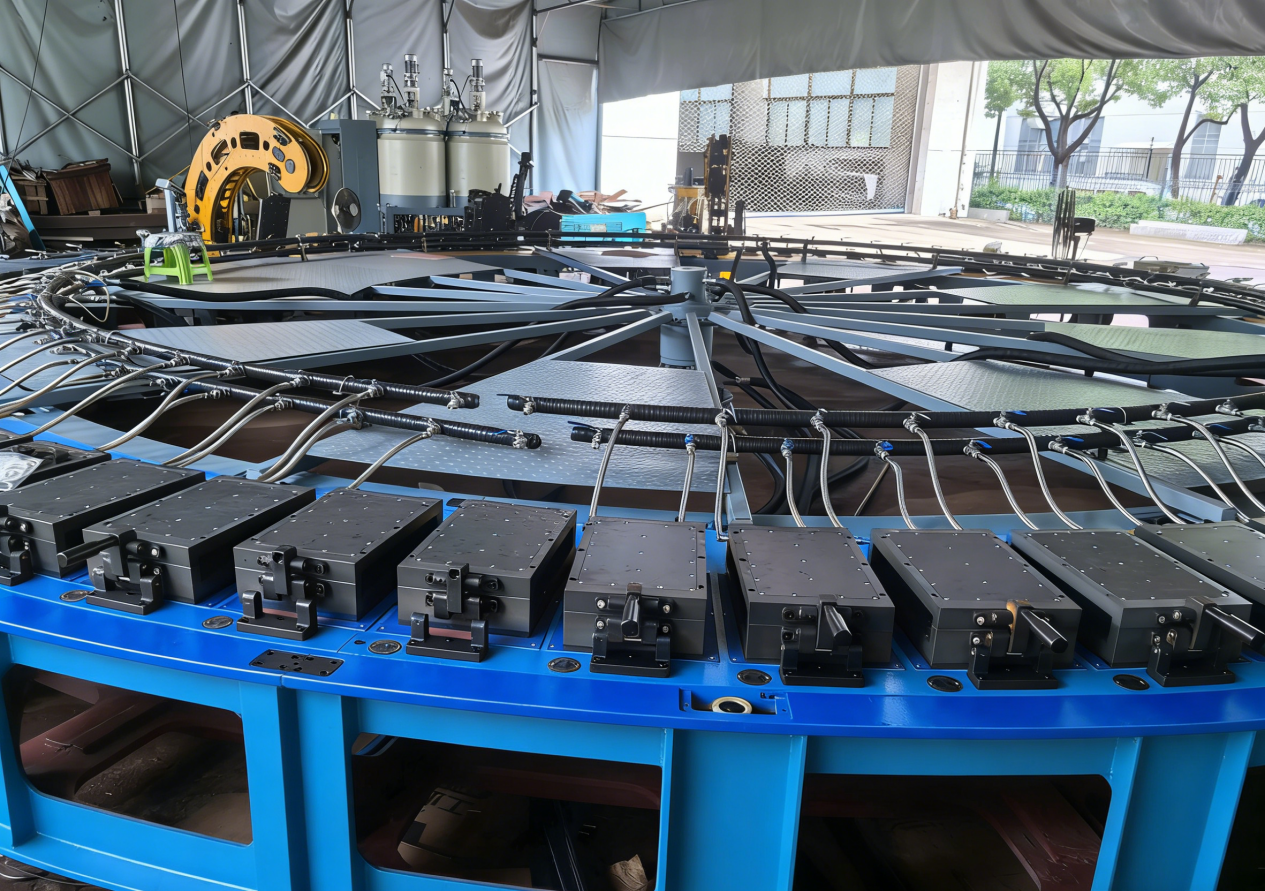
This small and medium-sized rail pad factory in Hebei has been engaged in rail pad production for many years, adopting a labor-dominated production mode. With the advancement of business, three major issues—”high dependence on labor, unstable product quality, and difficulty in increasing production capacity”—have become increasingly prominent, becoming key bottlenecks restricting the enterprise’s development. For example, during the peak season when undertaking railway maintenance orders, the factory often faces problems such as a serious shortage of workers and high operational error rates, which not only lead to delayed order delivery but also frequent product returns. In response to the enterprise’s actual situation of limited space and tight funds, the Haifeng team has customized a lightweight semi-automation upgrade plan after two on-site inspections. The core of the plan revolves around four aspects: customizing compact core equipment, applying patented technology to improve precision, simplifying operational processes, and enhancing after-sales support. This has helped the enterprise transform from “full manual production” to “semi-automation + standardized production”, successfully addressing the pain points of difficult recruitment, poor product quality, and low production capacity. It has not only stabilized cooperative relationships with existing customers but also equipped the enterprise with the capability to undertake bulk orders.
Core Customer Pain Points
01
High Dependence on Labor and Prominent Pressure from Labor Costs
More than 60% of core production processes, such as polyurethane batching, pouring, and demolding, require manual operation. For instance, the batching process requires two workers to closely monitor scales and add raw materials incrementally; the pouring process relies heavily on workers’ experience, leading to potential deviations in material dosage. A production line requires at least 4 workers to operate normally, and the absence of any one worker will disrupt the entire process. Nowadays, young people are unwilling to engage in heavy physical work in factories, resulting in a significant shortage of skilled workers. To retain employees, enterprises have to increase salaries year by year, leading to a continuous rise in labor costs. Furthermore, during peak order periods, it is difficult to recruit temporary workers, often resulting in delayed deliveries and a continuous compression of corporate profit margins. This issue has become a major concern for the enterprise’s management.
02
Insufficient Precision in Manual Operations and Unstable Product Quality
The batching process relies entirely on workers’ experience, leading to significant dosage deviations between different workers and even the same worker at different times, which directly affects product quality. The produced rail pads often suffer from various problems: uneven elasticity in some areas with obvious differences in hardness and softness, resulting in poor fit with rails after installation; insufficient wear resistance in some products, leading to short service life. The product qualification rate has always been difficult to improve, and product returns occur frequently. On one occasion, when supplying maintenance pads to a railway bureau, an entire batch was returned due to uneven elasticity, resulting in raw material losses and nearly losing this important long-term customer. Since then, the enterprise has become extremely cautious in cooperating with existing customers and lacks confidence in developing new customers.
03
Limited Production Capacity and Weak Market Expansion Capability
The fully manual production mode is highly inefficient. A single production line can only produce a maximum of over 80 pads per day from batching to finished products, and production volume will further decrease if workers take leave. Restricted by production capacity, the enterprise can only undertake scattered small maintenance orders related to railway maintenance, with each order volume ranging from dozens to hundreds of pads. For large-batch orders in fields such as high-speed railways and urban rail transit that require thousands or even tens of thousands of pads at a time, the enterprise is completely unable to meet the tight delivery deadlines required by customers. Long-term confinement to small-batch maintenance order business has hindered the enterprise’s expansion, and while watching peers profit from large-batch orders, the enterprise’s development has stagnated, lacking growth momentum.
Haifeng's Solutions
01
Customized Compact Core Equipment to Adapt to Space Constraints
During the first on-site inspection, the Haifeng team discovered that the factory’s workshop aisles were too narrow to accommodate large-scale equipment. To address this, a “compact polyurethane automatic batching system + robotic arm-assisted pouring line” was specially customized. The equipment size was minimized while ensuring performance, and it could be installed in split parts. This set of equipment does not require wall demolition or re-planning of the workshop layout and can be directly placed in the original manual operation area. The renovation only requires a 1-day work stoppage for circuit connection, without significantly affecting daily production. Meanwhile, the initial investment of this plan is more than half lower than that of full automation transformation, which is in line with the enterprise’s tight financial situation and can be quickly implemented and put into use.
02
Application of Patented Technology to Improve Production Precision and Quality
Haifeng’s independently developed patented nozzle technology (Patent No.: ZL 201611168678.6) was introduced, which can precisely control the precision of polyurethane pouring and minimize batching errors. This fundamentally solves the problem of inaccurate manual batching, ensuring that key performance indicators such as elasticity and wear resistance of the produced rail pads meet industry high-quality standards, and product quality stability is significantly improved.
03
Simplified Operational Processes to Reduce Personnel Adaptation Costs
Considering that most of the factory’s workers are middle-aged and have low acceptance of complex equipment operations, the Haifeng team designed the equipment operation interface as a Chinese touch screen with only a few buttons. Each button is labeled with straightforward terms such as “Start Batching” and “Pause Pouring” for easy understanding. For the factory’s existing senior workers, Haifeng dispatched technical personnel to conduct on-site special training for two days. After operating two batches of products under guidance, the workers could fully master the operation without the need to recruit young professionals with specialized technical knowledge. After the upgrade, only 2 core workers are needed for one production line, responsible for demolding and final quality inspection respectively. The labor demand is reduced by half, effectively alleviating the pressure of recruitment and reducing annual labor costs.
04
Improved After-Sales Support System to Ensure Production Continuity
We understand that for small and medium-sized enterprises, each day of work stoppage results in significant losses. Therefore, we provide a one-year free warranty service for the equipment. In response to potential equipment failures, we have established a rapid response mechanism. Once receiving a fault consultation from the enterprise, we will answer questions promptly; at the same time, we will quickly arrange professional technical personnel. Combined with the reserve of common spare parts in our local accessory warehouse in Hebei, we ensure that technical personnel can arrive at the site within 2 hours to carry out maintenance work. General minor faults can be repaired on the same day, minimizing downtime and ensuring that the enterprise’s order production is not affected.
Project Achievements
Significant Reduction in Labor Costs and Great Relief in Recruitment Pressure
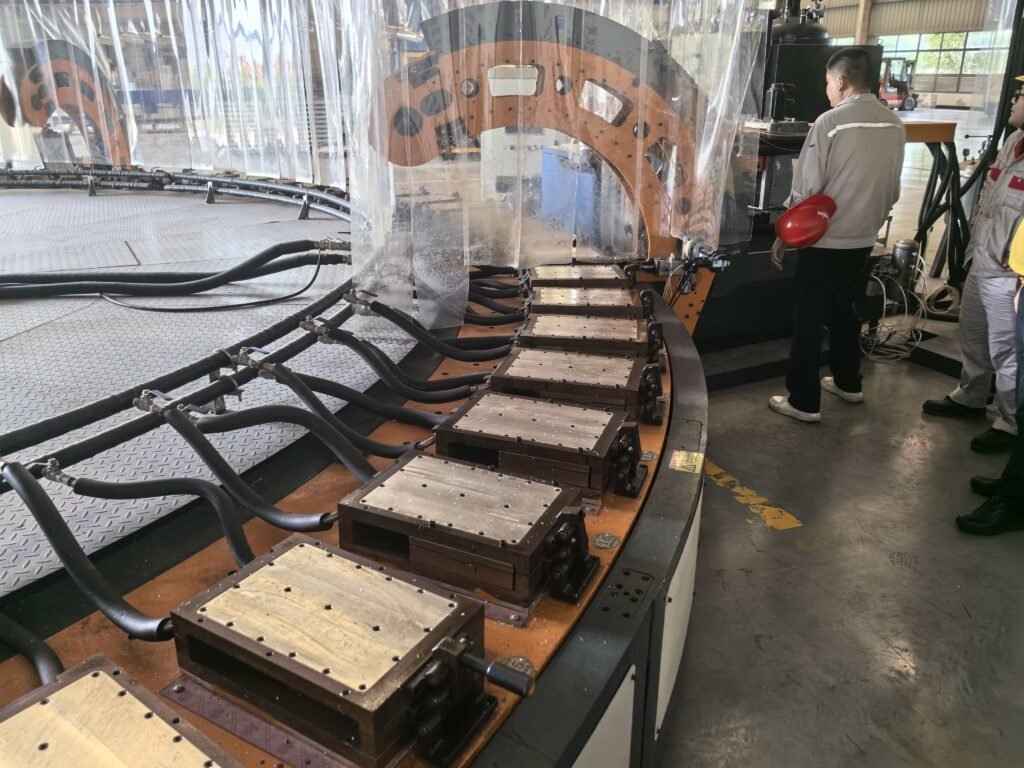
After the upgrade, the production line can operate stably with only 2 core workers. Compared with the previous configuration of 4 workers, the labor demand is directly halved. There is no need to recruit skilled technical workers or temporary workers, which not only avoids the industry dilemma of “difficulty in recruitment and high cost of retaining employees” but also saves about 40% of labor costs annually, further expanding the enterprise’s profit margin.
Stable and Controllable Product Quality and Continuous Improvement in Customer Trust
With the help of patented nozzle technology, batching errors are precisely controlled. Key indicators such as elasticity and wear resistance of rail pads meet high-quality industry standards, and the product qualification rate has increased from less than 80% to over 99%. Since the upgrade, there has not been a single product return due to quality issues, successfully stabilizing the cooperative relationship with the original railway bureau. At the same time, the stable quality has won bulk orders from 3 new customers, and customer reputation continues to improve.
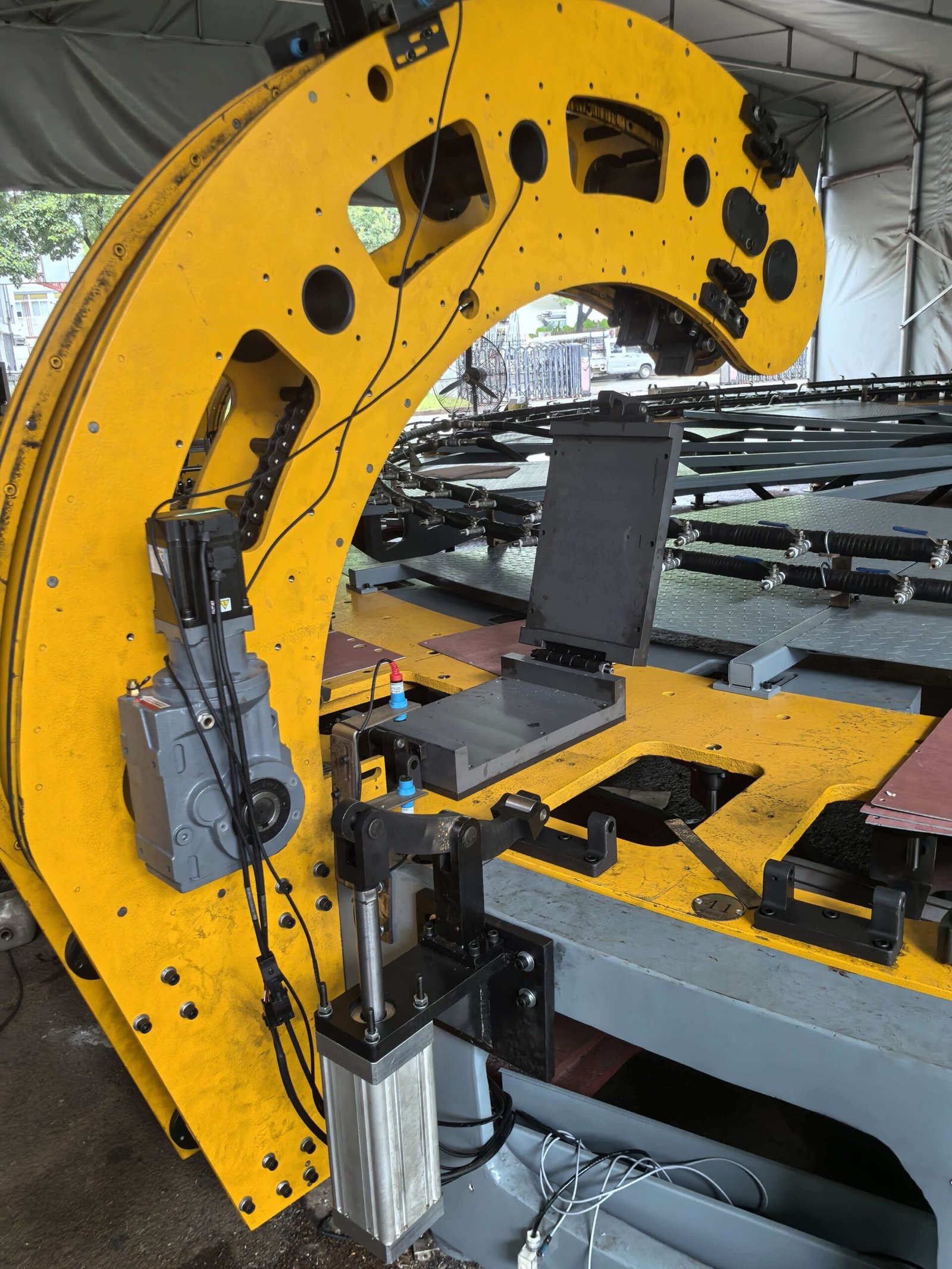
Doubled Production Capacity and Efficiency, and Comprehensive Enhancement of Market Expansion Capability
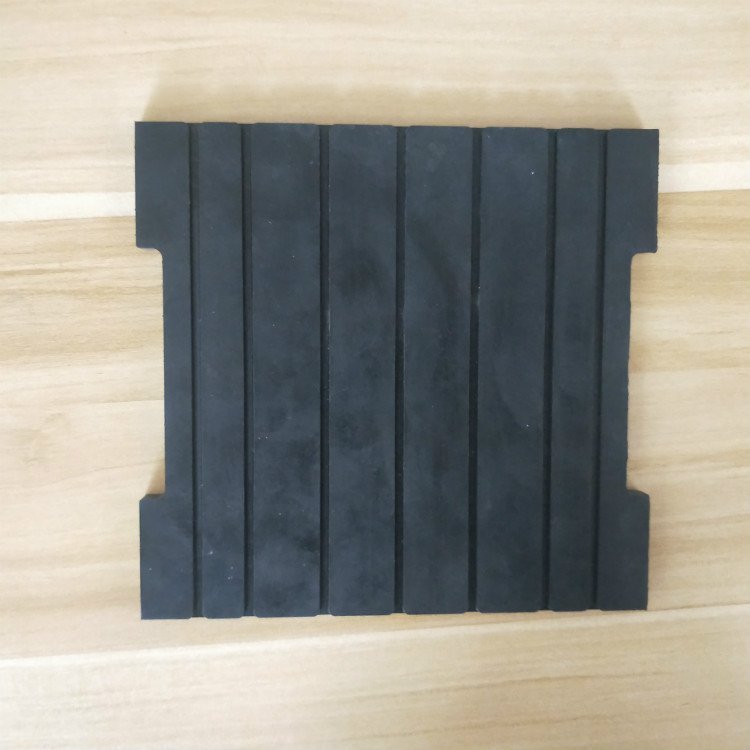
The semi-automated production line has broken the efficiency limitations of manual operations. The daily production capacity has increased from over 80 pieces to more than 200 pieces, with a production capacity increase of over 150%. Nowadays, the enterprise can not only efficiently complete the original scattered maintenance orders but also has the ability to undertake large-batch orders for high-speed railways and urban rail transit. It has successfully signed 2 large-batch orders of over 1,000 pieces, breaking away from the development dilemma of “only being able to handle small maintenance orders” and significantly improving market competitiveness.
Short Investment Return Cycle and Enhanced Enterprise Operational Resilience
The project adopts a lightweight upgrade plan, with an initial investment only half of that of full automation transformation. During the renovation, only 1 day of work stoppage was required, without significantly affecting daily production. The return on investment cycle from commissioning to profitability is only 8 months, far exceeding the customer’s expectations. Meanwhile, the improved after-sales support system ensures stable equipment operation, with the shutdown failure rate controlled within 1%. The enterprise’s production continuity and operational resilience have been greatly enhanced, laying a solid foundation for further expanding production scale and exploring broader markets in the future.