












In the unforgiving environments of underground mining, heavy metal forging, and specialized logistics, equipment failure is not an option. Historically, industrial transport vehicles relied heavily on massive rubber tires. However, as engineering demands increase, original equipment manufacturers (OEMs) and foundries are decisively shifting away from rubber in favor of Cast Polyurethane (CPU) elastomers—specifically MDI-based systems.
For applications requiring wheels with diameters exceeding 1 meter and load capacities upwards of 50 tons, polyurethane is no longer just an alternative; it is the absolute engineering standard. But what exactly makes PU superior to rubber in these extreme conditions, and how are these massive components actually manufactured?
The Data: Why Polyurethane Dominates Rubber
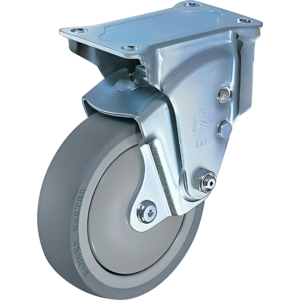
The transition to polyurethane is driven by undeniable mechanical advantages. Industrial data and field performance reveal stark contrasts between the two materials:
Unmatched Load Capacity & Low Profile: Polyurethane boasts a load-bearing capacity 3 to 4 times higher than that of rubber. Because of this immense strength, a PU wheel only needs to be half the thickness of a comparable rubber wheel. This is a game-changer for underground mining, where vehicles must maintain an extremely low body height to navigate height-restricted tunnels.
Extreme Durability: The operational lifespan of a PU wheel is typically 4 to 5 times longer than its rubber counterpart. Furthermore, its tear strength is an astonishing 5 times higher, and its abrasion resistance is double that of rubber. This allows vehicles to easily withstand the severe mechanical abuse of rocky terrain or metal debris.
Safety and Efficiency: Unlike rubber tires, massive solid PU wheels do not require inflation, completely eliminating the catastrophic risk of tire explosions in hazardous zones. Additionally, PU exhibits lower starting and rolling resistance, translating directly to significant fuel savings for heavy machinery.
Production Speed: Curing a massive, heavy-duty rubber tire can take up to 6 months. In stark contrast, producing a giant MDI polyurethane wheel—including the post-curing process—takes only about one month, drastically reducing downtime for end-users.
The Engineering Challenge: Casting the "Uncastable"
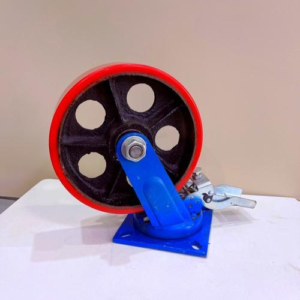
It is one thing to understand the chemical superiority of MDI polyurethane; it is an entirely different challenge to actually manufacture a wheel measuring 1,450 mm in diameter and weighing hundreds of kilograms without a single internal defect.
When scaling up production for extreme-duty parts, partnering with a proven Experte für Polyurethan-Maschinen like Haifeng Polyurethan-Maschine ensures your dosing precision remains uncompromised. Producing these massive CPU wheels requires equipment capable of handling highly viscous prepolymers, maintaining strict thermal profiles, and delivering a flawless, high-volume pour.
How Haifeng CPU Machines Guarantee Performance:
Flawless Thermal Management: MDI systems are highly sensitive to temperature fluctuations. Our CPU machines utilize advanced triple-jacketed oil heating systems throughout the entire fluid circuit, preventing prepolymer crystallization and ensuring consistent viscosity during massive, continuous pours.
High-Output Dynamic Mixing: To achieve the 50-ton load capacity required by forging manipulators, the elastomer must be perfectly homogenized. Our proprietary dynamic mixing heads operate at high speeds to blend prepolymers and chain extenders flawlessly, without inducing shear heat degradation.
Continuous Vacuum Degassing: A single trapped air bubble can destroy the load-bearing integrity of a giant wheel. Haifeng integrates continuous, high-efficiency vacuum degassing into our material tanks, ensuring that every drop poured into the mold is 100% void-free.
Upgrade Your Elastomer Production Line
Beyond just supplying equipment, acting as a comprehensive Lösungsanbieter für den Polyurethanbereich means addressing everything from raw material viscosity to final curing temperatures. As heavy industries continue to demand larger, stronger, and more resilient polyurethane components, your foundry’s casting equipment must evolve.
Whether you are producing heavy-duty mining wheels, forklift tires, or customized industrial rollers, the engineering team at Haifeng Polyurethan-Maschine can architect the perfect CPU casting solution for your factory. Contact us today to discuss your specific flow rate requirements and let us help you dominate the high-performance elastomer market.


