








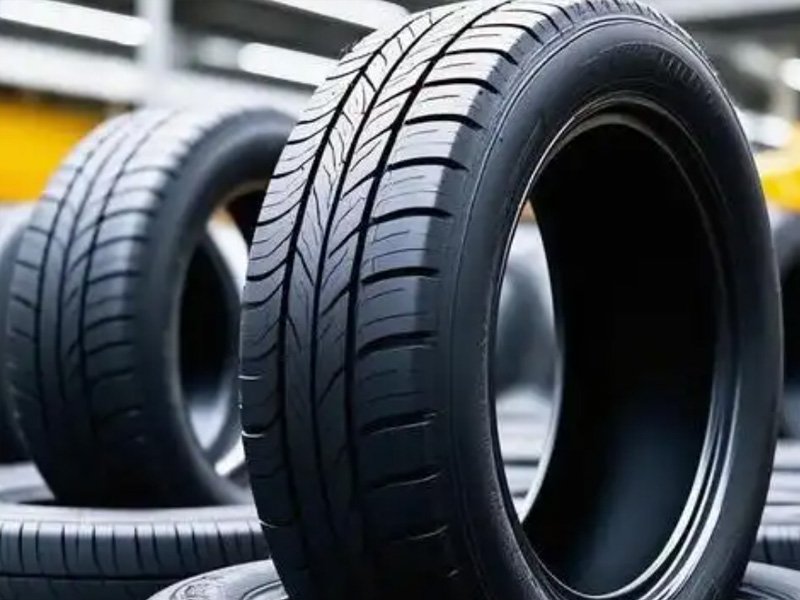
Polyurethane Tire Machine Solutions

Schmerzpunkte der Industrie

01

"Path Dependence" in Molding Processes

Interface issues with traditional processes:

Both compression molding and filament winding involve bonding pre-formed sheets; these processes are complex, require extensive equipment, and consume significant amounts of energy. Additionally, the bond between the layers is not very strong, making delamination likely to occur.

Anisotropy in the injection method:

Although the injection molding process has improved mechanization and product quality, it suffers from anisotropy—that is, the material’s properties differ between the flow direction and the non-flow direction. This affects the uniformity of tire performance under different load directions.

02

The Economic Calculus of Productivity and Costs

Challenges in production line integration:

Take quiet tires as an example: traditional processes require pre-formed polyurethane foam components to be transported to the tire assembly station, involving multiple stages of intermediate storage and manual or semi-automatic operations. This increases tire manufacturing costs by 25% and typically cannot be integrated into existing tire factories.

Material waste and lack of flexibility:

The scrap generated from prefabricated foam parts results in a significant amount of waste-10. At the same time, tooling and color changes take a long time, making it difficult to meet the production requirements for small batches and a wide variety of products.

03

Mechanical Challenges in Molds and Clamping Mechanisms

Clamping force eccentricity:

In traditional designs, the gate is located on the mold; the injection pressure causes the mold to shift, resulting in an eccentric clamping force of -3. This affects product quality consistency and, in severe cases, can even damage the mold.

Clamping mechanism jammed:

Occasional jamming of the screw clamping mechanism prevented pressure relief, causing the equipment to shut down. The improved design incorporates a spring buffer and an open-type bearing housing, which enhances the control accuracy and reliability of the pressure sensor and resolves this issue.

Kern der Lösung

Haifeng Automation, a veteran in the polyurethane automation equipment industry, focuses on the core demands of “comprehensive protection, long-lasting durability, green environmental protection, and intelligent efficiency”. It integrates independently accumulated solvent-free/water-based PU technology, precision manufacturing processes, and intelligent quality control systems, integrating core equipment and process solutions into the entire industrial chain of safety shoes. Leveraging technical experience in PU foaming equipment, precision metering systems, and other fields, it achieves four core goals, adapts to multi-scenario needs, and provides integrated “technical solution + equipment implementation” services.

Kernlösungsmodule

R&D of Scenario-Specific Specialized Materials

Ingredients and formulation:

PU polyurethane raw materials (Material A is generally polyester polyol; Material B is generally isocyanate)

The approximate ratio of the ingredients is 100:30–70.

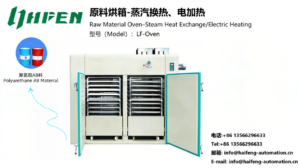
Raw material preheating temperature: 60–70°C (Note: An oven is required.)

Other ingredients: Demolding agent (function: prevents sticking), pigment (function: for coloring), (MC) dichloromethane (function: cleans the nozzle), (DOP) dioctyl phthalate (function: cleans the tank).


Castability:

Maximum instantaneous flow rate: 200 g/s.

The casting flow rate of the outer tire casting machine is approximately 150 g/s, while that of the inner tire casting machine is about 100 g/s. For example, a small vehicle tire requires approximately 1,200 g of raw material, with around 840 g needed for the outer tire and about 360 g for the inner tire.

Measurement accuracy: ±0.5%.

Solution Advantages:

A high-precision measurement system ensures accurate raw material ratios and precise automated production processes, minimizing manual intervention. The modular design facilitates maintenance and accommodates various tire specifications. The energy-efficient and environmentally friendly design reduces operational costs.

Pipeline Production Process Flowchart

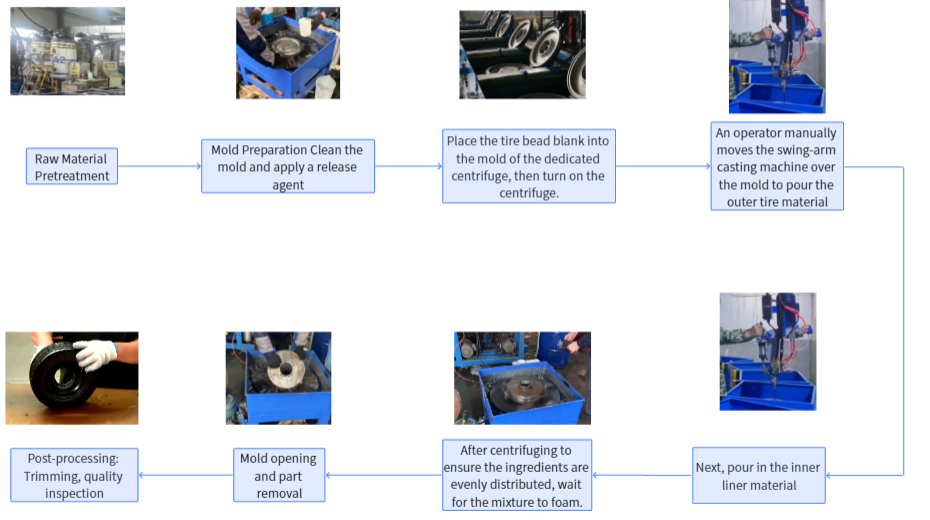
Swivel-arm production flowchart

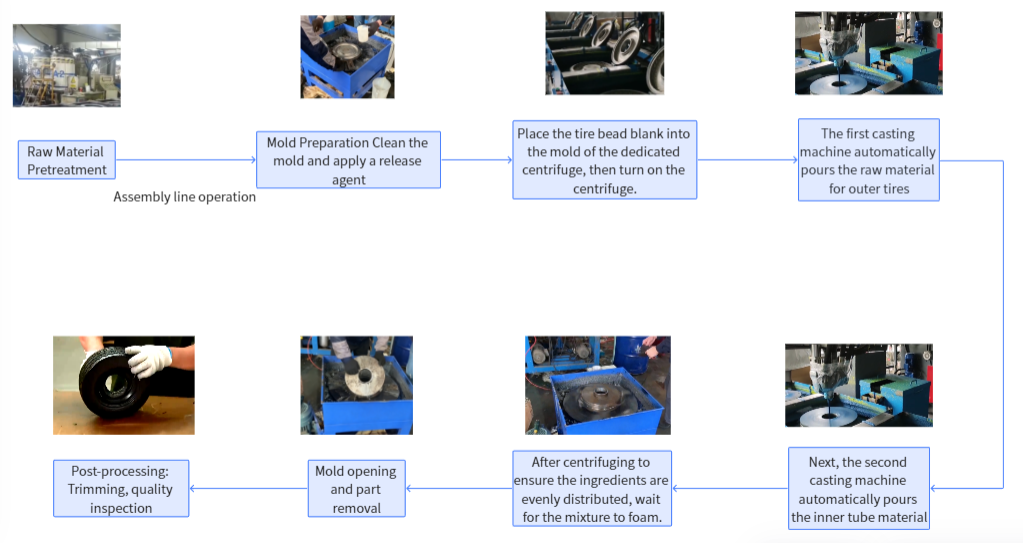
Production Process Flow

Process StepProcess Description
1 Raw Material Pre-treatmentPreheat Polyurethane Part A (polyol) and Part B (isocyanate) in a raw material oven to 60-70°C to ensure material fluidity.
2 Mold PreparationClean the mold and apply a release agent to ensure the tire can be demolded smoothly.
3 Bead Wire CentrifugationPlace the bead preform into the specialized centrifuge mold. The centrifuge rotates at high speed to generate centrifugal force, evenly pressing the rubber-coated steel wires outward. Gaps are filled with rubber compound, creating a tighter, denser wire arrangement. At the same time, the adhesion between the rubber and the steel wires is strengthened, and the mold closes.
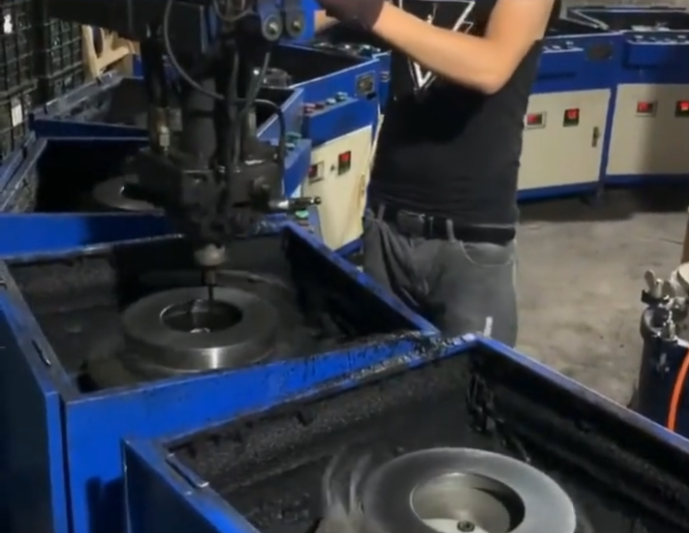
4 Precision PouringThe pouring machine injects the Part A and Part B materials for the outer tire and inner tire into the centrifuge according to preset ratios and flow rates, where they are mixed in sequence and injected into the mold.
5 Centrifugal MoldingThe materials cure under specific pressure and temperature. Centrifugal force ensures even raw material distribution before the material waits for foaming.
6 Demolding & RemovalThe mold opens, and the finished tire is removed.
7 Post-ProcessingTrimming, quality inspection, packaging, and other subsequent steps.

Core Equipment Configuration

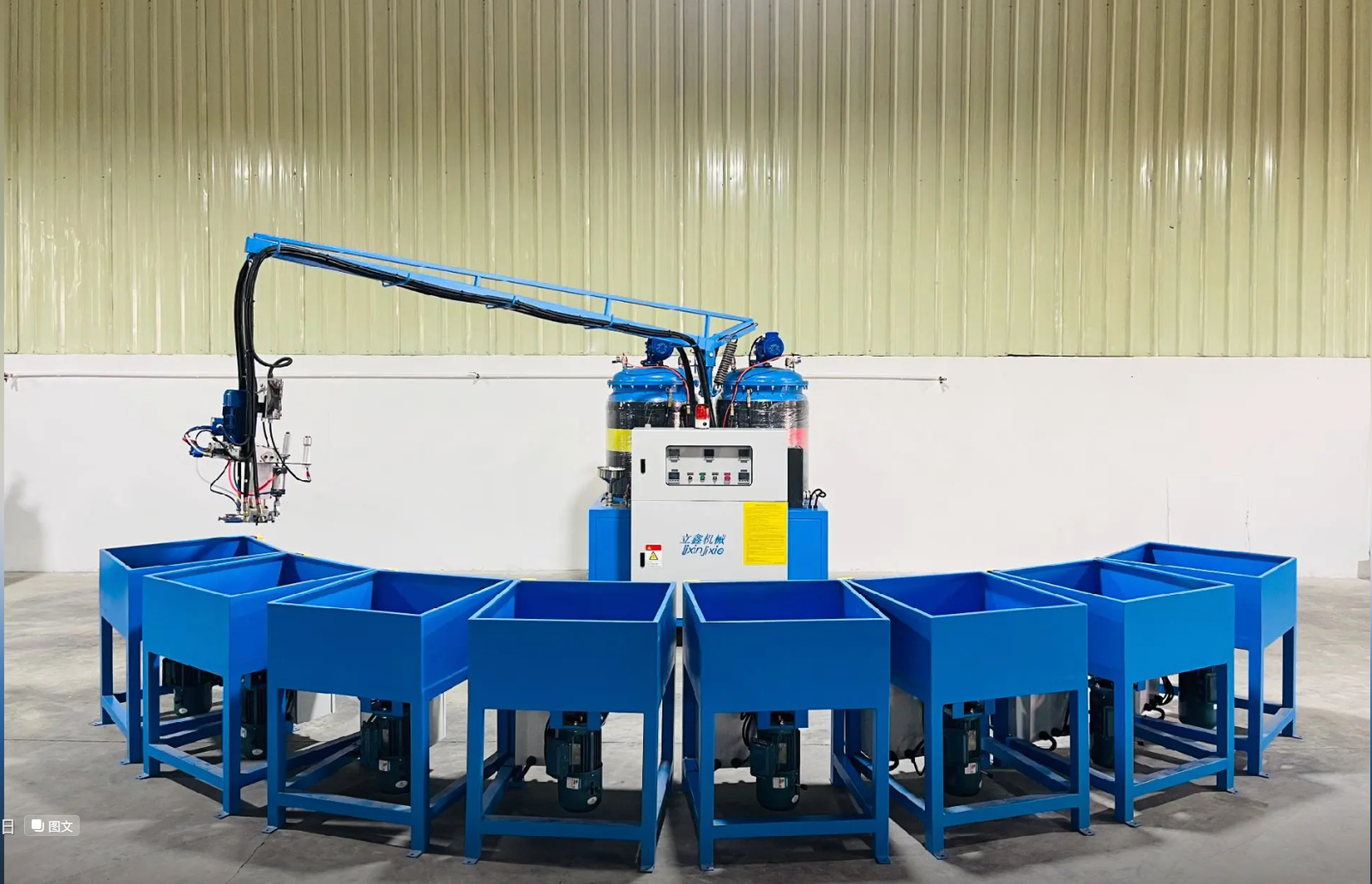
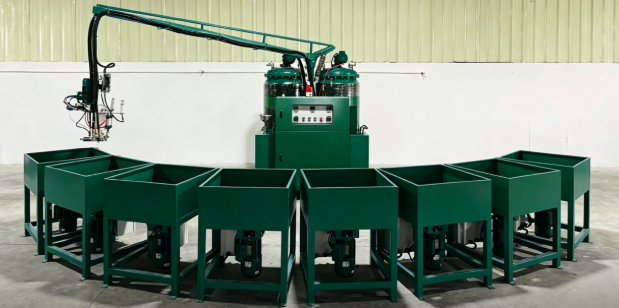
Pipeline-type equipment
No.Equipment NameMain FunctionTechnical FeaturesPhoto Reference
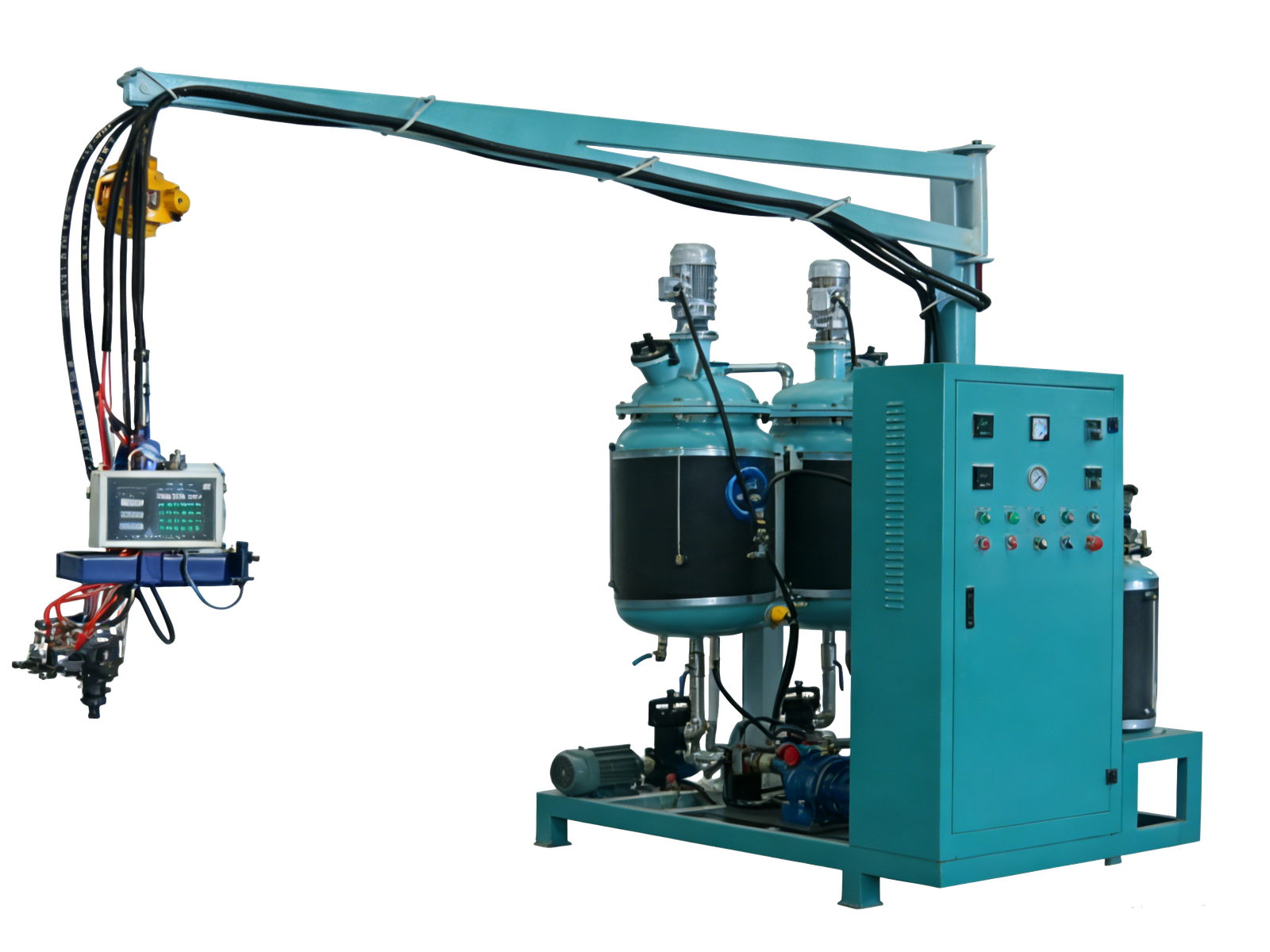
1Automatic Tire Pouring Machine (Fully Automatic)Precisely mixes and pours polyurethane raw materialsThe pouring volume required for the outer tire is typically twice that of the inner tire. Adjust according to actual conditions so that the pouring time for both outer and inner tires remains consistent.
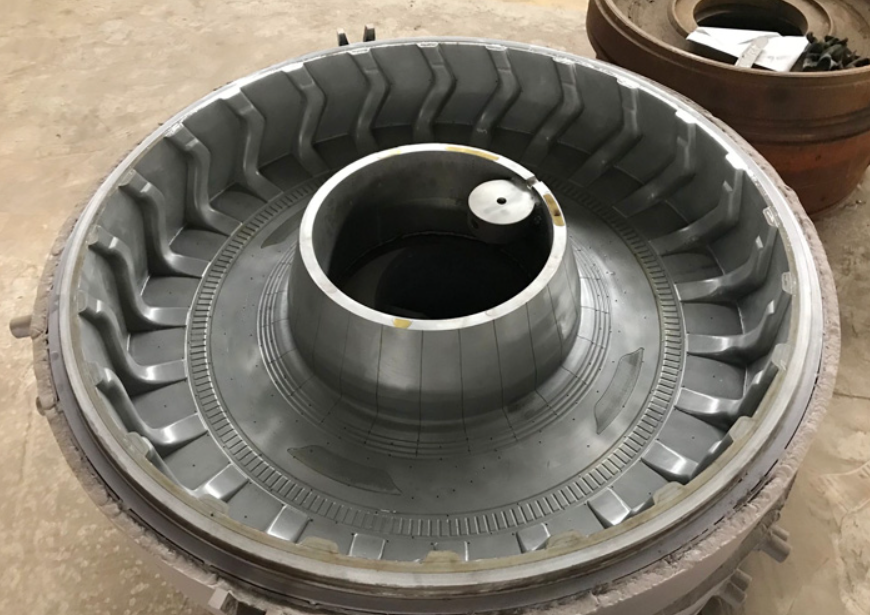
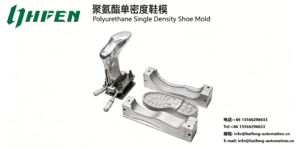
2Tire Mold SystemTire shaping / formingHigh-temperature resistant alloy steel, rapid opening/closing design (different molds are used for different tire models).
3Raw Material Pre-treatment SystemRaw material preheating and dehumidificationAutomatic temperature control, anti-crystallization design.
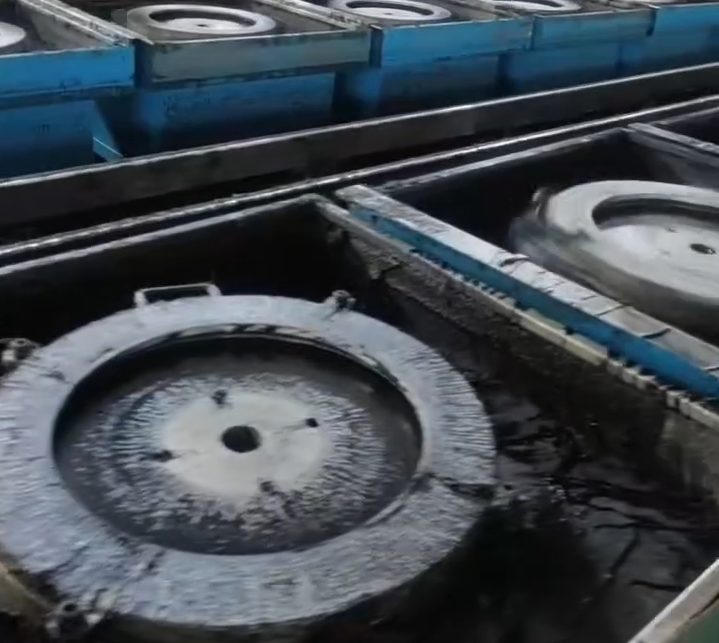
4Automated Conveyor LineAutomatic mold conveying60-station design, precise positioning (configurable according to production needs).
Swivel-arm type equipment
No.Equipment NameMain FunctionTechnical FeaturesPhoto Reference
1Swing Arm Pouring Machine (Semi-automatic)Precisely mixes and pours polyurethane raw materialsThe pouring volume required for the outer tire is typically twice that of the inner tire. Adjust according to actual conditions so that the pouring time for both outer and inner tires remains consistent.
2Tire Mold SystemTire shaping / formingHigh-temperature resistant alloy steel, rapid opening/closing design (different molds are used for different tire models).
3Raw Material Pre-treatment SystemRaw material preheating and dewateringAutomatic temperature control, anti-crystallization design.
4Fixed Station SystemFixed mold positioning20-station design (configurable according to production requirements).

Production output and production efficiency

Line-based tire production
Production ModeCycle TimeShift Output (8 hours)Daily Output (16 hours)Annual Output (300 days)
Small Tires
(5-10kg)
Approx. 7 mins≈ 550 pcs≈ 1100 pcs≈ 330,000 pcs
Medium Tires
(10-20kg)
Approx. 11 mins≈ 350 pcs≈ 700 pcs≈ 210,000 pcs
Large Tires
(20-30kg)
Approx. 14 mins≈ 275 pcs≈ 550 pcs≈ 165,000 pcs
Line-based tire production
Production ModeCycle TimeShift Output (8 hours)Daily Output (16 hours)Annual Output (300 days)
Small Tires
(5-10kg)
Approx. 10-12 mins≈ 320 pcs≈ 640 pcs≈ 288,000 pcs
Medium Tires
(10-20kg)
Approx. 15-18 mins≈ 230 pcs≈ 460 pcs≈ 192,000 pcs
Large Tires
(20-30kg)
Approx. 19-23 mins≈ 180 pcs≈ 360 pcs≈ 153,600 pcs

Key Technical Parameters

Add Your Heading Text Here
ModellJJF-G100
Max. Movement RangeX, Y=60m/min, Z=24m/min
Working RangeX, Y, Z=250, 800, 200
Material Tank Quantity (pcs)4
Single Tank Capacity (L)280
Metering Pump Displacement (L/R)40-100
Metering Pump Quantity (pcs)4
Metering Pump Speed (r/min)60-280
Dosiergenauigkeit (%)0.5
Pouring Head Mixing Shaft Speed (r/min)8600±200 rpm
Pouring Head Cleaning MethodAutomatic
Continuous Pouring Count per Cleaning Cycle (times)≥80
Max. Output (G/S)80-560
Number of Stations60
Raw Material Ratio Range100:30-100 (A:B)
Working Pressure0.6-0.8MPa
Total Power (kW)37.5KW

Work conditions requirements

ProjectRequirement
Workshop RequirementsFlat ground (area approx. 30m × 8m), power supply, compressed air, cooling water, good ventilation
Environmental Temperature & Humidity≤35°C, relative humidity ≤80%, non-condensing environment
Stromversorgung3×380V ± 5%, 50Hz, reliable grounding, total power approx. 100-120KW
Compressed Air0.7-0.8MPa, dry and oil-free, displacement ≥5m³/min
Cooling WaterClean, low mineral content, max inlet water temperature 20°C, flow rate ≥8m³/h
Operators5-6 trained operators (including pouring control, mold operation, quality inspection, etc.)

Vollständig automatisiertes Produktionssystem

Integrated production line

Provide customized complete production lines covering all processes from raw material pretreatment to intelligent sorting. Core equipment adopts Haifeng's independently developed imported configuration, ensuring material mixing uniformity ≥98% and stable and reliable operation.
Customized adaptation

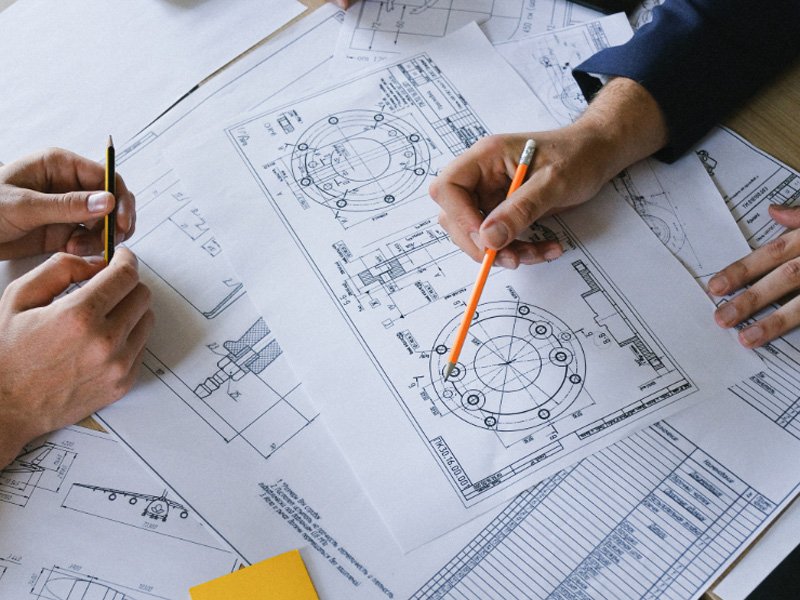
Rely on the CAD modeling and 3D printing capabilities of the Mechanical Design Research Institute to quickly produce customized molds and non-standard components, shortening the R&D cycle of new styles to 7-10 days.
Existing equipment transformation

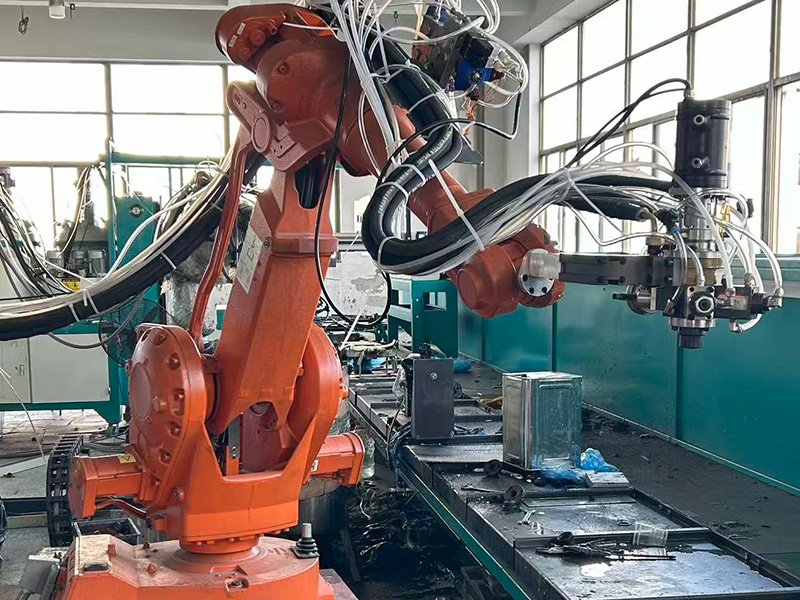
Install Haifeng's intelligent temperature control, precision proportioning, and automated conveying modules to realize the transformation from solvent-based to solvent-free/water-based processes, reducing labor and raw material losses.
Umfassende Qualitätsüberprüfung und Konformitätssicherung

Intelligent quality inspection

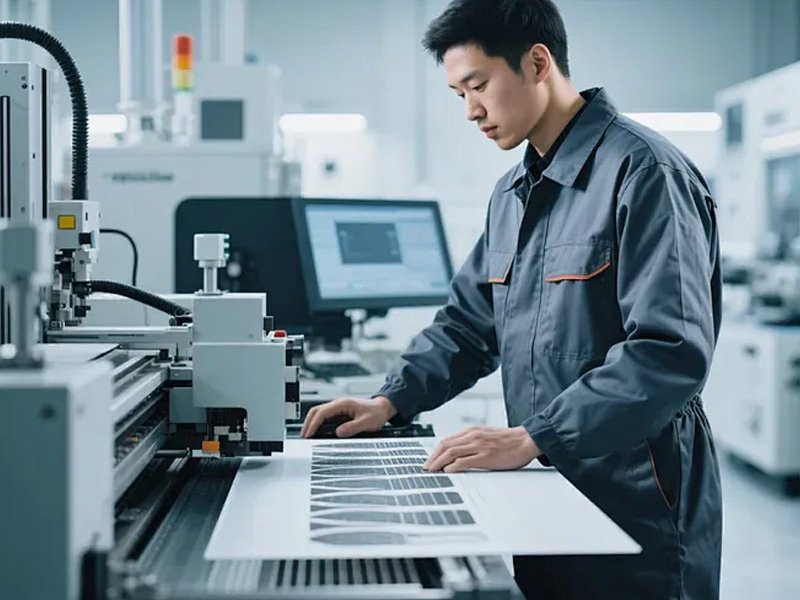
Equip Haifeng's independently developed integrated testing equipment, covering thickness, defect, bonding strength, and key performance tests. With an efficiency of ≥50 pairs per minute, defective products are automatically sorted out.

Real-time control

Adopt Haifeng's intelligent production control system to dynamically adjust parameters, controlling the defect rate at 2-3%; integrate environmental monitoring modules to achieve near-zero VOC emissions.
Certification support

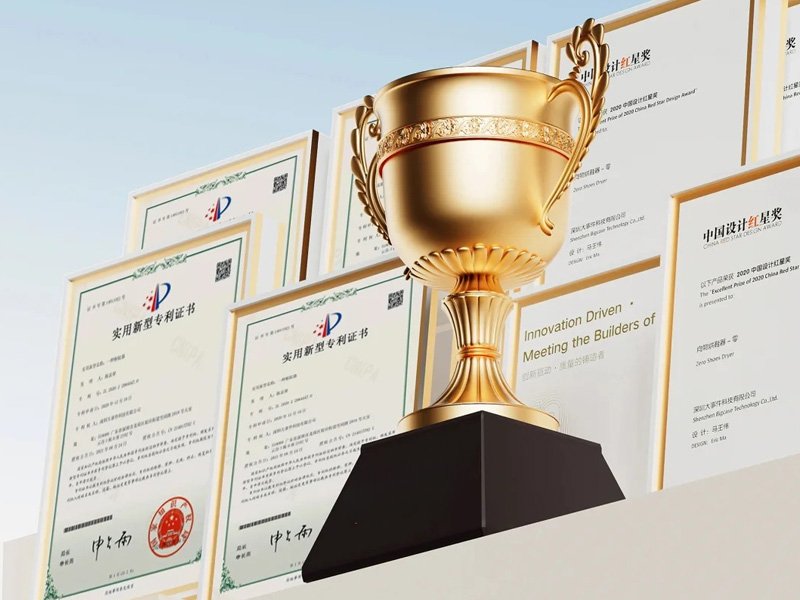
Cooperate with authoritative testing institutions to assist in completing multi-standard certifications, providing technical parameters and sample support to help obtain CE and LA certifications and break through high-end market barriers.
Lösungswert und Auswirkungen

DimensionTraditionelles VerfahrenHaifeng AutomatisierungslösungVerbesserungseffekte
Compliance Rate of Protective PerformanceBelow 85%Above 99%Meet national/international standards and eliminate safety hazards
Defect Rate10-15%2-3%Reduce by over 75% and minimize rework losses
Raw Material Waste Rate≥15%≤5%Reduce by 67%, saving over 300,000 yuan in raw material costs per line annually
Labor Requirement8-10 people/line2-3 people/lineReduce by 75% and lower the risk of operational errors
VOC-EmissionenExcessiveNahe NullAchieve environmental compliance and obtain international certifications
R&D Cycle30-45 days7-15 daysShorten by over 60% for rapid market response

Prozess der Umsetzung

Nachfragerforschung

Das technische Team führt Untersuchungen vor Ort durch, um personalisierte Lösungen zu erarbeiten.

Formel und Prozessgestaltung

Vollständige Anpassung und Überprüfung der Machbarkeit durch das F&E-Zentrum.

Geräteanpassung/Transformation und Inbetriebnahme

Das Werk schließt die Produktion ab, und die Ingenieure führen die Installation und Inbetriebnahme vor Ort durch.

Kleinserien-Versuchsproduktion

Das technische Team verfolgt und optimiert die Parameter.

Vor-Ort-Installation und Massenproduktion

Implementierung der Produktionslinie und Beginn der Massenproduktion unter technischer Anleitung.

Unterstützung bei Qualitätsinspektion und Zertifizierung

Hilfestellung beim Ausfüllen von Prüfungs- und Zertifizierungsanträgen.

Betrieb und Wartung nach dem Verkauf

Erbringung von Instandhaltungs- und Modernisierungsdiensten auf der Grundlage des nationalen Servicenetzes.

VERWANDTE PRODUKTE

VERBUNDENE NACHRICHTEN

KONTAKT US

Wenn Sie mehr über unsere Produkte und Lösungen erfahren möchten, füllen Sie bitte das nachstehende Formular aus, und einer unserer Experten wird sich in Kürze mit Ihnen in Verbindung setzen.