








目次

浙江海豊自動化設備有限公司 営業・マーケティング担当副社長
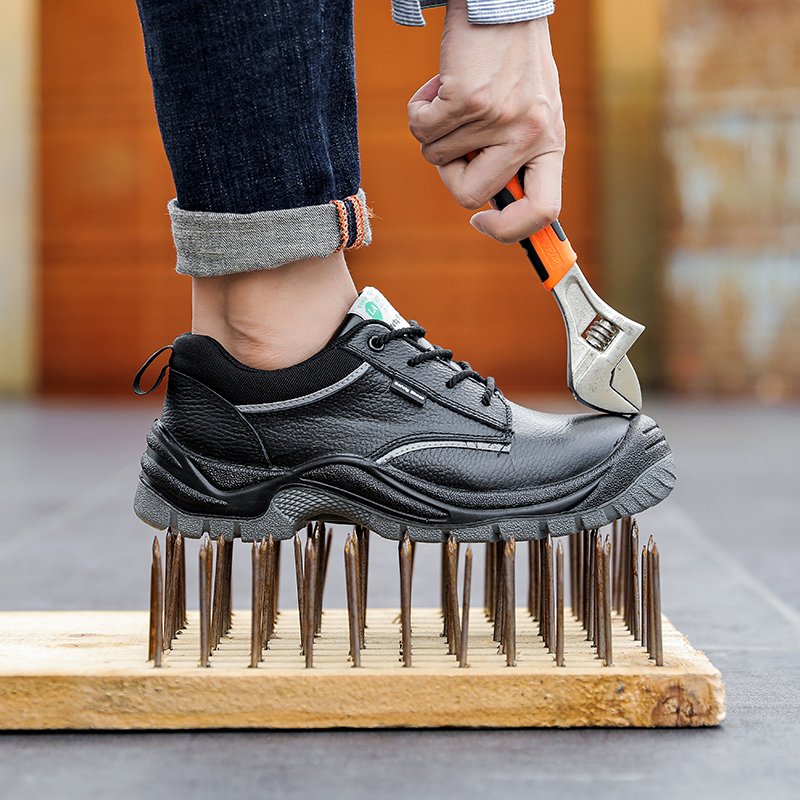
PU footwear is a popular choice in safety shoes, industrial boots and general-purpose workfootwear. This is because it is long-wearing, comfortable, and, given its widespread uptake by manufacturers, rapidly and economically produced at scale. For footwear manufacturers establishing a new factory or upgrading their current lines of production, it is important to understand where the real production flow occurs—not just theoretically, but how each step of the flow is integrated with the factory machinery and with labor, and how the flow relates to the output itself.
Here is a practical flow, factory-centric perspective on how PU shoes are constructed, focusing primarily on the double–density process as well as direct injection. These methods are most commonly used in factories today.
Raw materials
The flow starts with the raw materials. In particular, some of these raw materials have to be quite consistent in their characteristics throughout the production run in PU shoe manufacture. The key raw materials will typically comprise:
Polyol and isocyanate (the PU chemical system)
Additives (catalysts, pigments, blowing agents)
Materials for the upper (these could come from leather, synthetic leather, or fabric)
Insoles and toe caps (steel or composite, and only if safety toe shoes are desired), and so on.
These materials will need to be stored under fairly controlled conditions so that they do not suffer degrading effects due to temperature changes, or other kinds of failure of reaction in storage since this can lead to the foams being erratic after use or the sole failing to bond well in a later stage of the shoe assembly.
Upper preparation
The upper for the shoe must be prepared before going to the PU injection station. Upper preparation will usually entail a period of:
Cutting
Stitching
Lasting (developing the final ‘fit’ shape for the shoe, on the shoe last)
In the production of safety footwear, toe caps will often be steel or composite, added at this stage of upper preparation. How well the upper is lasted will strongly affect how successfully the upper will bond with the PU sole in the subsequent stages.
Setting up and preparing the mold
Molds are those hollow forms that establish finally the shape of the sole and of its surface finish. Workers will usually clean and apply release agents to the mold to:
Prevent the PU sole from sticking to the mold while it pours and sets therein
Facilitate easy demolding when the sole hardens
Prolong the life of the mold itself.
Cold molds can lead to incomplete foaming. On the other side, overheated molds can melt the plastic.
PU Injection / Pouring Process
This is really the heart of the PU shoe manufacturing process.
Using PU shoe injection machine (DIP or rotary type), the system first mix polyol and isocyanate in a set ratio and injects the liquid into the mold. If you are making double-density soles, e.g.:
First layer (outsole). This is obvious, it has a higher density to resist wear.
Second layer (midsole). Lower density to allow comfort, easing shock, etc.
The chemical reaction occurs within seconds, and the PU expands in the mold to form the final shape of the sole, bonding directly to the upper. Key here is a stable mixing head and accurate metering system. Otherwise, poor mixing leads to:
Air bubbles in the shoe.
Weak structure.
Uneven density.
発泡と硬化
Following injection, foaming of the material takes place rapidly. Inside the closed mold:
The PU expands.
Bonds to the upper.
Begins curing.
You are talking about a few minutes typical curing time, depending on formula, and machine settings and so on.
In a high output plant, a rotary machine means production and delivery are continuous. While one station is injecting, for example, others are curing or demolding.
Demolding and Cooling
Shoe has been cured in the mold, so you will be removing it at this point. The sole is fully formed of course, and the upper and lower are bonded, permanently. But the material is yet soft (may be warm) and so the shoes, are placed on rack or conveyor to cool down and stabilize.
Not cooling the shoes properly may lead to issues of deformation or shrinking.
Trimming and Finishing
Once shoes have sufficiently cooled, they are trimmed to remove any excess (also known as flash) material, then finish includes:
Cleaning the edges
Inspecting the surface for defects
Printing or labeling a logo on the surface
For shoes of higher quality, it is not unusual for additional processes such as polishing to be carried out, or coating applied to enhance durability.
Quality Inspection
Quality inspection is not a standalone procedure but integrated into all stages of production, right from R&D to packaging, with final inspection ensuring that the product adheres to standards. Important checks include:
The bond strength between the upper and sole
Density consistency throughout the shoes
Defective appearances that indicate bad design/engineering.
Defective shoes that don’t meet safety national standards (particularly with protective footwear).
Factories that produce shoes to exporting markets need to adhere to other product standards such as EN ISO, ASTM, etc.
Packaging and Storage
The shoes are paired and packed in cartons and stored until they are ready shipped out. Proper storage is paramount to maintaining the integrity of the product especially when exposed to humid and hot environments and other unfavorable conditions.
Key Equipment in a PU Shoe Production Line
A typical PU shoe manufacturing plant would contain the following key machines:
PU shoe injection machines (inline or rotary).
High-pressure metering and mixing machines.
Molds and mold temperature controllers.
Compressors.
Material feeding and storage equipment.
Cooling conveyor.
Trimming and finishing tools.
Integrating these machines into a carefully laid-out manufacturing plant is as crucial as selecting the right type of machine if you are building a new PU shoe factory.
Final Words
PU shoes are not made just injecting PU mixture into a mold, and getting good shoes out of the process. It is where the chemistry, machines and process control must all work together in a coordinated manner for a successful production line to be created. Often, factories which manage a stable production in the long-term have:
Stable quality in raw materials
Reliable equipment.
A skillful operator
Correct process parameters.
So whether you have a new PU shoe factory to run or are building a new production line at an existing factory, there are a number of steps which when understood, will lead to less common production problems and overall profitable.
よくあるご質問
What is the difference between PU injection and traditional cemented shoes?
PU injection bonds the sole directly to the upper during molding, eliminating the need for glue. This results in stronger adhesion and faster production.
How long does it take to produce one pair of PU shoes?
In a modern rotary production line, a pair can be completed every few minutes, depending on mold stations and curing time.
What is double-density PU in footwear?
Double-density means two layers of PU with different properties—typically a hard outsole for durability and a soft midsole for comfort.
Can one production line handle different shoe designs?
Yes, by changing molds and adjusting parameters, the same machine can produce various styles.
What is the biggest challenge in PU shoe manufacturing?
Maintaining consistent mixing and reaction conditions. Small variations in temperature or material ratio can significantly affect product quality.