












Haifeng Automation PU Insole Production Line Upgrade - Caso do Camboja
Customer Background
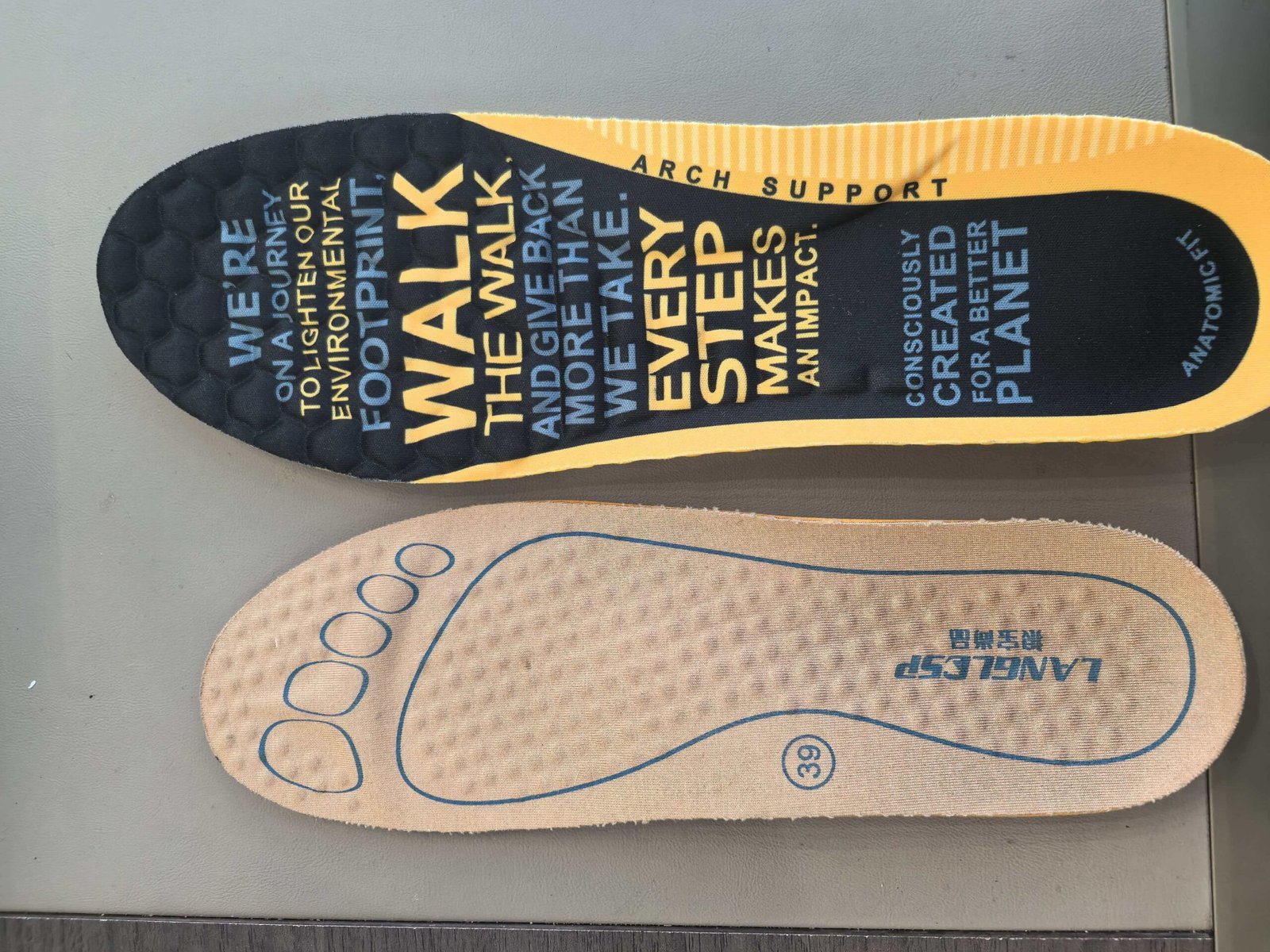
Based in Phnom Penh, Cambodia, the client has 6 years of experience in R&D and production of PU comfort insoles, shock-absorbing insoles, and safety shoe insoles. It mainly supplies export-oriented shoe factories in Cambodia, Vietnam, and Thailand, and its products must meet EU environmental and quality standards for export.
The factory used old low-pressure foaming equipment relying on manual proportioning and adjustment, resulting in poor product consistency and lack of data traceability, making it difficult to pass customer factory audits.
Project Overview
A professional PU insole manufacturer in Cambodia was troubled by uneven foaming, unstable temperature control, inconsistent hardness, poor resilience, and low batch consistency due to outdated semi-automatic equipment. These issues made it difficult to meet the quality and audit requirements of export-oriented shoe factories in Southeast Asia.
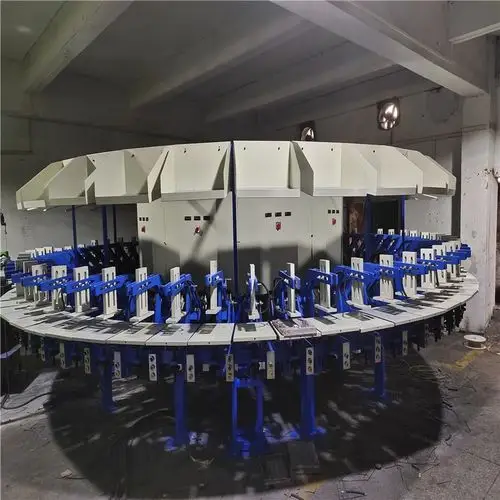
Haifeng Automation provided a dedicated lightweight upgrade solution for insoles, equipped with 2 sets of Haifeng XJJF Series Precision PU Foaming and Pouring Machines, combined with constant-temperature mold stations and formula management functions. The low-cost intelligent transformation helped the factory quickly improve quality, efficiency, and delivery capacity.
Core Customer Pain Points
01
Uneven Foaming & Poor Quality Consistency
Insufficient mixing performance of traditional equipment leads to uneven cell structure, obvious hardness fluctuation in the same batch, and unqualified comfort and resilience.
02
No Closed-Loop Temperature Control & Prone to Deformation
Without a stable constant-temperature system, the foaming and curing process is unstable, causing collapse, elasticity loss, and cracking of insoles.
03
High Labor Dependence & Low Production Efficiency
The production line requires 8 operators, with heavy workload in manual proportioning, machine adjustment, and trimming, accompanied by rising labor costs.
04
Low Metering Accuracy & High Raw Material Waste
Large errors in manual pouring result in a raw material waste rate of about 7%, increasing long-term production costs.
05
No Data Traceability & Difficulty Passing Audits
Without formula storage and process recording, product changeover is slow, and it cannot meet the traceability requirements of international shoe factory audits.
Haifeng's Solutions
01
Core Equipment Upgrade
Adopt 2 sets of Haifeng XJJF Series Precision PU Foaming and Pouring Machines, with high-precision metering and uniform mixing, suitable for thin, high-elastic, and lightweight insole production.
02
Intelligent Constant-Temperature Control System
Closed-loop temperature control within ±1℃ stabilizes foaming and curing, ensuring stable elasticity and uniformity of insoles.
03
Automatic Proportioning + Formula Storage
One-click parameter switching enables fast and stable product changeover, adapting to multi-model, small-batch orders.
04
Automation for Labor Reduction & Efficiency Improvement
Simplify manual processes such as proportioning, adjustment, and inspection to reduce labor dependence.
05
Production Data Traceability
Automatically record key process parameters to meet audit requirements for export customers.
Core Achievements of Project Implementation
Greatly Improved Quality Consistency
Finished product qualification rate increased from 84% to 95%, with stable hardness and resilience.
Reasonably Reduced Headcount
Operators reduced from 8 to 4, significantly cutting labor costs.
Significantly Lower Raw Material Waste
Waste rate reduced from 7% to 3.0%, making production costs more controllable.
Steady Increase in Production Capacity
Daily output increased from 3,000 pairs to 5,200 pairs, supporting large-batch orders.
Passed International Customer Audits
Became a qualified long-term supplier for 3 major export-oriented shoe factories in Southeast Asia.
Enhanced Market Competitiveness
Monthly orders increased by 42%, consolidating its regional supporting position.


