











حالة ترقية خط إنتاج نعال الأحذية المصنوعة من البولي يوريثين من هايفنغ: تمكين العلامات التجارية للأحذية من تحقيق إنتاج ضخم عالي الكفاءة وعلى نطاق واسع لنعال الأحذية عالية الأداء
خلفية العميل
As a well-known domestic footwear enterprise with more than 15 years of deep cultivation in the shoemaking industry, the brand covers a full range of men’s, women’s and children’s shoes, involving casual shoes, outdoor shoes, professional sports shoes and other categories, and has a stable consumer group and improved domestic and overseas sales channels. The enterprise focuses on the R&D and production of shoe soles and the manufacturing of finished shoes as its core business. Previously, the production of polyurethane shoe soles adopted a semi-automated pouring + manual auxiliary molding mode, lacking specialized precision molding equipment for shoe soles. It could only mass-produce ordinary basic polyurethane shoe soles with an annual output of about 500,000 pairs, and had no large-scale production capacity for high-performance shoe soles. In recent years, consumers’ requirements for the comfort, wear resistance and safety performance of shoes have been continuously upgraded, and the competition in the mid-to-high-end footwear market has become increasingly fierce. The brand plans to launch a series of high-performance polyurethane shoe soles featuring high wear resistance, strong anti-slip, excellent shock absorption and ultra-lightweight. The pouring precision, process control and production capacity efficiency of the original production lines can no longer match the R&D and market expansion needs of new products, thus, there is an urgent need for a professional automated production line upgrade solution for polyurethane shoe soles to complete the technological transformation.
نظرة عامة على المشروع
A well-known domestic footwear brand with more than 15 years of experience in the shoemaking industry has laid out the mid-to-high-end market with mature channels and consumer groups. However, it was restricted by such problems as process bottlenecks of traditional semi-automated shoe sole production lines, lack of mass production capacity for high-performance shoe soles, and low production standardization, failing to meet the market demand for polyurethane shoe soles with high wear resistance, anti-slip and shock absorption performance. Combining the brand’s actual production needs and the process R&D requirements for high-performance shoe soles, Haifeng Automation tailored a full-chain upgrade solution featuring a single model of special equipment for shoe soles as the core + intelligent process control + full-process closed-loop production. By introducing precision pouring molding equipment specialized for polyurethane shoe soles, optimizing the foaming and molding process, and customizing exclusive performance formulas, the installation, commissioning and production line adaptation of 4 core production lines were completed in only 5 days. This helped the brand transform from “semi-automated shoe sole production” to “intelligent and precise manufacturing”, successfully overcoming the problem of large-scale mass production of high-performance polyurethane shoe soles, and laying a solid foundation of core production capacity and technical support for its expansion into the domestic and international mid-to-high-end footwear markets.
نقاط الألم الأساسية للعملاء
01
Hindered product performance upgrading, insufficient competitive advantages in the mid-to-high-end market
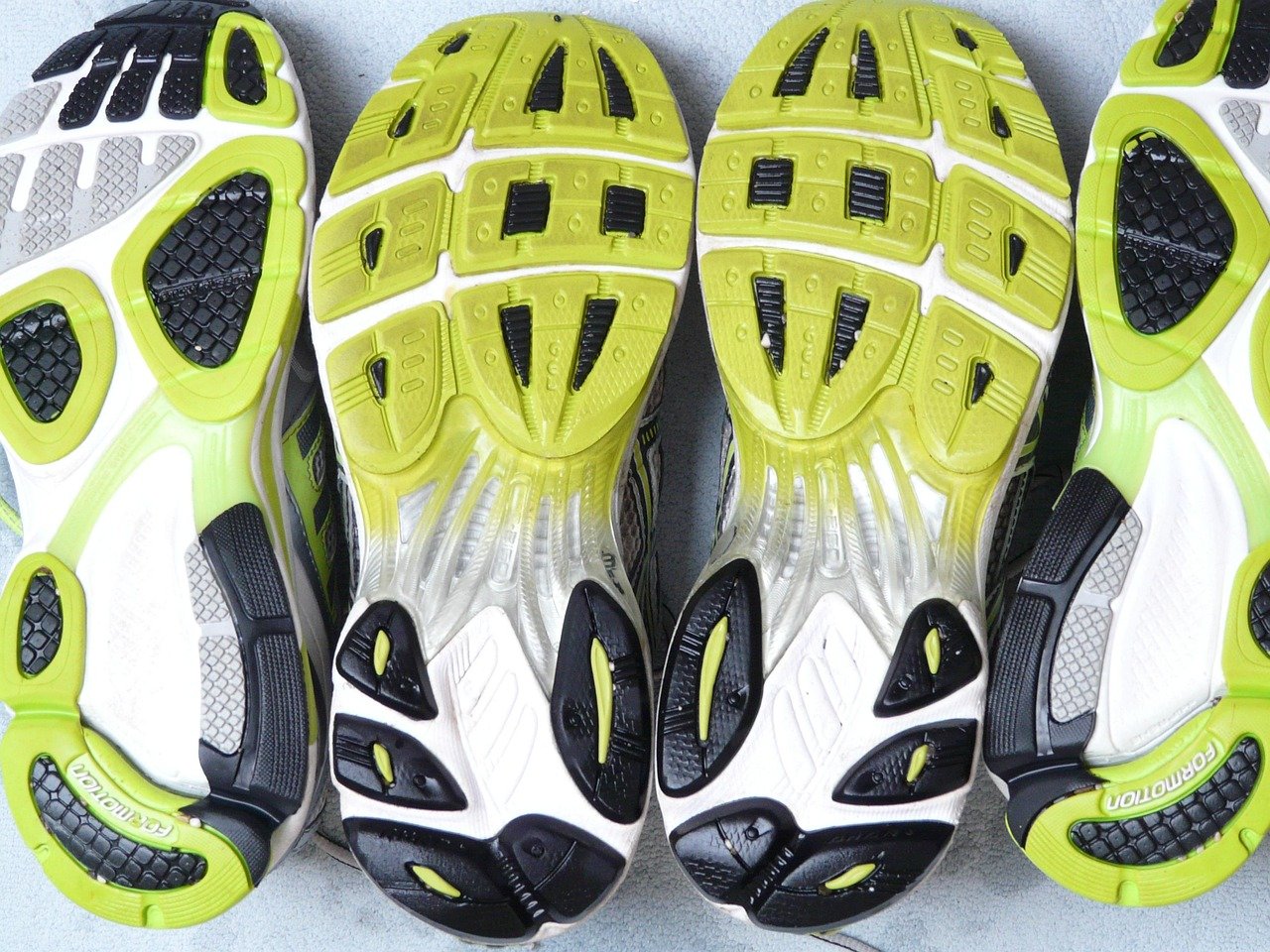
Due to the lack of specialized precision molding equipment, the original production lines could not accurately control the polyurethane foaming density, raw material ratio and molding process, and only produce ordinary basic shoe soles with average wear resistance, anti-slip performance and shock absorption effect, which failed to meet the high-performance index requirements of outdoor shoes and professional sports shoes. There was a blank in the category of high-performance shoe soles with low product added value, putting the brand in a passive position in the competition of the mid-to-high-end footwear market.
02
Insufficient pouring precision, prominent problems of raw material waste and poor product consistency
The traditional semi-automated pouring equipment had limited precision in quantitative control, and the raw material ratio parameters adjusted by manual assistance had fluctuations, leading to a large deviation in the raw material pouring volume during production, with a comprehensive raw material waste rate as high as 10%, causing high cost losses. At the same time, the insufficient temperature control uniformity of the equipment resulted in obvious deviations in the density, hardness and thickness of shoe soles, poor product consistency, and some shoe soles were prone to quality problems such as delamination and cracking, which directly affected the overall quality of finished shoes.
03
Low level of production line automation, production capacity unable to support market expansion needs
All 4 polyurethane shoe sole production lines adopted semi-automated segmented operation, with each process of pouring, molding, demolding and transfer requiring manual connection. The overall production cycle of a single sole was as long as 3 minutes, and the daily output of a single production line was only 4,000 pairs, with an annual output of only 500,000 pairs of polyurethane shoe soles. This was far from meeting the brand’s demand for shoe sole supporting of 2 million pairs of mid-to-high-end finished shoes sold annually, and the insufficient production capacity became a core obstacle to the brand’s market expansion and product upgrading.
04
Lack of standardized processes and quality inspection, negative impact on brand reputation
There was no standardized process system and full-process online quality inspection links adapted to the production of polyurethane shoe soles. Manual operation was prone to cause appearance defects such as burrs and uneven surfaces on shoe soles, with a qualified product rate of only 82%. In addition, the low performance indicators of ordinary shoe soles and frequent quality problems led to a long-term high after-sales complaint rate of finished shoes due to shoe sole problems, which affected the brand’s market reputation to a certain extent.
حلول هايفنغ
01
ترقية المعدات الأساسية
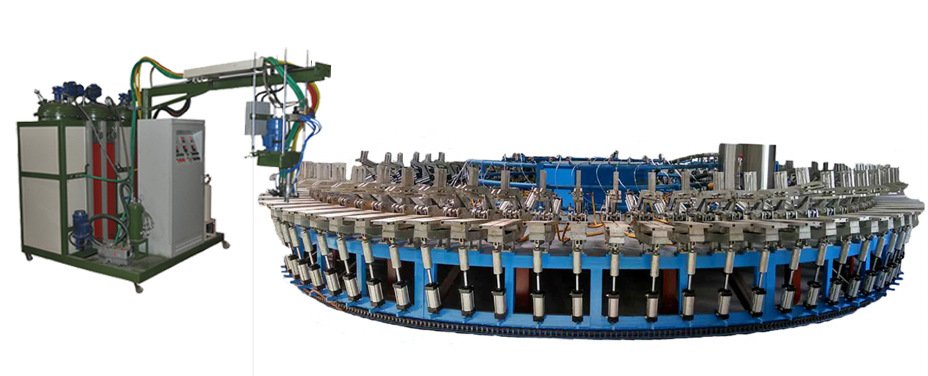
The brand’s 4 core production lines are uniformly equipped with 4 sets of Haifeng XCXZ Series Precision Pouring Molding Machines Specialized for Polyurethane Shoe Soles. As a special model for polyurethane shoe materials, the equipment accurately matches the process characteristics of shoe sole pouring and molding, and is equipped with an 8-cavity multi-cavity molding unit, an intelligent constant temperature control module and a high-precision quantitative pouring module. It can accurately control the mixing ratio, pouring volume and foaming molding process of polyurethane raw materials, support the integrated production of various types of shoe soles such as casual shoe soles, outdoor shoe soles and sports shoe soles, and perfectly meet the process and performance requirements of high-performance polyurethane shoe soles. Meanwhile, it is equipped with an integrated automatic raw material mixing and conveying device to realize continuous, precise and closed raw material supply, reduce manual intervention and ensure pouring precision from the source.
02
Intelligent Control Implementation, Realizing Production Standardization and Flexibility
The production line is equipped with a PLC intelligent industrial control system and a robotic arm automatic demolding and handling device. The system pre-stores more than 800 sets of shoe sole production formulas with different specifications and performances, and supports one-click switching of product parameters with different densities (20-60D), hardness and thickness, eliminating the tedious manual debugging and mold adjustment links and greatly improving the product model change efficiency. Multi-dimensional online quality inspection stations are added to real-time monitor the core indicators such as the size, density, hardness and thickness of shoe soles, realizing the full-process visual and intelligent management of production progress, process parameters and product quality, and promoting the implementation of shoe sole production standardization.
03
Process and Supporting Optimization, Building a Full-Process Closed-Loop Production Chain
An automatic raw material pretreatment system is configured, which effectively ensures the viscosity stability and foaming performance of polyurethane raw materials through 55-65℃ constant temperature preheating and vacuum dehydration treatment, laying a foundation for the molding of high-performance shoe soles. Combined with the performance requirements of different types of shoe soles, the exclusive polyurethane foaming formula and molding temperature-pressure curve are optimized to improve the wear resistance, anti-slip performance and shock absorption performance of shoe soles in a targeted manner. Equipped with high-precision CNC trimming and deburring equipment and professional shoe sole performance testing equipment, a full-process closed-loop production chain from raw material processing, precision pouring and foaming molding to post-processing finishing, performance testing and quality inspection is built to ensure the performance and quality of shoe soles in all links.
04
Full-Cycle Supporting Services, Ensuring the Efficient and Stable Operation of Production Lines
A 5-member professional technical team is arranged to be stationed at the factory for 5 days, adopting a modular installation method to efficiently complete the installation, commissioning of core equipment, as well as the demolition, modification and production line docking of old equipment, minimizing the production line downtime. Targeted practical training is carried out for the enterprise’s production workers and quality inspectors, focusing on core skills such as equipment operation, formula retrieval, parameter adjustment and quality inspection. The staff can master and operate proficiently in only 3 hours. A 1-year whole-machine warranty service is provided, a 24-hour on-site technical support mechanism is established, and regular equipment maintenance, precision calibration and process optimization guidance are carried out for the enterprise to fully ensure the efficient, stable and continuous operation of the production lines.
الإنجازات الأساسية لتنفيذ المشروع
Leapfrog Upgrade of Product Performance, Large-Scale Mass Production of High-Performance Shoe Soles Realized
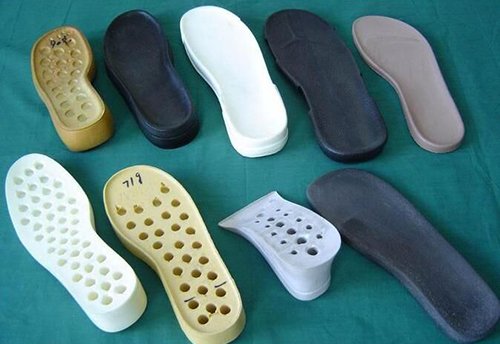
Relying on the core technologies such as precision pouring molding of the XCXZ Series equipment, customized exclusive foaming formulas and process optimization, the brand successfully broke the production limitations of ordinary shoe soles and realized the large-scale mass production of a variety of high-performance polyurethane shoe soles including outdoor anti-slip shoe soles, sports shock absorption shoe soles and casual lightweight shoe soles. The wear resistance of the mass-produced high-performance shoe soles is increased by more than 150% compared with traditional models, the anti-slip performance is greatly optimized, and the shock absorption rate reaches more than 40%, fully meeting the performance index requirements of mid-to-high-end outdoor shoes and professional sports shoes. At present, high-performance shoe soles account for 50% of the production of the brand’s mid-to-high-end finished shoes, becoming the core product support for the brand to explore the high-end market.
Dual Improvement in Capacity and Efficiency, Enhanced Order Response Capability
After the full-process automated transformation, the processing efficiency of the production line has been improved. The production cycle of a single sole has been shortened from 3 minutes to 45 seconds, the daily output of a single production line has increased from 4,000 pairs to 16,000 pairs, and the annual output of 4 production lines has reached 2.3 million pairs, exceeding the brand’s sole supporting demand for mid-to-high-end finished shoes. The product model switching efficiency has also been improved simultaneously, shortened from the original 1 hour to 10 minutes, enabling rapid response to multi-specification, small-batch custom sole orders and enhancing production flexibility and market order response capability.


Significant Reduction in Comprehensive Manufacturing Costs, Sustained Expansion of Product Profit Margin
The application of high-precision quantitative pouring modules and 8-cavity multi-cavity production lines has reduced the raw material waste rate from 10% to 2%, saving more than 1.2 million RMB in raw material costs annually. Automated equipment has replaced more than 80% of manual labor, the number of operators per production line has been reduced from 10 to 4, and more than 3 million RMB in labor costs has been saved annually for 4 lines. Combined with the improvement in finished product qualification rate brought by process optimization, the enterprise’s unit sole production cost has been reduced by 25%, enabling the brand to maintain a stable profit margin for mid-to-high-end footwear products even in a market environment with fluctuating raw material prices.
Comprehensive Upgrade of Product Quality, Sustained Improvement of Brand Market Reputation
Through the intelligent and precise control of equipment and the implementation of standardized shoe sole production processes, the deviations in size, density and hardness of shoe soles are accurately controlled within the range of 0.2mm/±1D, with no burrs or defects on the appearance and a significant improvement in molding consistency. The overall qualified product rate is increased from 82% to 99.2%, the after-sales complaint rate of finished shoes caused by shoe sole problems is reduced by more than 90%, and the brand’s product quality recognition and market reputation are improved simultaneously.
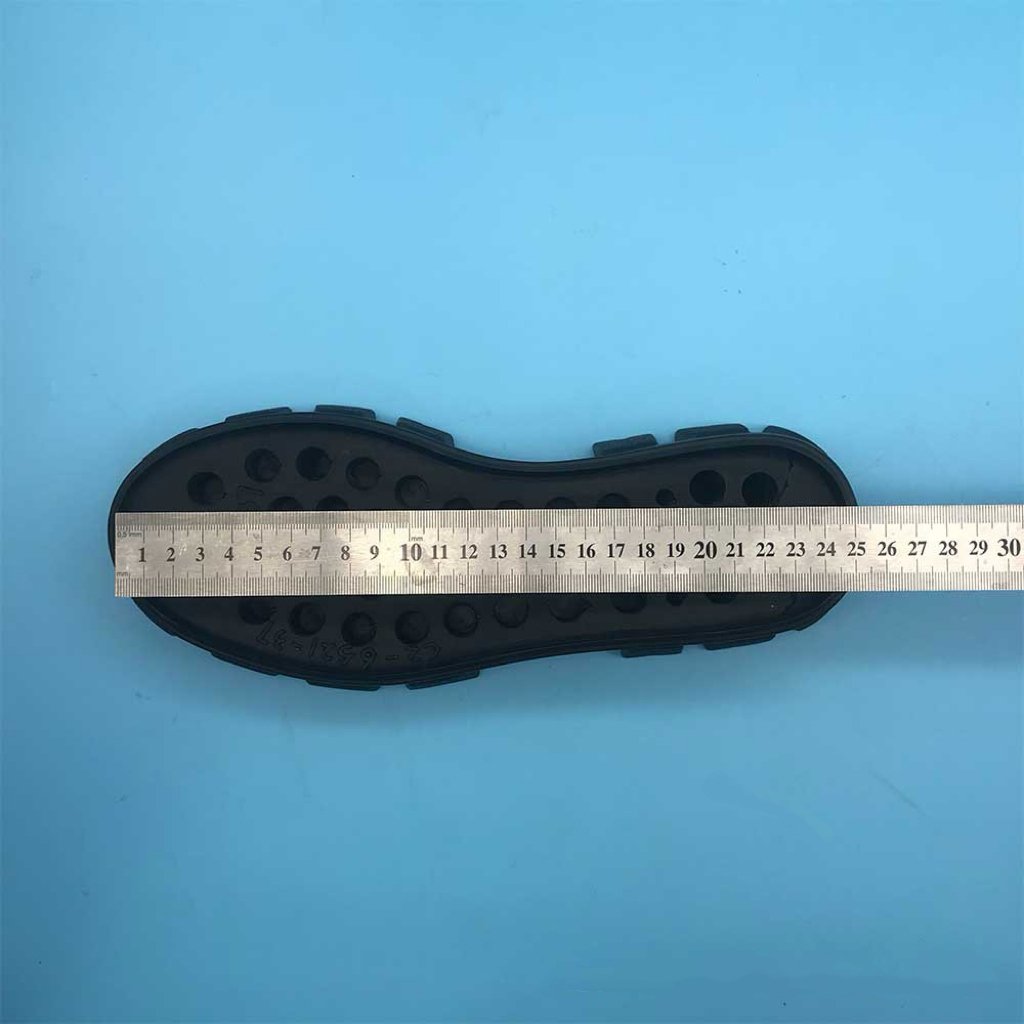

Upgrade of Core Technical Capabilities, Comprehensive Expansion of Domestic and Overseas Mid-to-High-End Markets
The upgraded production line features an environmentally friendly design with a water-based release agent and a low-energy consumption constant temperature molding system, and the production process fully complies with the EU REACH, ROHS and other environmental regulations, completely breaking the compliance barrier for the brand’s expansion into the overseas high-end market. Meanwhile, the intelligent and standardized polyurethane shoe sole production system with the XCXZ Series equipment as the core has laid a solid technical foundation for the brand’s subsequent R&D of innovative products such as intelligent temperature-sensitive shoe soles and high-elasticity lightweight shoe soles. At present, the proportion of overseas sales of the brand’s mid-to-high-end finished shoes has increased to 35%, successfully opening up the high-end footwear markets in Europe, America, Southeast Asia and other regions.


