












目次
Manufacturing KPU shoe uppers requires a highly integrated Cast Polyurethane (CPU) turnkey production line. KPU technology directly transfers the exceptional physical properties of polyurethane onto shoe upper textiles, drastically enhancing tear resistance and folding longevity. Haifeng Polyurethane Machinery provides a comprehensive EPC+M+O (Engineering, Procurement, Construction + Management + Operation) solution. From fully automatic PU casting machines that eliminate mixing ratio errors and double-insurance vacuum degassing systems that guarantee a bubble-free finish, to multi-station seamless heat pressing machines, we deliver end-to-end results. Whether you are leveraging our client ecosystem to purchase finished KPU uppers directly, or building a factory from the ground up, we ensure your production achieves and maintains a 98% yield rate, empowering you to dominate the athletic and safety footwear markets.
Introduction: Global Footwear Supply Chain Restructuring and the Rise of KPU Technology
In the evolutionary history of the global footwear industry, every major leap in the supply chain has been accompanied by a deep integration of materials science and automation technology. For decades, traditional footwear manufacturing has been heavily stigmatized as a “labor-intensive” industry. This is particularly true for traditional shoe upper manufacturing, which historically required navigating dozens of cumbersome processes including cutting, stitching, laminating, and finishing. The dense arrangement of manual labor in stitching rooms not only skyrockets management and operational costs but also rigidly caps product consistency and production volume based entirely on worker proficiency.
As the global demographic dividend of cheap labor fades, and as international brands enforce draconian “zero-defect” quality control standards, a manufacturing revolution focused on streamlining processes and enhancing the macromolecular physical properties of products has become an absolute necessity.
Against this backdrop, the KPU integrated molding technology—which originated in China around 2008—has undergone more than a decade of relentless heavy-industrial iteration, fundamentally disrupting traditional footwear manufacturing logic. KPU represents far more than just the application of a new synthetic material; it embodies a modernized manufacturing philosophy that directly integrates “chemical reactions into the mechanical molding assembly line.”
Today, international benchmark athletic brands such as Nike, Adidas, and Anta utilize KPU technology in their flagship running and basketball shoe lineups to sculpt highly futuristic, 3D support structures. Furthermore, in the safety shoe and industrial work boot sectors—where technical barriers and safety regulations are exponentially higher—KPU has become the irreplaceable mainstream solution in the European and North American markets due to the extreme protective capabilities provided by its seamless, integrated structure.
However, for multinational investors or footwear factory managers attempting to transition their production lines, executing a KPU turnkey project is not as simple as purchasing a few hydraulic presses. It requires conquering multi-dimensional technical barriers spanning heavy machinery, CNC mold design, and high-polymer chemical formulations. Grounded in decades of polyurethane equipment engineering, this guide will comprehensively deconstruct the core processes of KPU production from a hardcore engineering perspective, providing you with a highly actionable EPC+M+O turnkey factory blueprint.
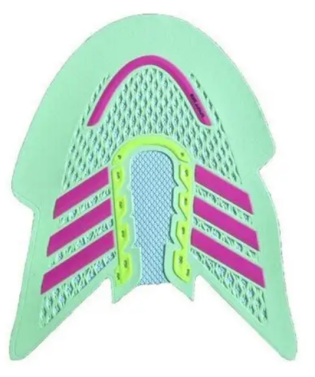
Figure 1. KPU Shoe Uppers
1.What is a KPU Shoe Upper? (A Panoramic Technical Perspective)
To correctly configure the core hardware of a KPU production line, one must first look through the underlying logic of polymer materials to clearly understand its technical essence. Many entry-level investors easily confuse KPU with the more common TPU (Thermoplastic Polyurethane), a misconception that leads to catastrophic directional errors in equipment procurement.
1.1 The Underlying Chemical Reaction Mechanism: Thermosetting CPU System
From the perspective of materials science classification, KPU belongs to a highly specialized, modified branch of Cast Polyurethane (CPU) applied to the footwear industry. The molding process of KPU is not a simple physical change in state; it is an irreversible Chemical Cross-linking reaction.
- The Reactive Components: During production, Component A (primarily composed of polyether or polyester polyols and prepolymers) and Component B (isocyanate curing agents and specialized catalysts) are maintained in a liquid state at room or medium temperatures.
- The Dosing Logic: Depending on the specific requirements for rigidity, elasticity, and tensile strength dictated by the shoe design, the mass ratio of the A and B materials is typically strictly controlled between 100:40 and 100:60.
- The Cross-linking Process: Once the two liquid components are precisely metered and mixed together, a rapid polyurethane reaction occurs between the isocyanate groups (-NCO) and the hydroxyl groups (-OH) under the action of the catalyst. The molecular chains rapidly extend and cross-link with one another, transforming from a linear structure into a three-dimensional Thermosetting Network (Thermosetting Matrix).
1.2 Molecular-Level Adhesion: Liquid Wetting vs. Physical Melting
This chemical reality highlights the fundamental difference in process performance between KPU and standard TPU patches:
- The TPU Process (Physical Injection/Calendering): TPU is a thermoplastic elastomer. TPU shoe uppers typically involve melting already-cured TPU pellets at high temperatures inside an injection molding machine, and then relying on immense physical pressure to extrude and stick the melted plastic onto the mesh fabric. This is a “solid-liquid-solid” physical cooling and bonding process. The molecular chains cannot truly penetrate the tight textile fibers. Under long-term dynamic bending, TPU patches are highly susceptible to physical delamination (peeling and ungluing).
- The KPU Process (Liquid Chemical Casting): The liquid KPU mixture is poured into an engraved mold before it has fully cured. At this specific stage, its molecules are in a low-viscosity, free-flowing liquid state, possessing extraordinary surface wettability. When this liquid comes into contact with the underlying fly-knit fabric or high-strength mesh, the liquid resin completely envelops and permeates into the microscopic gaps between every single textile fiber. Subsequently, under the high temperature and immense pressure of a seamless heat press, the chemical cross-linking reaction achieves completion inside the fibers. This “in-situ curing” realizes molecular-level mechanical interlocking and chemical bonding, resulting in a peel strength that vastly exceeds industry testing standards.
1.3 Extreme Physical Data: Dynamic Fatigue and Weather Resistance
This unique thermosetting, three-dimensional network molecular structure grants KPU shoe uppers extreme physical durability:
- Dynamic Bending Lifespan: On standard footwear flexing testers (such as the ISO 17707 flex test), traditional synthetic leather or PVC materials often develop severe fatigue cracks after just 30,000 to 40,000 flexes. In stark contrast, KPU material engineered through optimized chemical formulas can easily pass over 200,000 continuous bending cycles without exhibiting any cracking or substrate detachment.
- Extreme Weather Resistance (Cold-Climate Flexibility): Many athletic and safety shoes become noticeably stiff and brittle when temperatures plummet in winter. This occurs because the material’s glass transition temperature (Tg) is too high. KPU, through precise formulation adjustments, maintains an extremely low temperature sensitivity to hardness. Even in freezing environments of -20°C, its molecular chains retain flexible segmental motion. It does not harden, and it does not shatter, making it exceptionally suited for northern frigid regions or extreme outdoor industrial environments.
2. What Can We Offer?
At Haifeng, we don’t just sell equipment; we sell a proven business model. Understand your vision by contacting us for a consultation.
Direct Sourcing of Finished KPU Shoe Uppers (Asset-Light Startup)
If you prefer to start with an asset-light business model to test market reactions, you do not need to invest heavy capital to build a factory on day one. Haifeng possesses a massive, high-quality client ecosystem network in core footwear manufacturing hubs, including Fujian and Dongguan in China, as well as emerging overseas manufacturing centers like Vietnam. By utilizing our ecosystem of factories that exclusively operate Haifeng equipment, you simply need to submit your design drawings and requirements. We can directly provide you with a one-stop delivery service, taking you from rapid prototyping and performance testing to massive, standardized bulk production.
Building a High-Standard Factory from 0 to 1 (Rapid Process Landing)
If you are aiming to establish your own KPU manufacturing barriers, we provide much more than just mechanical hardware. The actual production of KPU involves a highly sensitive and complex chemical system. Haifeng will directly deliver practical “results” in core chemical sectors—including the exact A/B material formulation and precise ratio calibration, the logical selection of applicable release agents, and the perfect matching of high-color-fastness pigments. Our senior technical team will dive deep into your workshop, providing hands-on operational training to your workers. We ensure that the complex chemical workflow takes root in your factory rapidly, helping you completely bypass the long and expensive trial-and-error phase.
For established manufacturers, Haifeng provides modular upgrades to modernize existing lines, integrating robotic handling, carousel automation, and closed-loop metering for Industry 4.0 standards.
3. How to Start a High-Profit KPU Factory? (The EPC+M+O Core Equipment Checklist)
To build a world-class KPU production line capable of sustaining an exceptionally high yield rate of over 98%, your factory must strictly follow battle-tested industrial workflows and deploy highly specialized equipment. Here is the definitive checklist:
3.1 Raw Material Dosing & Mixing (The Life-or-Death Battle Between Manual and Auto)
The most primitive KPU production processes often rely on handheld stirring machines and manual pouring, with operators using stopwatches to control volume. However, manual operation contains fatal flaws in chemical production: the A/B chemical ratio (100:40 to 100:60) is extremely prone to human error, and violent manual stirring relentlessly whips massive amounts of ambient air into the liquid mixture. This directly causes entire batches to suffer from localized non-curing, permanent stickiness, or surfaces riddled with micro-pores.
Therefore, for modern, large-scale factories, we Highly Recommend investing directly in a Fully Automatic Polyurethane Casting Machine. Automatic equipment utilizes servo-driven high-precision metering pumps to achieve millimeter-level, zero-drift chemical dosing and dynamic mixing. When evaluating overall yield rates and multi-batch product consistency, automated machinery represents a dimensional strike against manual labor. The seemingly higher initial Capital Expenditure (CAPEX) is rapidly recouped through drastically lower chemical waste and near-zero scrap rates post-production.
3.2 The "Double-Insurance" Vacuum Degassing System (The Secret to a 98% Yield)
To completely eradicate hidden air bubbles, water blisters, and surface defects on the shoe upper, Haifeng mandates a strict “Double-Insurance” vacuum mechanism within the production workflow. This is the highest standard in the industry:
- The First Insurance (In-Tank Degassing): Deep, continuous vacuum degassing is conducted directly inside the constant-temperature material tanks of the PU casting machine. This cuts off the problem at the source by extracting micro-bubbles inherent in the raw chemical liquids.
- The Second Insurance (Vacuum Box Secondary Degassing): Immediately after the machine completes pouring the mixture into the mold, the operator must place the mold into a dedicated external vacuum box for a crucial secondary degassing cycle. Here, we recommend the classic two-stage vacuum method: apply the first vacuum for 7-8 seconds and quickly release, immediately followed by a second vacuum cycle for 10-15 seconds. This two-pronged, “tank + vacuum box” approach is the absolute core process for eliminating the source of defects, achieving a mirror-like perfect finish, and pushing the yield rate past 98%.
3.3 Conveyor Tunnel Oven for Initial Curing (Leveling & Curing)
Once the molds have passed through the double vacuum degassing phase, they are smoothly transferred onto a conveyor tunnel oven. The transit time is precisely calibrated to last between 3 to 5 minutes. During this highly specific thermodynamic window, the liquid KPU resin fully levels out and initiates the preliminary chemical cross-linking reaction, preparing the material for the final violent heat pressing stage.
3.4 Multi-Station Seamless High-Temperature Heat Pressing
The molds are then fed into the KPU shoe upper heat pressing machine for a high-temperature cycle lasting 5 to 7 minutes. This is the most physically oppressive link in the entire production process. The equipment unleashes dozens of tons of immense clamping force. Supported by high heat, this force drives the semi-cured KPU resin deep into the innermost fibers of the fly-knit or mesh fabric. This is not merely physical compression; behind the scenes, it is a permanent chemical fusion. Once bonded at this stage, the KPU and the underlying textile grow together as a single entity—making delamination completely impossible unless the fabric itself is torn to shreds.
3.5 Mold Material Strategy & Maintenance (Why You MUST Buy a Sandblasting Machine)
Based on design requirements, factories must use CNC (Computer Numerical Control) machines to engrave metal molds. At this stage, the choice of mold material has a decisive impact on its operational lifespan during mass production. Many factory owners, eager to compress initial CAPEX, opt for cheap, low-hardness metals. However, in daily production, molds must endure the continuous, high-tonnage abrasion of hydraulic presses and the repeated chemical corrosion of release agents. Cheap molds easily deform or develop surface pitting, causing post-production Operational Expenditure (OPEX)—repairing, replacing, and maintaining molds—to skyrocket exponentially.
This is a classic commercial battle between “early one-time investment and long-term post-production maintenance costs.” In addition to advising you to select high-hardness, wear-resistant mold materials, we strongly demand that a Sandblasting Machine be a standard fixture in your factory. Utilizing a sandblasting machine for regular mold surface descaling, removing stubborn release agent buildup, and refurbishing the molds will fundamentally multiply the lifespan of your tooling, saving you tens of thousands of dollars in hidden annual expenses.
4. Key Features of a Microcellular PU Elastomer Casting Machine
To maintain automotive-grade precision in footwear manufacturing, Haifeng’s KPU casting systems are engineered with several critical industrial features:
- Servo-Driven Dosing Precision: The machine utilizes high-precision gear pumps driven by servo motors. This ensures the highly sensitive 100:40 to 100:60 cross-linking ratio remains perfectly stable, completely preventing the “sticky, uncured spots” that plague low-end machines.
- Integrated Constant Temperature Control: Polyurethane viscosity is highly sensitive to ambient temperature. Our tanks feature intelligent heating and preservation jackets to keep the raw materials at the optimal 50°C-60°C flow state, ensuring smooth winter production.
- Multi-Station Independent Control: For the heat pressing stage, our machines offer multi-station configurations (e.g., 4, 6, 8, or 12 independent stations). Each station features independent temperature and timer controls, allowing a factory to simultaneously produce men’s large sizes and women’s small sizes on the same machine without thermal interference.
- Automated Double-Vacuum Integration: The casting machine seamlessly integrates the first stage of the “double-insurance” vacuum directly into the mixing tanks, synchronizing with the external vacuum box to guarantee a 100% bubble-free resin output.
5. Operating Tips for Consistent Quality
-
Based on decades of field experience, consistent quality in KPU production relies heavily on the execution of “invisible” chemical and physical variables:
- Strict Vacuum Timing Protocol: Never rush the degassing phase. Operators must strictly adhere to the two-stage external vacuum protocol: an initial pull for 7-8 seconds (followed by a quick release to pop surface bubbles), immediately followed by a deeper pull for 10-15 seconds.
- Thermal Synchronization: The temperature of the raw material heating oven and the KPU heat press must be perfectly synchronized. If the mold is too cold or the oven time (3-5 minutes) is cut short, the KPU resin will not level properly, leading to weak fiber penetration and eventual delamination.
- Release Agent Discipline: Apply the mold release agent evenly but sparingly. Over-spraying will cause chemical residue buildup in the CNC mold’s micro-textures, which will eventually dull the sharp 3D visual effects of the finished KPU shoe upper.
6. Common Buying Mistakes
-
- Confusing KPU with TPU (The Machinery Trap): The most catastrophic mistake a buyer can make is treating KPU (a thermosetting CPU liquid) like TPU (a thermoplastic solid). Purchasing a standard physical injection molding machine for a KPU project will completely halt your production on day one. KPU requires specialized Polyurethane Casting Equipment.
- Skipping the Vacuum Box: To save on initial CAPEX, some factory owners omit the secondary vacuum box. This “cost-saving” measure always results in devastatingly high defect rates. A single batch of ruined uppers due to trapped air bubbles will cost more than the vacuum equipment itself.
- Neglecting the Sandblasting Machine: As mentioned in our tooling strategy, failing to invest in a basic sandblasting machine means your expensive CNC molds will quickly degrade from release agent corrosion, forcing you into an endless cycle of costly mold replacements.
7. Plan for Future Expansion
Haifeng designs its KPU turnkey plants with extreme modularity, ensuring your factory can scale seamlessly as your market share grows:
- From Manual Pouring to Robotic Dispensing: As demand scales, you can upgrade your line by integrating automated robotic dispensing arms (XYZ CNC pouring). This eliminates manual pouring variations, significantly reducing material waste and labor costs.
- Product Line Diversification: The KPU infrastructure is incredibly versatile. With minimal adjustments to the molds and chemical formulas, your shoe upper factory can easily expand into producing high-margin KPU safety knee pads, impact-resistant industrial gloves, or even advanced protective gear for extreme sports.
Conclusion
The manufacturing of KPU shoe uppers is by no means simple physical processing; it is a “dual symphony” merging extreme mechanical precision with rigorous chemical formulation. If you are determined to enter this high-profit, high-technical-barrier premium market, you need a strategic partner capable of orchestrating the entire board. Choosing our EPC+M+O turnkey project means you are not only purchasing hardware at the pinnacle of the industry; you are inheriting decades of proven process data and a massive OEM ecological network. Partner with us, and you will completely bypass the abyss of trial and error, securing a decisive victory in the global race of modern, high-end footwear manufacturing.
Video Resource
FAQ
What is the fundamental difference between KPU shoe uppers and traditional Sublimation heat transfer printing?
Sublimation heat transfer is merely a flat, 2D dyeing technology. The shoe upper feels completely flat to the touch and provides absolutely no structural protection aside from altering the color. In contrast, the KPU casting process creates a three-dimensional, 3D resin structure. It not only grants the upper striking visual depth and a muscular aesthetic but, more importantly, acts as a tough exoskeleton, providing the foot with robust lateral support and superior anti-abrasion protection.
Why are modern heavy-duty Safety Shoes increasingly relying on KPU materials?
This is dictated by the extreme hostility of heavy industrial environments. Safety shoes must not only provide anti-smash and anti-puncture capabilities but must also constantly withstand acidic and alkaline liquids and heavy oil stains on the workshop floor. KPU material easily passes the rigorous European EN ISO 20345 safety testing standards. Furthermore, its integrated, seamless molding process directly eliminates traditional stitching lines. This completely resolves the fatal physical flaw of traditional safety shoes, which are highly prone to thread rot, ungluing, and splitting open in harsh environments.
Faced with such a complex turnkey assembly line, how are your installation and after-sales services executed?
Delivering the machinery is merely the starting point of our service. We provide comprehensive, English-language workshop layout plans and electrical wiring diagrams. Once the equipment arrives at your port, we dispatch senior engineers with extensive practical experience to your country to conduct full-line installation and deep commissioning. Crucially, these engineers will provide hands-on, intensive training to your workers on chemical ratio operation, vacuum timing control, and temperature calibration. This entire on-site integration process typically lasts for 7 days, ensuring your factory can immediately launch independent, high-yield mass production.

浙江海豊自動化設備有限公司 営業・マーケティング担当副社長
- Member of the Polyurethane Equipment Professional Committee, China Polyurethane Industry Association
- Member of the Expert Committee on Footwear and Apparel Equipment, China Leather Association
- Executive Vice President, Wenzhou Footwear Machinery Chamber of Commerce, China


