








Foam Spray vs Industrial PU Foaming Equipment: Complete Selection Guide for Engineering & Mass Production
The core difference between foam spray and industrial PU foaming equipment is the distinction between a "material-based tool" and a "process-based system": the former addresses the convenience of temporary repairs, while the latter guarantees 10+ years of consistent performance and stability for large-scale mass production.
1. Technical Fundamentals: Why Foam Spray Cannot Replace Industrial Equipment
The core difference between the two solutions lies in the core control logic of PU foaming: dosing accuracy and mixing uniformity. The performance of PU foam (closed-cell rate, strength, insulation performance, lifespan) is entirely determined by the dosing accuracy of A/B components, mixing uniformity and reaction environment stability.
1.1 Technical Limitations of Foam Spray
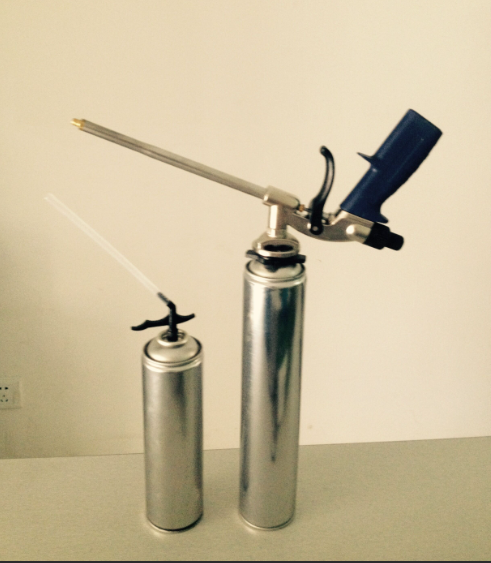
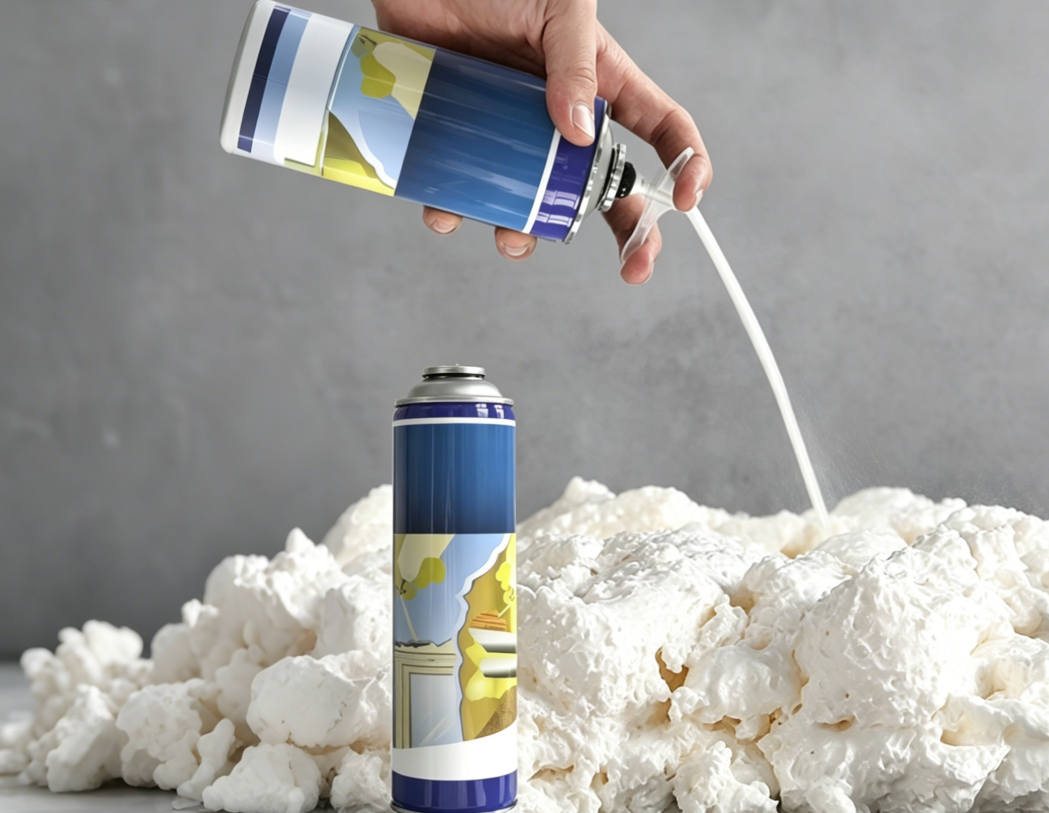
Commercial single or dual-component foam spray is a pre-mixed atmospheric pressure foaming system, with three inherent and insurmountable technical shortcomings:
- Uncontrolled dosing ratio: A/B components are pre-mixed in the can, with no dynamic adjustment based on ambient temperature and humidity. Reaction speed and expansion ratio are completely dependent on environmental conditions, with a density deviation of over 20% caused by only ±5℃ temperature difference
- No high-pressure mixing process: Foam spray is discharged by can pressure, without high-pressure impingement mixing above 150bar. The mixing uniformity of A/B components is less than 60%, resulting in a closed-cell rate of only 30%-50%, with uneven pore size and fragile cell walls
- No process parameter control: There is no monitoring of temperature, pressure or flow rate during the entire foaming process. The performance of foam from each spray varies, making standardized production impossible
1.2 Core Advantages of Industrial-Grade Foaming Equipment
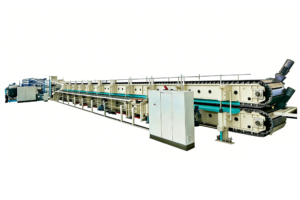
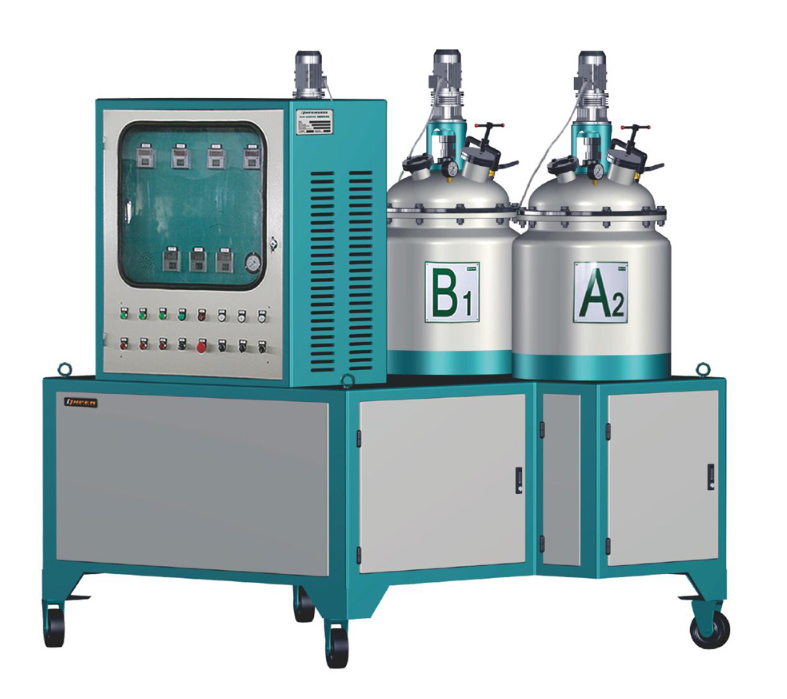
Industrial-grade PU foaming systems are complete closed-loop process control systems, eliminating all variables in the foaming process at the source:
- High-precision dosing closed-loop: Servo-driven metering pumps control the A/B component ratio within ±0.5%, with automatic dynamic compensation based on ambient temperature and humidity, and full closed-loop control throughout the process
- High-pressure impingement mixing technology: 150-200bar high-pressure impingement mixing inside the mixing head achieves ≥99% mixing uniformity of A/B components, resulting in a closed-cell rate of ≥90%, which can be increased to over 95% with supercritical technology
- Real-time full parameter control: The equipment monitors all core parameters in real time, including material temperature, pipeline temperature, mixing pressure, flow rate and discharge volume. All data is traceable and replicable, enabling 100% standardized production
2. Engineering Scenarios: The Real Gap Between 1-Year Failure and 5-Year Zero Degradation
In building insulation, cold chain storage, pipeline anti-corrosion and other engineering scenarios, the long-term performance stability of foam is the core assessment indicator, and also the scenario where foam spray is most likely to expose its shortcomings.
Real Pitfall Case: Million-Dollar Rework Loss in Cold Chain Storage
A large domestic cold chain storage contractor used a large amount of commercial foam spray for filling wall joints and pipeline gaps in cold storage construction, in order to shorten the construction period and reduce initial costs.
- Acceptance phase: The foam appeared full with no obvious gaps, and the project passed acceptance smoothly
- After 12 months of operation: Under repeated thermal cycling between -18℃ and room temperature, the fragile cell walls of the spray foam ruptured in large quantities, and the closed-cell structure failed. The thermal conductivity of the insulation layer soared from the initial 0.038 W/(m·K) to 0.065 W/(m·K), resulting in a 42% increase in refrigeration energy consumption, with condensation and icing in local areas
- Final loss: The entire insulation layer of the project was completely removed and reworked, with total direct material, labor and downtime losses exceeding 1.2 million RMB, along with liquidated damages for project delay
Industrial Solution Implementation: 5-Year Zero-Degradation Supercritical Foaming Process
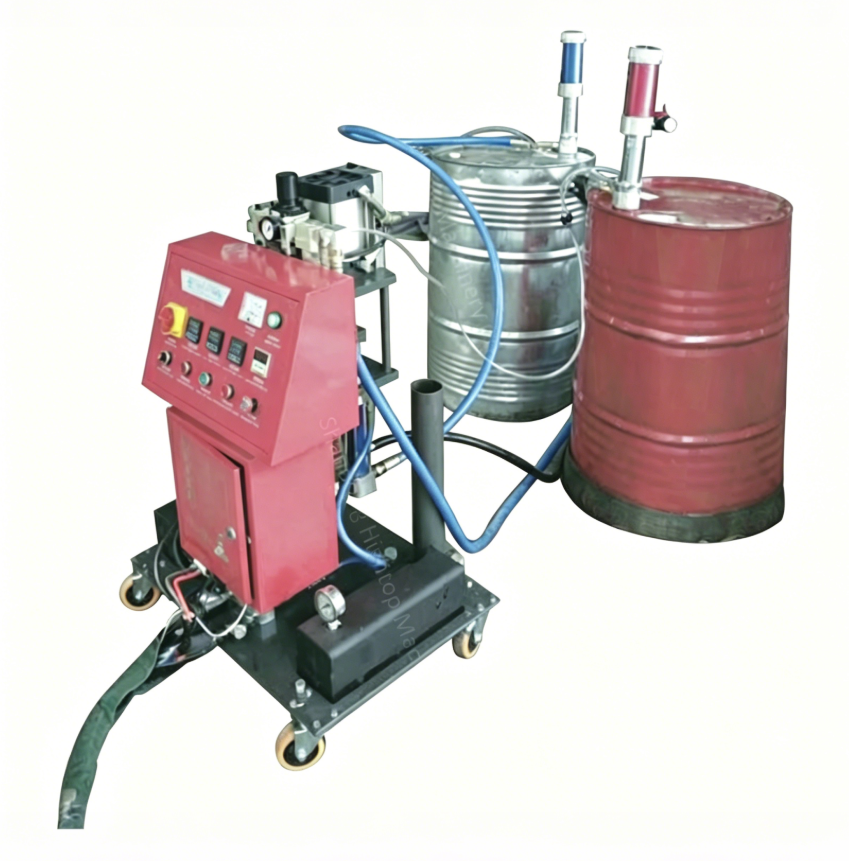
Driven by industry trends of green manufacturing and building energy efficiency, Haifeng Polyurethane Machinery introduced industrial high-pressure spray and injection equipment equipped with CO₂ supercritical foaming technology to a leading insulation material manufacturer in Hebei, providing insulation layer construction solutions for multiple large-scale cold chain projects in China.
- Core technology: Utilizing the strong penetration and uniform nucleation characteristics of supercritical CO₂ fluid, completely eliminating traditional HCFC blowing agents, and generating a nano-scale, highly uniform dense closed-cell structure with a closed-cell rate of ≥95%
- Performance data: Initial thermal conductivity of foam ≤0.022 W/(m·K), dimensional stability ≤0.5% (cycling from -30℃ to 70℃), compressive strength ≥200kPa
- Long-term verification: 5 years after project completion, third-party authoritative testing confirmed that the attenuation rate of thermal conductivity, dimensional stability and compressive strength of the insulation layer is ≤1%, with no cracking, shrinkage or cold leakage, fully complying with GB 50176 and ISO 14801 standards for PU insulation materials
3. Mass Production Scenarios: The Essential Difference Between Black-Box Out-of-Control and Full-Process Traceability
In factory mass production scenarios such as shoe materials, automotive interiors, insulation panels and buffer parts, the traceability, consistency and yield control of the foaming process directly determine the profitability of the factory.
Mass Production Pitfall Case: 30% Scrap Rate Caused by Human Variables
A domestic automotive interior parts factory initially used simple foaming machines for mass production of PU buffer blocks. 3 months after commissioning, the scrap rate remained between 28% and 32%, with no solution.
- Core problem: The equipment had no parameter locking or traceability function. Night shift operators secretly increased the pipeline temperature by 15℃ and adjusted the A/B component ratio to increase output. When batch defects occurred, there was no process data to trace, making it impossible to locate the root cause, resulting in full batch scrapping
- Hidden cost: The monthly raw material scrap loss alone exceeded 150,000 RMB, along with quality complaints and order deductions from the OEM
Industrial Solution Implementation: MES Full Traceability and Permission Control System
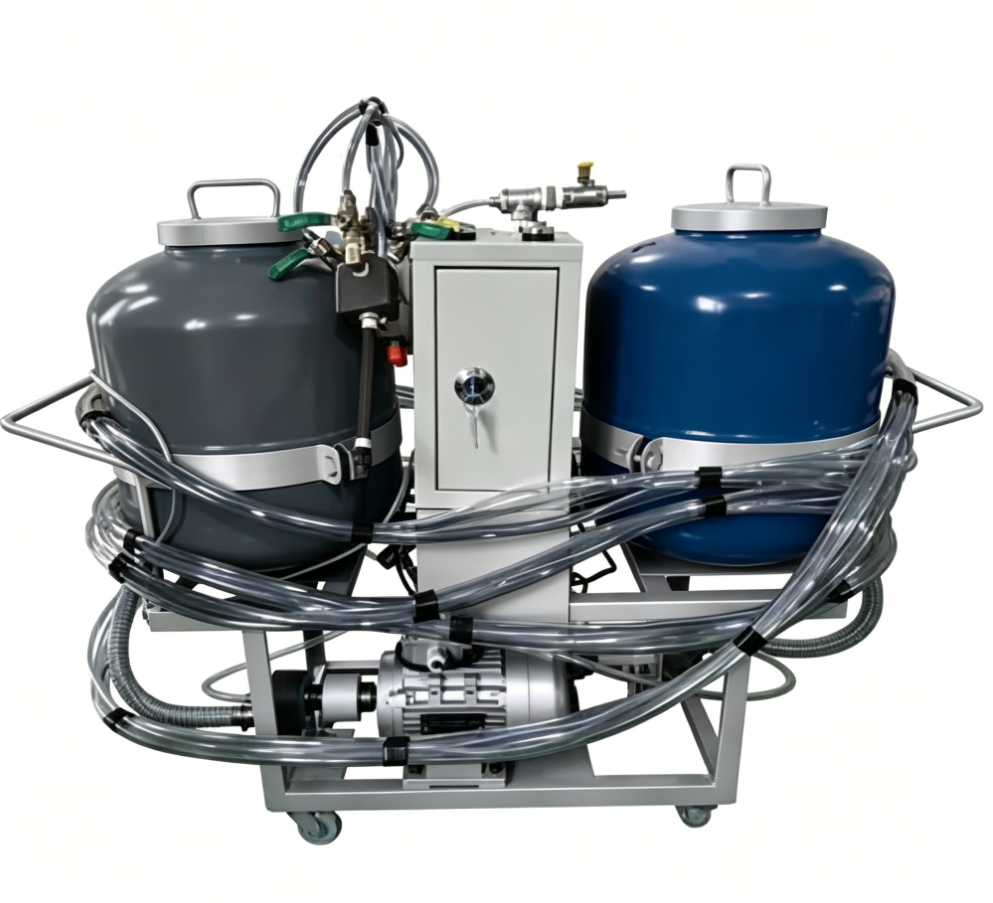
Haifeng's industrial foaming systems eliminate black-box operations and human variables in the mass production process at the source:
- Full-process data traceability: The equipment is seamlessly connected to the factory's MES system through the underlying PLC. The A/B material flow rate, discharge pressure, temperature of each zone and cycle time of each injection generate a unique digital tag for permanent storage, enabling full-process traceability through product barcodes, with problem positioning accuracy up to 0.1 seconds
- Three-level permission control system: The system is equipped with a strict permission matrix. Front-line operators can only operate the "Start/Stop" buttons; team leaders can only adjust conventional production parameters; all core parameters such as formula ratio, pressure threshold and temperature curve can only be modified by the plant manager, process supervisor and Haifeng remote operation and maintenance center, preventing human tampering from both hardware and software levels
- Implementation results: After the factory introduced the equipment, the mass production yield increased from 68% to 99.2%, the monthly raw material scrap loss dropped to less than 8,000 RMB, and the factory successfully passed the IATF 16949 automotive quality management system certification
4. Full-Dimension Quantitative Comparison Matrix
To more intuitively demonstrate the differences between the two solutions, the Haifeng engineering team has compiled a full-dimension quantitative comparison table:
| Evaluation Dimension | Canned Foam Spray / Simple Foaming Tools | Haifeng Industrial Foaming Systems |
|---|---|---|
| Core Positioning | Temporary repairs, small-scale non-structural filling | Core equipment for long-term stable mass production and precision turnkey projects |
| 投与精度 | No control, deviation over ±20% | Servo closed-loop control, deviation within ±0.5% |
| Mixing Method | Atmospheric discharge, mixing uniformity <60% | 150-200bar high-pressure impingement mixing, uniformity ≥99% |
| Closed-Cell Rate | 30%-50% | ≥90% for conventional process, ≥95% for supercritical process |
| Long-Term Performance Lifespan | Cell rupture, shrinkage and performance degradation within 1-2 years | Performance attenuation rate ≤1% for over 5 years, meeting engineering lifetime warranty requirements |
| 温度と圧力のコントロール | None, highly susceptible to environmental influence, severe density drift | Three-layer constant temperature system + dynamic servo pressure compensation, fully closed-loop |
| Data & Permission Management | No data record, no permission control, completely free operation | MES full-process data traceability, three-level permission locking, 100% controllable |
| Compliance | Unable to provide standardized test reports, difficult to meet industry certifications | All processes are traceable, can provide test reports complying with ISO, ASTM and GB standards |
| Full Life Cycle Cost | Extremely low initial cost, extremely high later rework and scrap costs | High initial investment, mass production yield ≥99%, full life cycle cost reduced by more than 60% |
5. Selection Decision Framework: 3 Steps to Choose the Right Solution
The core logic of selecting a foaming solution is not based on initial cost, but on risk tolerance and full life cycle cost. You can make decisions according to the following 3 steps:
- Divide by application scenario: Foam spray can be selected for temporary repairs and small-scale non-structural filling; industrial-grade equipment must be selected for all scenarios involving building compliance, engineering warranty and large-scale mass production
- Divide by performance requirements: Foam spray can be selected when there are no strict requirements for foam strength, insulation performance and lifespan; industrial-grade equipment must be selected when it is necessary to meet industry standards, provide long-term warranty and have high requirements for performance consistency
- Divide by production scale: Simple tools can be selected for small-batch trial production with monthly output less than 50 pieces; for large-scale mass production with monthly output over 500 pieces, the return on investment period of industrial-grade equipment is usually no more than 12 months
6. Frequently Asked Questions
Q1: Can foam spray be used for permanent building insulation projects?
Q2: What is the typical return on investment period for industrial-grade foaming equipment?
Q3: What is the difference between CO₂ supercritical foaming and traditional chemical foaming?
Q4: Can the MES traceability system be connected to my factory's existing ERP system?
7. Conclusion
Choosing a foaming solution essentially means choosing your risk exposure. If the cost of failure is acceptable, you can choose low-cost simple tools. However, if your products involve engineering warranty, industry compliance, large-scale mass production or long-term performance guarantee, using non-industrial equipment is tantamount to burying a time bomb in production and engineering.
Haifeng Polyurethane Machinery has 18 years of experience in the PU foaming equipment industry, providing turnkey solutions for more than 300 factories and engineering contractors worldwide. From equipment customization, process commissioning, personnel training to later operation and maintenance, we fully support your production and engineering throughout the entire process.
If you need to evaluate the upgrade plan of your existing production line, or obtain the equipment configuration and quotation for a specific project, please contact our engineering team, and we will provide you with free process diagnosis and customized solutions.
Need Customized Foaming Equipment Solutions?
Haifeng provides professional industrial foaming systems, process debugging and turnkey engineering services.
View Our Turnkey Solutions