









PU Shoe Sole Foaming: Complete Guide to Defects Troubleshooting & Process Control
This article deeply analyzes the four core "minefields" in PU shoe sole production, provides standardized defect troubleshooting solutions and equipment selection frameworks, helping footwear manufacturers achieve zero-defect mass production.
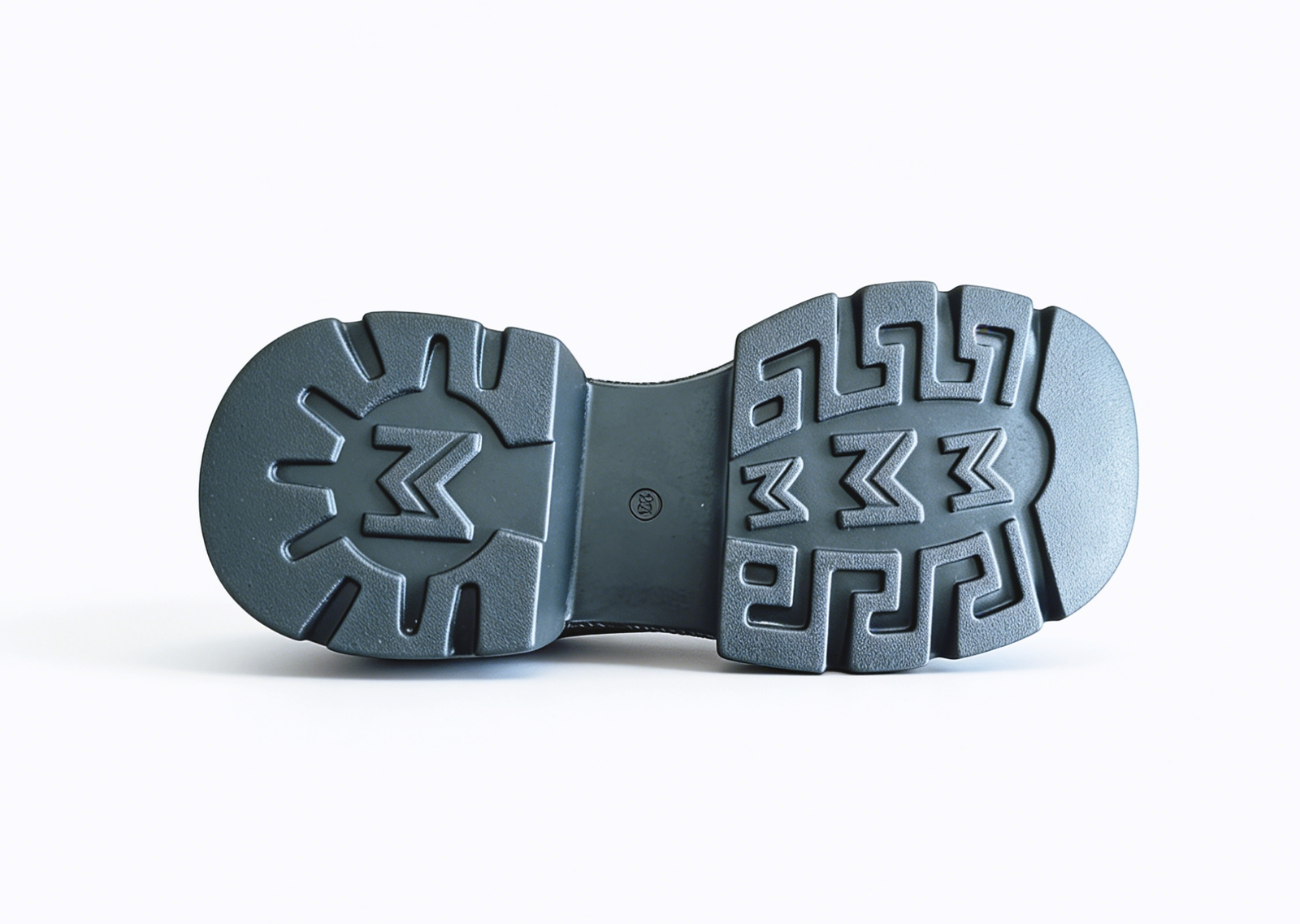
Figure 1: High Performance PU Shoe Sole Finished Product
1. Core Causes of Foaming Defects & Industry Standards
The physical properties of PU shoe soles (density, resilience, hardness, compression set, tear strength) are 100% determined by four core process links: proportioning accuracy, mixing uniformity, mold temperature control and production beat synchronization. Any deviation will directly lead to product scrap.
1.1 Industry Standard Requirements for Shoe Sole Performance
| Product Type | Core Performance Standards |
|---|---|
| Sports Shoes Midsole | Resilience ≥45%, compression set ≤5%, density 0.25-0.45g/cm³, comply with SATRA TM103 |
| Industrial Safety Shoes Outsole | Impact resistance ≥200J, puncture resistance ≥1100N, hardness 55-70 Shore A, comply with EN ISO 20345 |
| Casual Shoes Sole | Tear strength ≥10N/mm, yellowing resistance ≥4 grade, comply with GB/T 3903.3 |
2. Four Core Defect Minefields & Standard Solutions
2.1 Ratio Drift in High-Volume Continuous Production
The stoichiometric ratio of A and B components is the absolute bottom line to ensure the mechanical properties of shoe soles:
- 1% ratio deviation will lead to 15%-20% resilience drop, making the midsole shock absorption function completely invalid
- After 8 hours of continuous production, the ratio deviation of traditional open-loop equipment can reach 3%-5%, leading to batch hardness difference of more than 10 Shore A
Haifeng Standard Solution: Adopt servo-driven closed-loop precision metering system, proportioning accuracy ≤±0.5%, with temperature dynamic compensation function, automatically correct flow errors caused by viscosity changes.
2.2 Micro Mixing Dead Zones and Cross-Contamination
The cell uniformity, tear strength and surface texture of shoe soles are completely determined in the mixing chamber, especially critical for double-density sole production.
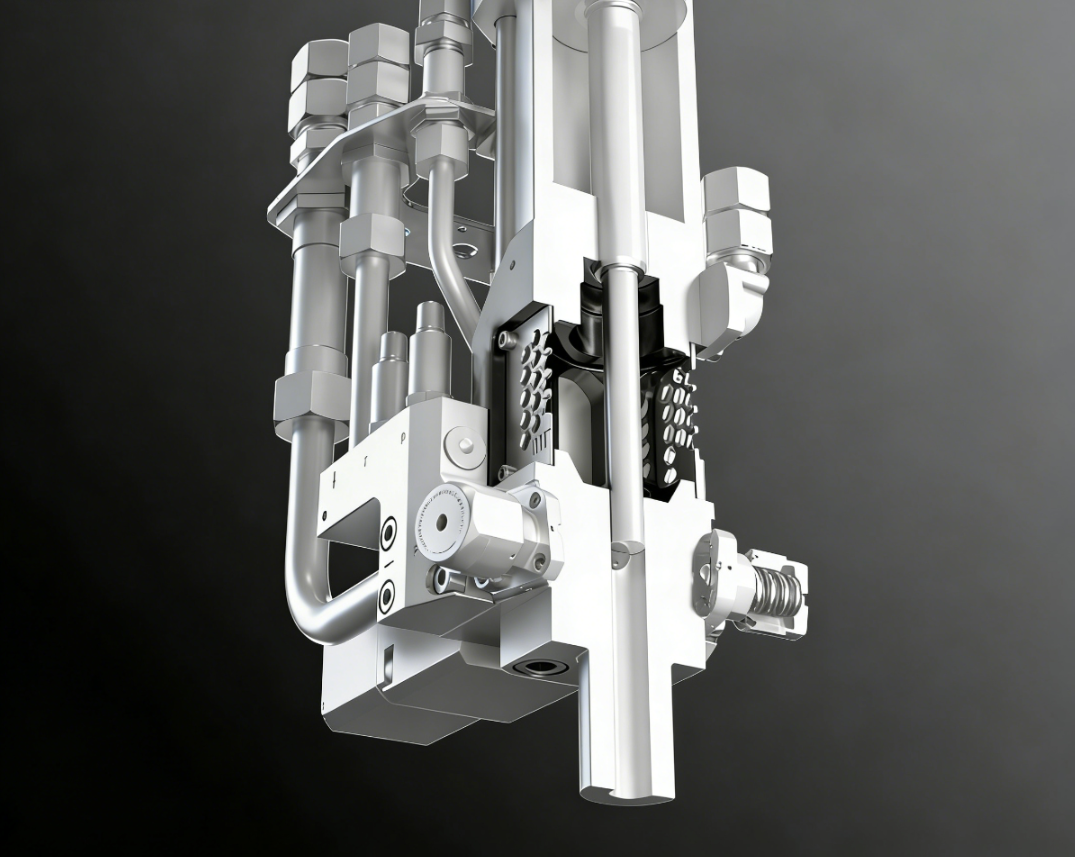
Figure 2: High Shear Dynamic Mixing Head for 99% Mixing Uniformity
Haifeng Standard Solution: Adopt high-shear dynamic mixing head with rotation speed 2000-10000rpm, multi-tooth stirring structure, mixing uniformity ≥99%; quick-cleaning structure, cleaning time ≤10 seconds when switching formulas, completely eliminating cross-contamination.
2.3 Mold Temperature Fluctuation and Skinning Effect
PU foaming is a strong exothermic reaction, extremely sensitive to mold thermal conductivity:
- Too low mold temperature: Premature termination of surface foaming, forming thick dense hard skin with appearance defects
- Too high mold temperature: Material gels too fast, cannot fully fill complex sole patterns, resulting in pores and material shortage
- Temperature difference >3℃ on the same mold leads to inconsistent foaming speed, resulting in sole warpage and deformation
Haifeng Standard Solution: Adopt multi-zone mold temperature machine with temperature control accuracy ≤±1℃, integrated PLC system monitors material temperature throughout the whole process.
2.4 Production Beat Asynchronization
Sole production is a race against time. The cream time counts down from the moment liquid PU is ejected from the mixing head.
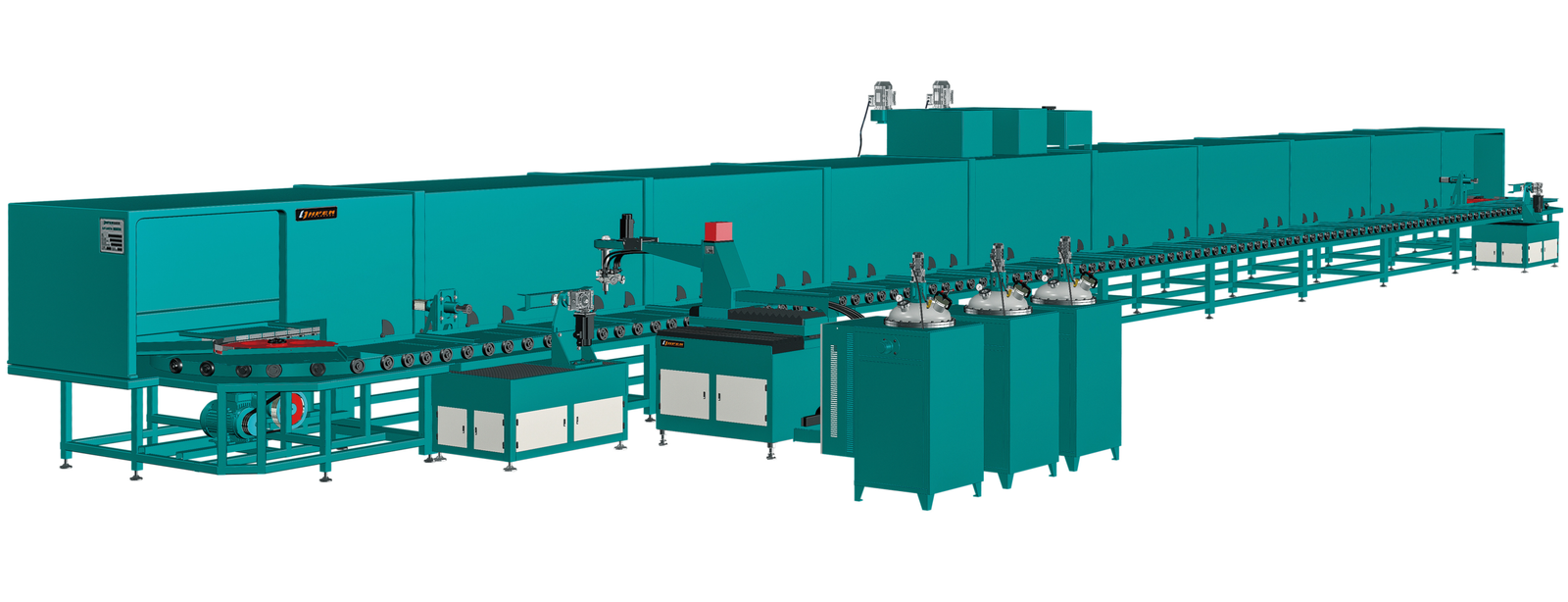
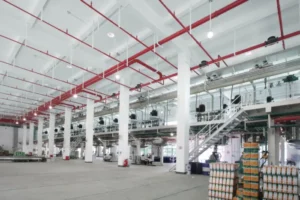
Figure 3: Haifeng Fully Automated PU Shoe Sole Production Line
Haifeng Standard Solution: Upgrade to fully synchronous automated production line, integrate casting unit with multi-axis robot and mold conveyor line, single sole weight tolerance ≤±1g, batch hardness difference ≤±2 Shore A.
3. Standardized Defect Troubleshooting Matrix
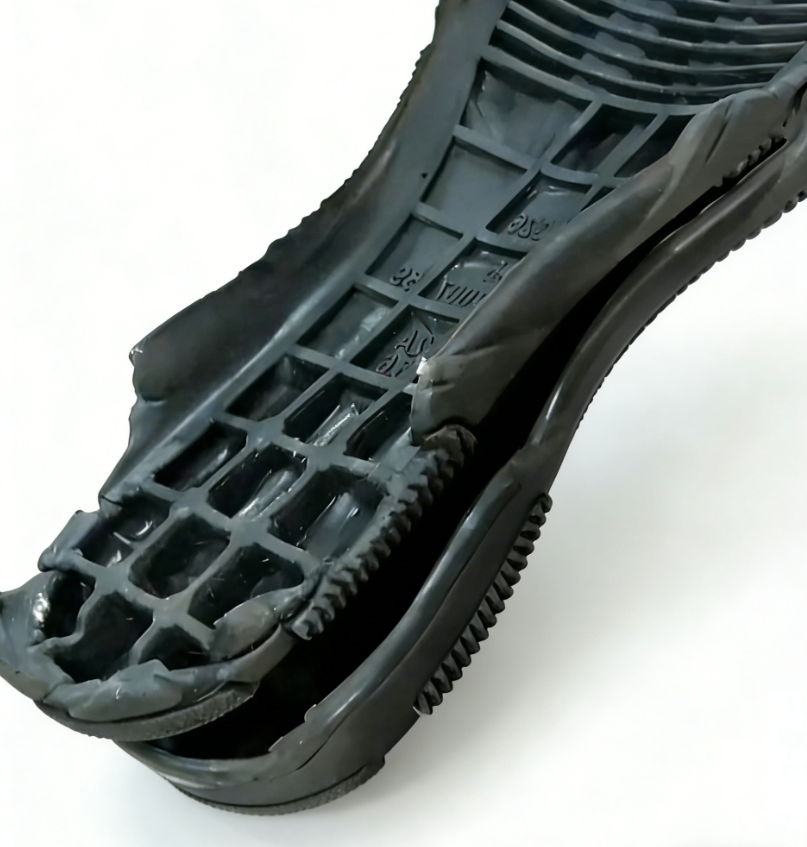
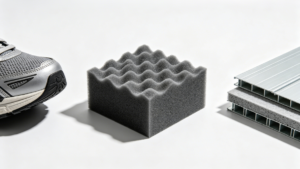
Figure 4: Typical Defects in PU Shoe Sole Production
| Defect Type | Core Root Cause | Standard Solution |
|---|---|---|
| Density drift & hardness inconsistency | Ratio drift, open-loop control without compensation | Adopt servo closed-loop metering; enable temperature dynamic compensation |
| Local voids & soft spots | Insufficient mixing shear force, uneven mixing | Increase mixing head speed; clean mixing chamber regularly |
| Surface hard skin & poor pattern reproduction | Too low mold temperature, too low material temperature | Increase mold temperature to 40-50℃; check mold heating uniformity |
| Internal stress & shrinkage after demolding | Mold closing too late, insufficient curing time | Optimize production beat; extend curing time appropriately |
| Double-density sole delamination | Cross-contamination, curing speed mismatch | Clean mixing head thoroughly; match curing speed of two layers |
| Sole warpage & deformation | Uneven mold temperature, uneven foaming speed | Calibrate mold temperature machine; optimize casting path |
4. PU Shoe Sole Foaming Equipment Selection Guide
4.1 Core Equipment Performance Indicators
When purchasing equipment, focus on the following three core indicators, avoid being misled by superficial parameters:
- Metering accuracy: ≤±0.5% is the basic requirement for stable mass production, higher than this will lead to scrap rate >10%
- Mixing uniformity: ≥99% high-shear mixing is the guarantee of uniform cell structure and performance
- Temperature control accuracy: ≤±1℃ full-chain temperature control, ensuring stable reaction conditions
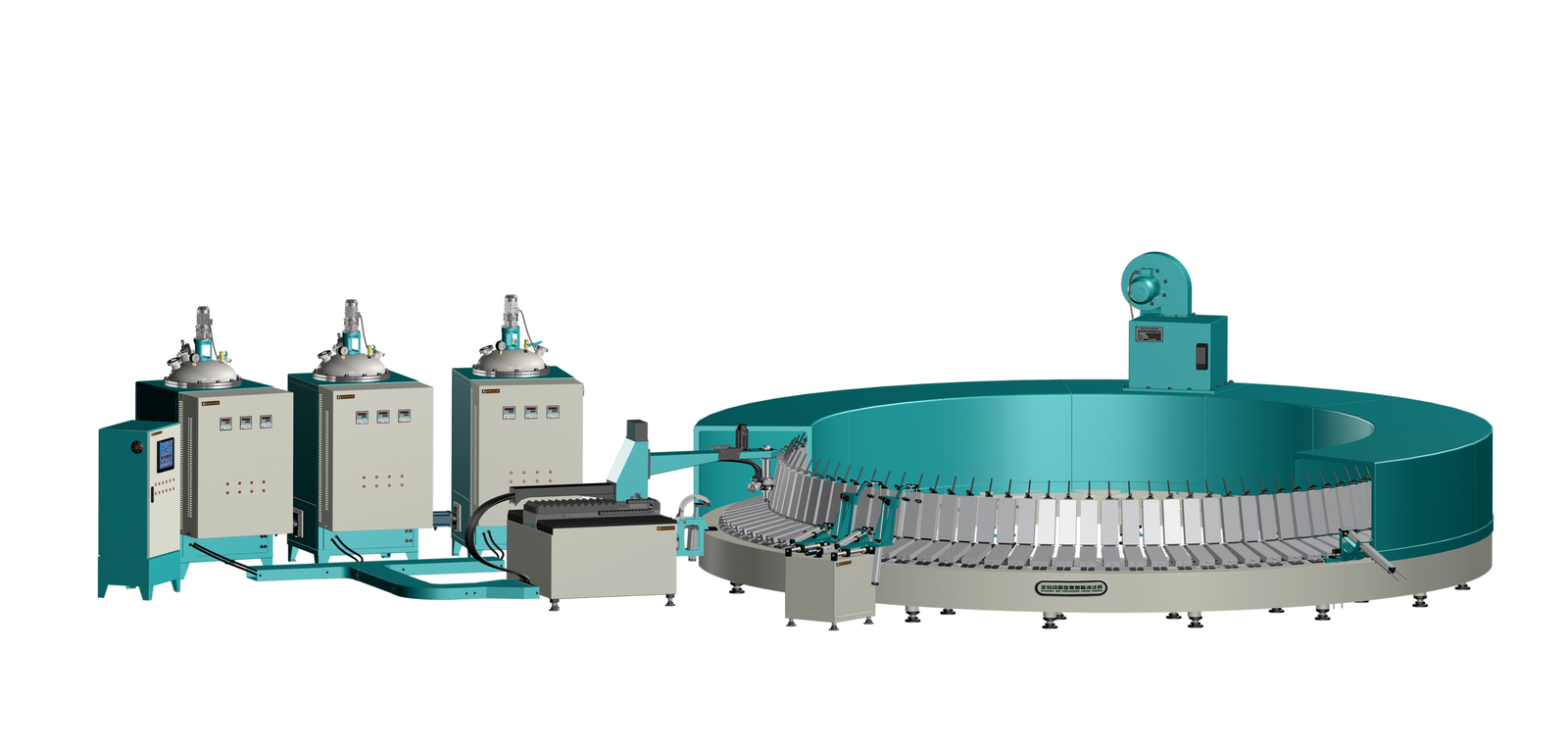
Figure 5: Haifeng Automated Rotary PU Shoe Sole Production Machine
4.2 Selection by Production Scale
| Production Scale | Daily Output | Recommended Equipment Configuration |
|---|---|---|
| Small batch trial production | <500 pairs/day | Small hydraulic drive system, semi-automatic operation |
| Medium batch mass production | 500-2000 pairs/day | Servo drive system, single-density production line |
| Large scale continuous production | >2000 pairs/day | Full servo drive system, double-density fully automated production line with robot |
5. Frequently Asked Questions
Q1: What is the qualified scrap rate for stable PU shoe sole production?
Q2: Can the same equipment produce both single-density and double-density soles?
Q3: How to solve the yellowing problem of white PU shoe soles?
Q4: How to maintain equipment to ensure long-term accuracy stability?
6. Conclusion
Achieving zero-defect production of PU shoe soles does not rely on luck or "magic" formulas, but an engineering discipline that requires absolute control of metering accuracy, dynamic mixing energy, thermodynamic parameters and mechanical synchronization.
Haifeng Polyurethane Machinery has 40 years of experience in PU casting equipment R&D and manufacturing for footwear industry. We provide full-process services from formula debugging, equipment customization, personnel training to after-sales maintenance for global footwear manufacturers. All equipment complies with SATRA, EN ISO and GB industry standards.
Contact our engineering team for free technical diagnosis and customized production line solutions.
Improve Your PU Shoe Sole Production Yield
Professional equipment, process debugging and turnkey production line support.
Get Free Technical Consultation