












目次
Why is producing polyurethane (PU) shoe soles considered the ultimate test of PU casting technology?
Because microcellular elastomers demand exceptionally strict chemical control over A/B material ratios, mold temperatures, and demolding times. In this guide, Haifeng Polyurethane Machinery’s Chief Engineer reveals the unvarnished realities of the workshop floor. From the correct 50-70°C melting process for crystallized B-material (MDI) to the commercial trade-offs between manual Catalyst (C-material) addition and pre-mixed fully formulated polyols. We also dissect the brutal cost battle between low-end toxic solvents (Methylene Chloride/DMF) and Haifeng’s high-end water-based release agents used in top-tier supply chains. Whether you are navigating the global phase-out of 141B blowing agents or fixing daily A/B ratio drift, this guide provides the hardcore engineering data you need for highly profitable footwear production.
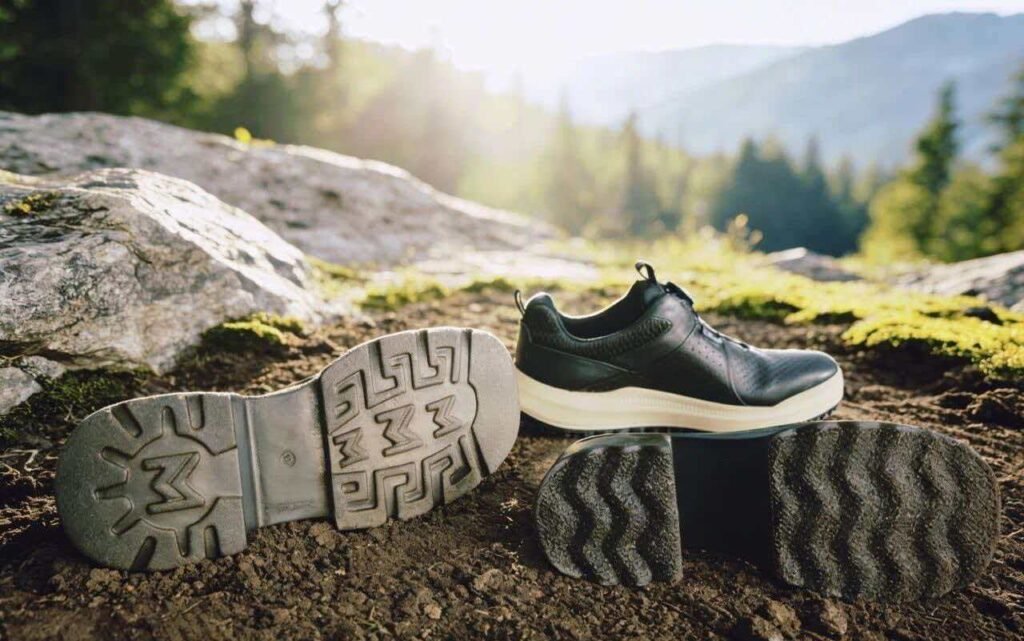
1. Why Are Polyurethane (PU) Shoe Soles the "Hard Bone" of PU Casting?
Many new investors entering the footwear industry assume that buying a casting machine and pouring chemicals into a mold will automatically yield perfect shoe soles. From an engineering perspective, this is a catastrophic misconception.
In the realm of polyurethane manufacturing, a standard two-component PU casting machine can produce flexible foam (sponges) or rigid foam (insulation) with relative ease. These applications primarily utilize TDI or PAPI, which offer a high tolerance for operational errors. However, PU shoe soles are microcellular elastomers, which predominantly rely on an MDI (Methylene Diphenyl Diisocyanate) system. MDI has an extremely narrow operational window and is hyper-sensitive to temperature fluctuations.
Shoe sole production is a highly continuous, fast-paced assembly line operation. It strictly requires the injected liquid material to achieve a very high demolding strength within a brief window of 3 to 5 minutes. Furthermore, because shoe soles are highly visible exterior components, the surface must be absolutely flawless—tolerating zero micro-bubbles, shrinkage, or color deviations. This combination of an ultra-narrow chemical reaction window and draconian aesthetic requirements makes PU shoe sole casting the true “touchstone” of polyurethane craftsmanship.
To conquer this business, you must first completely master your raw materials from the ground up.
2. Core Raw Material Breakdown: The True Workshop Definitions of A, B, and C Materials
During our on-site technical training at Haifeng, we strip away the complex academic jargon and define these three core materials for factory operators in practical, functional terms:
- Component A (Polyol System): Primarily composed of polyester or polyether polyols. We call this the “flesh” of the shoe sole. It dictates the base physical properties: abrasion resistance, flexibility, and overall structural volume.
- Component B (Isocyanate / MDI): Primarily refined MDI (liquefied MDI). In footwear applications, Component B is often pre-reacted with a small amount of Component A, which is why workshop technicians frequently refer to it as a “prepolymer.” This is the “skeleton” of the shoe sole, providing the necessary hardness, tensile strength, and structural rigidity.
- Component C (Catalyst / Additives): These are the reaction accelerators. When ambient temperatures are high and the mold is hot, Component C should be used at its minimum limit to prevent premature curing. Conversely, in freezing winter conditions where the reaction naturally slows down, Component C must be pushed to its maximum limit to maintain production speed.
3. Fatal Workshop Pain Point 1: What to Do When B-Material (MDI) Freezes? (Never Apply Direct Heat)
MDI is a highly temperamental chemical. When the ambient temperature drops below 20°C (depending on the specific chemical formulation), Component B will begin to crystallize and freeze. Crystallized MDI becomes rock-hard. If an operator forcefully attempts to pump it, it will not only block the entire hydraulic pipeline but can instantly shatter the high-precision gear pumps inside your casting machine.
3.1 The Fatal Operational Error
Inexperienced workers, desperate to meet production quotas, often try to melt the frozen barrels by roasting them with open flames or wrapping them in heavy-duty heating blankets pushing temperatures past 100°C. This is a multi-thousand-dollar mistake. When MDI is exposed to temperatures exceeding 80°C, it triggers a violent dimerization reaction. The chemical permanently alters its structure, turning into irreversible, useless solid chunks.
3.2 Haifeng’s Standard Operating Procedure (SOP) & Engineering Solution:
- Static Melting: If a full barrel of Component B has crystallized, the only standard procedure is to move it into a constant-temperature drying room or a dedicated raw material oven, setting the temperature strictly within the safe zone of 50°C to 70°C. This slow, safe melting process usually takes 10 to 15 hours, meaning factory managers must plan their raw material capacity well in advance.
- Machine-Level Constant Temperature Control: To permanently eliminate this hidden danger on the production floor, Haifeng’s PU casting machines are equipped with an Intelligent Jacketed Heating Tank System. Once the raw material enters our machine, the system uses a heated water/oil jacket to automatically lock the temperature of Component B in its optimal, highly active state of 35°C to 45°C, thoroughly eradicating any risk of crystallization during live production.
4. Fatal Workshop Pain Point 2: Why Does the A/B Ratio Always "Drift"?
A frequent complaint we hear from factory owners during month-end inventory checks is: “I purchased the exact required ratio of A and B materials, so why is there always leftover A-material after production?”
This occurs because, during live production, machine operators will unconsciously and artificially increase the dispensing ratio of Component B (MDI). The reason is grounded in workshop survival: The NCO groups in Component B are highly reactive and will instantly degrade if exposed to moisture in the air. If a barrel of Component B has been open for too long, or if the workshop humidity is excessively high, the material loses its potency, resulting in shoe soles that are soft, sticky, or un-cured. To ensure the soles cure fast enough to be demolded on schedule, operators are forced to manually increase the output volume of Component B to forcefully balance the NCO/OH reaction stoichiometry.
4.1 How do you solve this?
Aside from strictly controlling workshop humidity and material inventory cycles, you must invest in a casting machine equipped with high-precision servo motors and advanced metering gear pumps. By utilizing Haifeng’s mechanical precision, you lock the A/B ratio drift rate to below 0.5%. This physically revokes the operator’s ability to arbitrarily “turn up the B-material dial,” saving you massive amounts of wasted chemicals over the fiscal year.
5. Adding Component C (Catalyst): The Commercial Battle Between Manual Intervention and Standardized SOPs
Regarding how Component C is added to the mix, there are two distinctly different philosophies within the footwear industry, representing a clash of commercial logic.
5.1 The Traditionalists: Manual On-Site Addition (Prioritizing Flexibility)
The brutal reality is that the vast majority of ordinary shoe factories still rely on methods from a decade ago: The workshop foreman manually measures the catalyst (and color pigments) using a beaker and manually stirs it into the Component A tank, adjusting the dose based on that morning’s temperature and humidity.
- The Justification: This grants the foreman immense flexibility. By tweaking the catalyst and blowing agents, they can real-time adjust the density, hardness, and individual weight of the shoe sole. If the factory wants to save a few cents on material by making the sole lighter today, the foreman can achieve it with a splash of chemicals.
5.2 The Modernists: Using Pre-Mixed Formulated Polyol (Prioritizing Absolute Stability)
However, in the high-end benchmark factories serviced by Haifeng, this logic is completely overturned.
- The Commercial Truth: If you are manufacturing for international Tier-1 brands (like Nike or Adidas), you are bound by draconian Standard Operating Procedures (SOPs). In this realm, “human intervention” is considered the highest risk factor. Therefore, purchasing a “Fully Formulated Polyol” (where the catalyst is already perfectly pre-mixed by multinational chemical giants like BASF or Huntsman) is the ultimate operational model. It is 100% stable and immune to operator moods or shifting weather. Haifeng’s automated equipment is perfectly synchronized with these pre-mixed systems, ensuring that out of 10,000 pairs of shoe soles produced, the physical properties of pair #1 are identical to pair #10,000.
(Note: If your factory requires rapid color changes or catalyst adjustments without stopping the machine, Haifeng also offers advanced 3-component/multi-component casting machines where Component C is injected independently at the mixing head).
6. The Bloody Battle Between ESG and Profit: The Truth About Release Agents, Solvents, and Blowing Agents
As an equipment manufacturer, we could write a polished, sanitized brochure. But as a Chief Engineer with 30 years on the workshop floor, I must present factory owners with the cruel realities of the industry.
6.1 Highly Toxic Solvents vs. Water-Based Eco-Friendly Solutions
Mold release agents are sprayed onto the molds to ensure the cured PU sole detaches easily. Cleaning agents (mold washing agents and mixing-head solvents) are used to dissolve cured polyurethane “dead material” stuck in the machinery.
- The Reality of the Low-End Market: Currently, the vast majority of low-margin factories still use Methylene Chloride (MC) そして Dimethylformamide (DMF) as the primary ingredients for their release and cleaning agents. The reason is simple: they evaporate instantly, their cleaning power is unmatched, and they represent the ultimate pursuit of cost-efficiency.
- The ESG Transformation in High-End Factories: Methylene Chloride and DMF are highly toxic, highly volatile, and carcinogenic. They pose severe health risks to workers and the atmosphere. With the aggressive global deepening of ESG (Environmental, Social, and Governance) principles, these chemicals are strictly banned in European and North American supply chains.
- Haifeng’s Water-Based Solution: For high-end footwear factories (especially those in the Nike/Adidas supply chain), Haifeng developed a “Water-Based Release Agent & Eco-Friendly Water-Washing Machine System” over a decade ago.
- The Cruel Cost of “Green Premium”: Factory owners must understand basic physics: Water evaporates much slower than highly volatile toxic solvents. Adopting a water-based eco-friendly solution means you must raise your mold heating temperatures and extend the drying tunnel time. Compared to traditional toxic solvents, this inevitably slows down your daily assembly line output and increases the manufacturing cost (OPEX) of every single shoe sole. This is the unavoidable “Green Premium” a factory must pay to secure lucrative contracts from international flagship brands.
6.2 The Generational Shift in Blowing Agents: The End of 141B
Blowing agents are used to create the microcellular structure and lower the density of the shoe sole. Historically, HCFC-141b (141B) dominated the market due to its excellent foaming performance and rock-bottom price. However, it causes irreversible depletion of the Earth’s ozone layer.
- The Industry Red Line: As of January 1, 2026, China has completely banned the use of 141B. All domestic footwear chemical formulations have been forcibly transitioned to All-Water Blown Systems or fourth-generation eco-friendly blowing agents (HFOs).
- A Warning for Overseas Factory Builders: Although environmental regulations may take longer to enforce in certain developing nations, the global phase-out under the Montreal Protocol is irreversible. When procuring equipment today, you must explicitly demand that the supplier’s machinery is engineered to handle “all-water blown systems” (which have higher viscosities and more aggressive reaction profiles). Otherwise, your brand-new factory will be technologically obsolete within two to three years.
Conclusion
Managing a polyurethane shoe sole workshop is essentially waging a daily war of chemical reactions and physical controls. You only earn your ticket into the high-end footwear manufacturing arena once you understand the strict melting rules for crystallized B-material, grasp the commercial trade-offs between manual dosing and pre-mixed polyols, and proactively calculate the financial costs of the incoming water-based and all-water blown ESG era.
In the next installment, [Part 2: Practical Processing], I will teach you how to use the most primitive yet effective method on the floor—the “Cup Test”—to precisely calculate the material volume for every single shoe sole, and we will brutally dissect the life-or-death differences between PU casting and TPR/PVC injection molding. Stay tuned.
[If you are encountering challenges with eco-friendly formulation compatibility or temperature-control system selection while building your PU footwear factory, contact the Haifeng Engineering Team immediately. We will provide you with realistic capacity calculations and customized equipment solutions.]
FAQ
What is the general shelf life of Component A and Component B raw materials?
Unopened Component A (Polyol) is relatively stable and typically has a shelf life of 6 to 12 months. Component B (MDI Prepolymer), however, is highly reactive and normally expires within 3 to 6 months unopened. Once a barrel of Component B is opened, it begins to rapidly absorb ambient moisture and can degrade or form a hardened crust within just 1 to 2 weeks. Therefore, factory owners should schedule raw material procurement monthly based on actual production capacity, rather than hoarding half a year’s supply just to secure bulk discounts.
What are the strict precautions for storing these chemical liquids in the factory warehouse?
Proper storage relies on three non-negotiable rules: Temperature, Moisture Control, and Nitrogen Purging.
- Temperature: Both components must be stored indoors strictly between 20°C and 30°C. Never expose Component B to direct sunlight (which accelerates toxic deterioration) or allow the warehouse to drop below 20°C (which triggers crystallization).
- Moisture Control: Barrels must be elevated on wooden or plastic pallets; never let them touch the cold, damp concrete floor directly.
- Nitrogen Purging: If a barrel of Component B is partially used, you must purge the empty headspace inside the barrel with dry Nitrogen gas before sealing it tightly. This isolates the chemical from atmospheric moisture and prevents fatal curing inside the drum.
Can I mix different brands of PU raw materials in the same Haifeng casting/pouring machine?
Mechanically, Haifeng’s PU casting machines are universally compatible and can pump any brand of PU chemicals. However, chemically, it is absolutely forbidden to mix “Brand X’s Component A” with “Brand Y’s Component B.” Different chemical manufacturers use proprietary formulations and specific catalysts. Mixing cross-brands will cause severe chemical repulsion, leading to collapsed foam, brittle soles, and massive production failures.
Will switching to an eco-friendly water-based release agent cause my expensive CNC metal molds to rust?
This is a common concern when transitioning to ESG standards, but it is highly preventable. Modern premium water-based release agents are formulated with specialized anti-rust additives. Furthermore, by maintaining the molds at their optimal working temperature (which evaporates the water rapidly) and utilizing a sandblasting machine for regular maintenance and surface conditioning, rust is completely mitigated.
How do I know if my Component B has been contaminated by moisture during storage?
The most obvious visual indicator is the presence of a thick, crystallized “skin” or crust on the surface of the liquid inside the barrel. Additionally, if you notice the liquid becoming unusually cloudy, or if pressure starts building up inside the sealed drum (caused by the MDI reacting with water to produce carbon dioxide gas), the material has been compromised. Pouring moisture-contaminated B-material will result in shoe soles covered in microscopic blisters and a severe drop in tensile strength.

浙江海豊自動化設備有限公司 営業・マーケティング担当副社長
- Member of the Polyurethane Equipment Professional Committee, China Polyurethane Industry Association
- Member of the Expert Committee on Footwear and Apparel Equipment, China Leather Association
- Executive Vice President, Wenzhou Footwear Machinery Chamber of Commerce, China


