








Shrinkage, Closed Cells, Pinholes: Where Is Your Solvent-Free PU Leather Production Line Getting Stuck?
Introduction
The global synthetic leather industry has fully entered the era of mandatory green upgrading. Driven by EU REACH regulations, IATF 16949 automotive standards and global brands' zero-carbon supply chain requirements, traditional solvent-based PU leather with DMF residues and excessive VOC emissions has been completely phased out of the high-end market. Solvent-Free PU leather, with its core advantages of zero organic solvent addition, near-zero VOC emissions, excellent mechanical properties and high production efficiency, has become the first choice for mainstream factories in automotive interiors, furniture and footwear industries.
However, a large number of factories are facing a very realistic and painful dilemma after investing heavily in solvent-free PU production lines: the equipment parameters meet the standards, the formula has been debugged repeatedly by raw material suppliers, and the operators have received professional training, but various surface defects still occur frequently and irregularly. The most common and most difficult to solve are three major problems: intermittent surface shrinkage deformation, dense closed cells inside the foam layer, and uncontrollable pinholes and dark holes on the surface. These defects not only lead to a large number of batch scrap, directly increasing production costs by 15-25%, but also often lead to delivery delays, and even cause long-term customer loss due to unstable quality.
The core reason for this problem is that the solvent-free PU reaction system is far more sensitive than the traditional solvent-based system. Unlike the traditional solvent-based system which relies on solvent volatilization to form a film, the solvent-free system is a pure two-component reactive curing system, which has extremely strict requirements on raw material ratio accuracy, catalyst proportion balance, workshop temperature and humidity stability, equipment metering and mixing uniformity, and oven temperature curve. Any tiny parameter deviation will trigger a series of physical and chemical reaction imbalances, which will eventually be amplified into obvious surface defects.
Based on Haifeng Polyurethane Machinery's 8 years of on-site debugging experience of solvent-free PU production lines and the process data summary of 30+ cooperative factories at home and abroad, this article sorts out the three most common and most stubborn quality defects in the current industry: surface shrinkage, excessive closed cells and pinhole defects. We will analyze the microscopic formation mechanism of each defect from the root, sort out the full-chain troubleshooting ideas from raw materials, equipment, process to environment, and give factory-level adjustable process schemes and standardized operation specifications, helping factories fundamentally solve the defect problem and realize stable mass production.
1. Surface Shrinkage & Excessive Closed Cells: Root Cause & Microscopic Formation Principle
Surface shrinkage is the most common defect in solvent-free PU production, which usually appears as orange peel texture on the leather surface, local uneven depression, and edge warping of the finished product. In more than 90% of cases, surface shrinkage is accompanied by excessive closed cell rate inside the foam layer. The fundamental cause of these two defects lies in the imbalance of competition between gel reaction and foaming reaction in the curing process of solvent-free PU.
1.1 The Core Mechanism of Competitive Reaction
The solvent-free PU system is essentially a synchronous reaction system of gel and foaming:
- Gel Reaction: The isocyanate group (-NCO) in component A reacts with the hydroxyl group (-OH) in the polyol of component B to form a polyurethane molecular chain. This reaction directly determines the viscosity growth rate and cross-linking density of the slurry. The faster the gel reaction, the faster the viscosity of the slurry rises, and the earlier the system cures and stereotypes.
- Foaming Reaction: The isocyanate group (-NCO) reacts with trace water or physical foaming agent to produce carbon dioxide gas, which expands inside the slurry to form a foam structure. This reaction determines the foaming ratio, cell size and uniformity of the foam layer.
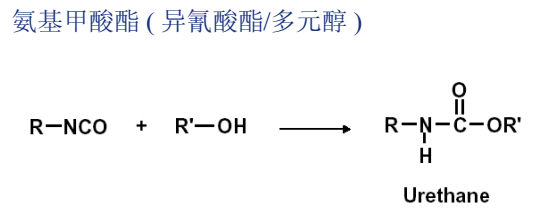
Gel Reaction: Formation of polymer chains increasing viscosity.

Foaming Reaction: CO2 generation creating foam structure.
Under normal process conditions, the two reactions maintain a dynamic balance: the foaming reaction produces gas to expand the foam, and the gel reaction provides appropriate viscosity to fix the foam structure, so that the cells maintain an appropriate opening rate, and the internal and external air pressure is balanced.
Once the proportion of gelling catalyst (organotin, TEDA, etc.) is too high, the gel reaction speed will be significantly faster than the foaming reaction speed. The viscosity of the slurry will rise sharply in a very short time, and the cell wall will become extremely tough and elastic. The carbon dioxide gas generated by the foaming reaction cannot break through the tough cell wall to realize cell opening, thus forming a large number of independent and completely closed cells inside the foam layer.
1.2 The Physical Principle of Shrinkage Collapse
The formation of surface shrinkage occurs in the cooling stage after the product exits the oven, which is a direct result of excessive closed cells: After the coated base material completes the curing reaction in the high-temperature oven, the gas inside the closed cells is in a high-temperature expansion state, and the internal air pressure is balanced with the external atmospheric pressure. When the product exits the oven and enters the normal temperature cooling area, the temperature of the gas inside the closed cells drops rapidly, and the internal air pressure decreases synchronously according to the ideal gas law.
Since the cell wall is completely closed and airtight, the external air cannot enter the inside of the cells to balance the air pressure, thus forming a micro negative pressure inside each closed cell. The elastic cell wall is continuously pulled inward by the negative pressure, and the macroscopic performance is orange peel texture, local collapse, uneven surface and even overall shrinkage deformation of the leather material.
1.3 The Influence of Foam Stabilizer on Closed Cells
In addition to the catalyst imbalance, the excessive addition of silicone foam stabilizer is also an important inducement for excessive closed cells. The function of foam stabilizer is to reduce the surface tension of the slurry and stabilize the cell structure in the foaming process. However, excessive addition of foam stabilizer will further enhance the toughness of the cell wall, strongly inhibit the natural opening of cells after foaming, directly increase the closed cell rate by 20-30%, and lay a hidden danger for subsequent cooling shrinkage.
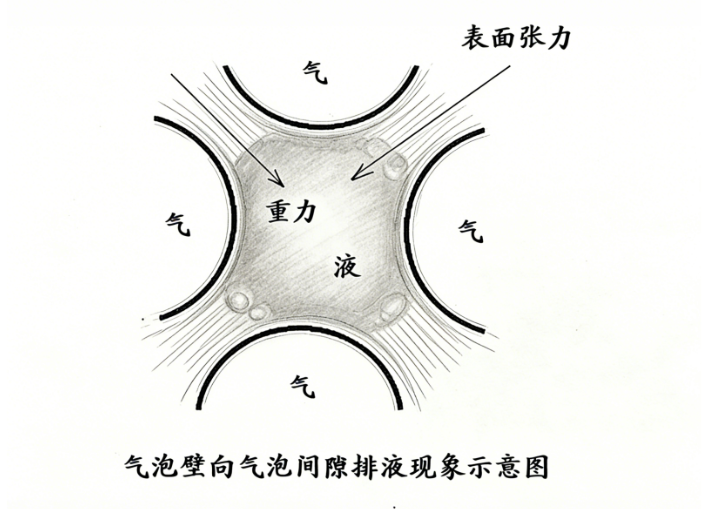
The role of the foam stabilizer in enhancing cell wall toughness.
2. Pinholes & Dark Holes: Microscopic Formation Causes & Inducing Factors
Pinholes and internal dark holes are the most hidden quality defects in solvent-free PU production. Light cases only affect the surface appearance, while heavy cases will lead to the decline of air permeability, hydrolysis resistance and peeling strength of the finished product, and it is easy to crack and peel in the subsequent use process, which is a major hidden danger affecting the long-term quality of the product.
2.1 Viscosity Imbalance & Poor Leveling Performance
The inherent viscosity of solvent-free PU raw materials is much higher than that of traditional solvent-based and water-based systems. In the process of high-speed mixing and pipeline conveying, it is very easy to wrap a large amount of air into the slurry, forming a large number of micro bubbles.
If the initial viscosity of the mixed slurry exceeds the reasonable range of 1500–1800 mPa·s, or the raw material preheating temperature is too low, the slurry will lose good leveling and fluidity. After doctor blade coating, the micro bubbles wrapped in the slurry cannot float up to the surface and escape in time. Once the surface of the slurry is pre-gelled and stereotyped, these bubbles will stay on the surface to form visible pinholes, or stay inside the foam layer to form invisible dark holes.
2.2 Premature Foaming & Surface Skinning
In the oven curing stage, the slurry needs a 30-60s dormant period after entering the oven. In this period, the slurry first completes natural leveling, and the internal bubbles escape fully, then enters the synchronous stage of foaming and curing.
If the proportion of catalyst is unbalanced and the overall reaction speed is too fast, or the temperature of the first section of the oven rises too fast, the slurry on the surface will be heated and cured first, forming a dense and hard "skin layer". At this time, the internal material is still in the reaction stage, continuing to foam and generate a large amount of gas. The gas can only break through the surface skin layer to escape, and the broken part of the skin layer cannot be healed automatically after curing, thus forming permanent pinholes on the surface.
2.3 Moisture Interference & Abnormal Foaming
The solvent-free PU reaction system is extremely sensitive to moisture, and the isocyanate group (-NCO) will react with water preferentially. If the workshop air humidity is too high in the high temperature and high humidity season, or the polyol raw material absorbs moisture during storage, or the release paper is damp, excessive moisture will enter the reaction system.
Excessive moisture will cause the isocyanate group to react with water preferentially, producing a large amount of irregular carbon dioxide gas, completely disrupting the original foaming rhythm, resulting in messy cell distribution, local over-foaming, and finally forming blisters, surface pinholes and internal voids. In severe cases, it will even lead to the overall collapse of the foam layer.
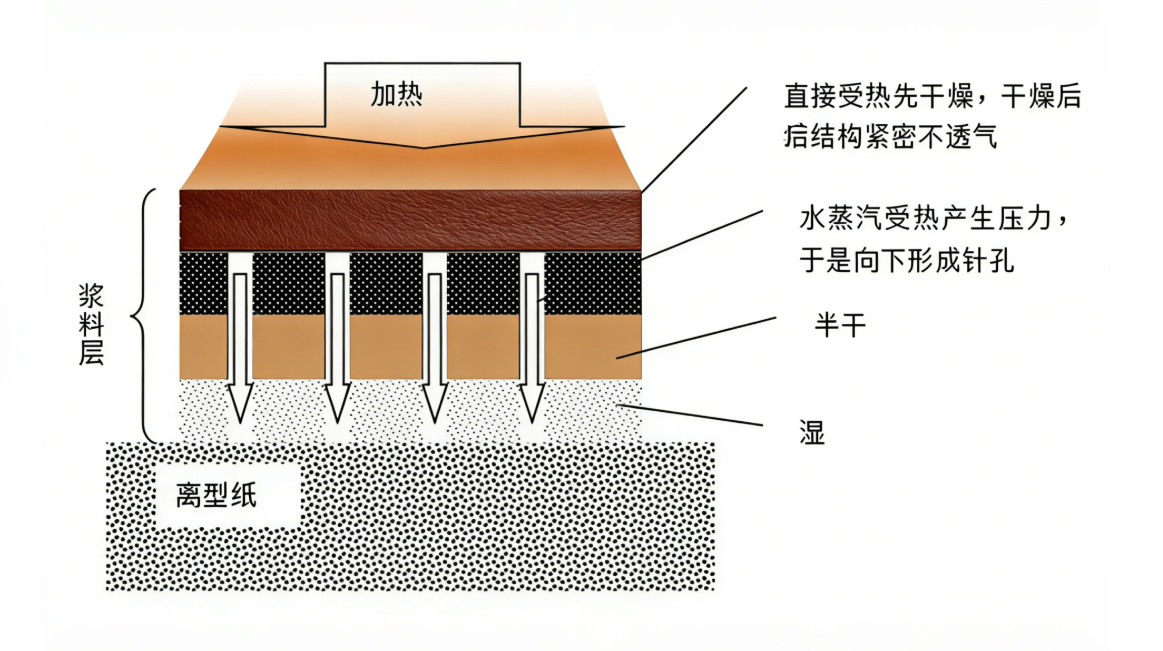
Pinhole formation mechanism: Trapped bubbles and surface skinning.
3. Factory Practical Troubleshooting & Step-by-Step Adjustment Scheme
All the above defects are not caused by a single factor, but the result of the superposition of multiple process parameters. We have sorted out a step-by-step troubleshooting and adjustment scheme that can be directly implemented by the factory, which can solve more than 90% of the common defects.
3.1 Catalyst System Balance Adjustment
The balance of gelling catalyst and foaming catalyst is the core to solve shrinkage and closed cell defects:
- If shrinkage and closed cell defects are serious: appropriately reduce the dosage of gelling catalyst (organotin, TEDA) by 10-15%, slow down the viscosity rising speed of the slurry, reserve enough time for the natural opening of cells, realize the balance of internal and external air pressure, and fundamentally eliminate shrinkage.
- If pinhole defects are serious: appropriately reduce the overall catalyst dosage, slow down the overall reaction speed, extend the leveling dormant period of the slurry, and ensure that the bubbles fully escape before surface curing.
- Note: It is strictly forbidden to adjust the catalyst dosage by more than 20% at one time, which will lead to incomplete curing and the decline of product mechanical properties.
3.2 Strict Control of Isocyanate Index (R-Value)
The isocyanate index is the core parameter affecting the reaction balance, the optimal control range is 1.0 ~ 1.05:
- When the index is higher than 1.05: the cross-linking density of the system is too high, the foam becomes brittle, the closed cell rate increases significantly, and the product is prone to shrinkage and cracking.
- When the index is lower than 1.0: the cross-linking is insufficient, the hydrolysis resistance and peeling strength of the product decrease, and it cannot pass the long-term aging test.
- It is recommended to calibrate the metering accuracy of the equipment every 7 days to ensure the accuracy of the ratio of component A and component B.
3.3 Viscosity & Oven Temperature Curve Calibration
- Strictly control the initial mixing viscosity of the slurry at 1500–1800 mPa·s, and preheat the raw materials to 35-40℃ in low temperature season to improve the fluidity and leveling performance of the slurry.
- The oven adopts a gradient temperature rise curve: the temperature of the first section is controlled at 100-110℃, the middle section at 130-140℃, and the tail section at 110-120℃. Avoid too fast temperature rise in the first section, which leads to premature surface skinning.
3.4 Workshop Environment & Raw Material Management
- In high temperature and high humidity season, strengthen the dehumidification of the production workshop, and control the relative humidity below 65%.
- Strictly seal and store polyol raw materials, and it is recommended to dry them before use in humid season to avoid water absorption.
- Dynamically adjust the line speed and catalyst dosage according to the ambient temperature and humidity every day.
3.5 Coating Process Optimization
- Ensure the uniform coating of release paper, and regularly clean the doctor blade to avoid scratches and local uneven coating.
- Optimize the gap between the doctor blade and the base material, and adopt the process of thin coating and multiple passes for thick products.
- Preheat the base material appropriately before coating to reduce thermal shock and discharge the trapped air in the base material.
4. Common Misunderstandings & Stable Production Core Points
4.1 Common Adjustment Misunderstandings in Factories
- Blindly increasing catalyst dosage to improve production efficiency: This is the most common mistake. Increasing the catalyst will only accelerate the gel reaction, leading to a sharp increase in closed cell rate and shrinkage defects.
- Increasing oven temperature to solve incomplete curing: Too high oven temperature will lead to premature surface skinning, which will aggravate pinhole defects.
- Ignoring the influence of ambient humidity: The change of temperature and humidity between day and night and between seasons will lead to unstable quality, and dynamic adjustment is required.
4.2 Core Points of Stable Mass Production
The core of stable production of solvent-free PU lies in the dynamic balance of "reaction rate - viscosity - temperature - environment". Shrinkage and closed cells come from excessive gelation and unbalanced internal and external air pressure; pinholes and dark holes come from viscosity mismatch, premature curing and moisture interference.
By standardizing catalyst ratio, strictly controlling isocyanate index, calibrating oven temperature curve, managing environmental humidity and optimizing coating process, these five core points can fundamentally solve the three major defects, and the qualified rate of finished products can be stabilized at more than 98%.
Haifeng Polyurethane Machinery has rich experience in solvent-free PU production line manufacturing and on-site process debugging. From the metering accuracy of high-precision metering pump, the mixing uniformity of high-speed mixing head to the stability of multi-stage gradient temperature control system, our equipment can meet the strict process requirements of solvent-free PU production.
We provide one-stop services from equipment manufacturing, installation and commissioning to process formula optimization and defect troubleshooting, helping customers quickly realize stable mass production.
If your production line is also troubled by shrinkage, closed cells and pinhole defects, you can contact us at any time to obtain professional process tuning scheme and customized equipment solutions.
- Email: jiacheng.dai@haifeng-automation.cn
- Official Website: www.haifengmachine.com
- WhatsApp/WeChat: +86 13566296633
Tags: #SolventFreePU #SyntheticLeather #SurfaceShrinkage #Pinholes #ClosedCells #HaifengMachinery