













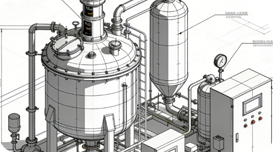

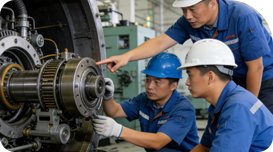

Haifeng believes that true technology transfer happens not just in the classroom, but right beside the machine. We categorize our training into two core scenarios: “Combat Drills” at your factory and “Deep-Dive Workshops” at our Wenzhou Headquarters.
01
Client-Site Training: Production-Ready Execution
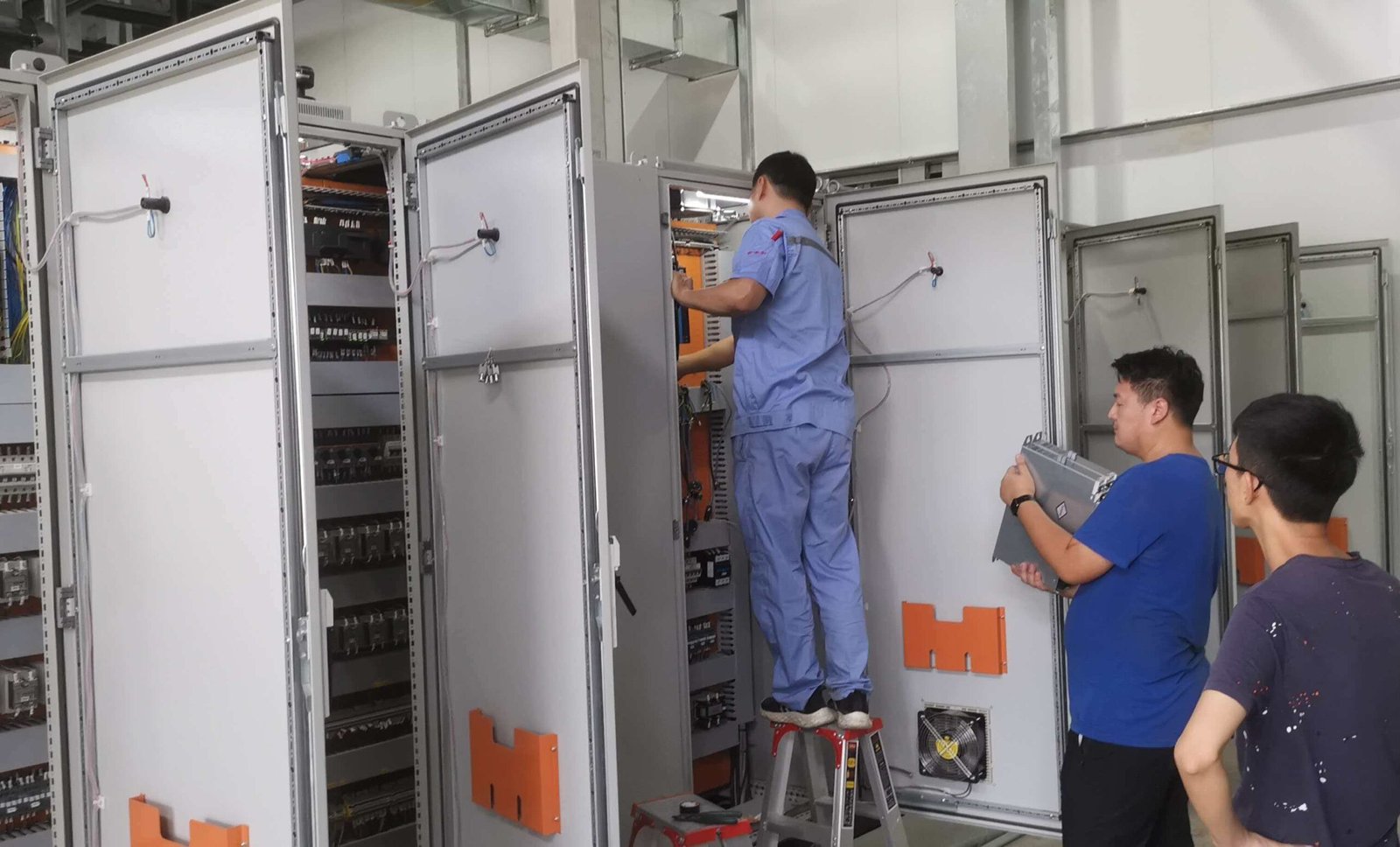
This is the core phase of equipment delivery. Our engineers are stationed at your factory during the critical window of installation and commissioning to conduct hands-on training.
Hands-on Focus, Barrier-Free
No dry textbook lectures. Working with local agents or professional translators and using standardized Bilingual (CN/EN) Materials, we guide your team to operate the equipment in a real production environment.
Training via Production
We integrate training into your first production run. From fine-tuning raw material ratios to demolding the first product, your staff will transform from “hesitant observers” to “independent operators” under the supervision of Haifeng engineers.
02
HQ Training (Wenzhou): The Advanced Workshop
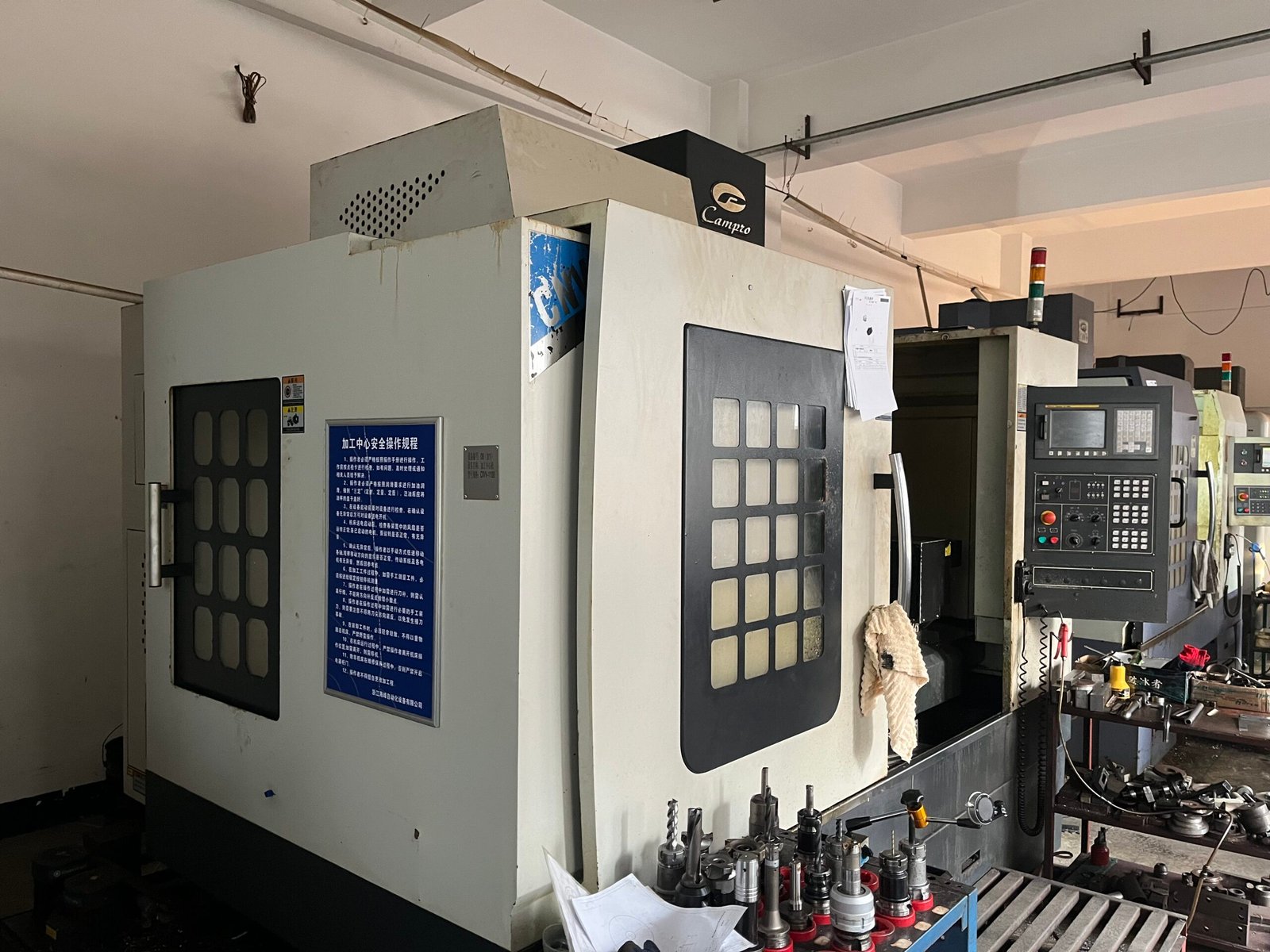
Every first and second half of the year, Haifeng hosts the “Advanced PU Technology Workshop” at our headquarters in Wenzhou, China. We invite global clients back to where it all started for hardcore technical advancement.
Deep-Dive Teardown & Repair
“Destructive teardowns” that are too risky at your factory are encouraged here. Trainees will disassemble mixing heads and repair high-pressure metering pumps in a lab setting, gaining a deep understanding of internal structures and repair logic.
This is more than training; it’s a journey to the source. Trainees visit Haifeng’s R&D center and precision machining workshops, getting early access to our latest energy-saving technologies and automation solutions, and discussing industry trends face-to-face with our R&D Director.
03
Comprehensive Training Syllabus
Module A: Mechanical Maintenance
Metering Pump: Disassembly, cleaning, and seal replacement.
Mixing Head: Friction piston check & nozzle cleaning.
Needle Valve Maintenance: Preventing clogging.
Module B: Process Optimization
Startup/Shutdown Protocols: Preventing crystallization.
Ratio Calibration: Ensures precise mixing.
Robotic Path Programming.
Module C: Electrical & Safety
HMI Operation & Recipe Management.
Emergency Stop & Chemical Safety.

Visual Principles & Management Empowerment
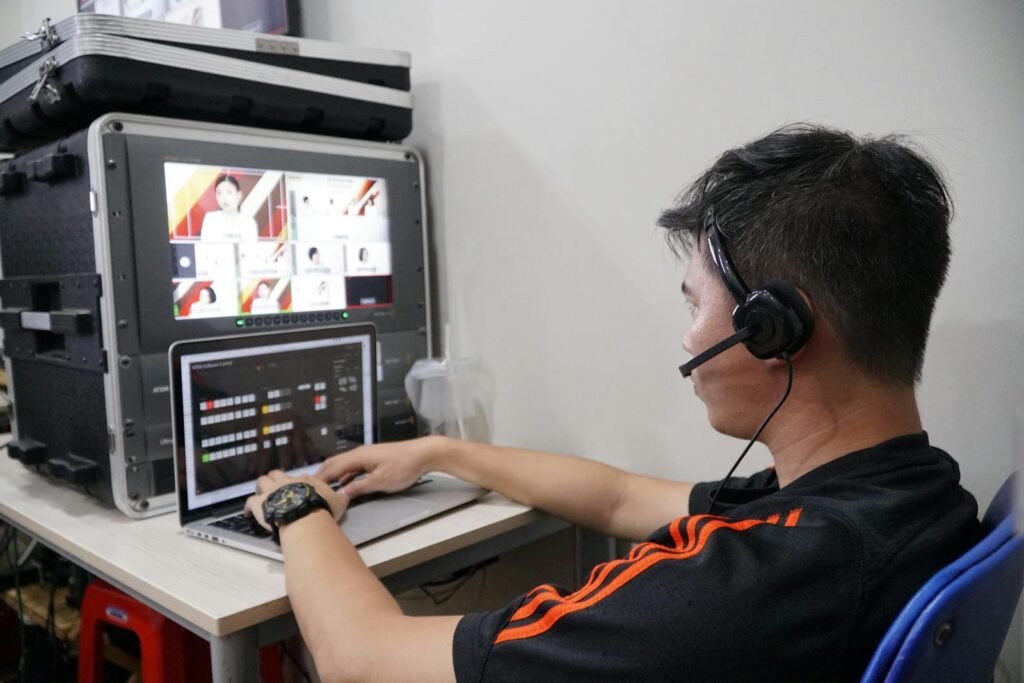
Live Video Principle Deep-Dive
Through live video sessions, Haifeng’s senior instructors use 3D exploded viewsand dynamic circuit diagrams to explain hydraulic flows, mixing head impingement principles, and electrical architectures, making complex mechanics intuitive and easy to grasp.
Managerial Maintenance Guidance
For equipment managers, we provide customized “Equipment Lifecycle Management” We guide you on how to formulate scientific Preventive Maintenance (PM) plans and interpret data trends to predict equipment health, extending machine life and minimizing unexpected downtime.
Systematic Troubleshooting Methodology
This is the core advanced course of Haifeng’s off-site training. We impart the “Diagnostic Logic Tree” used internally by Haifeng engineers to your technical staff, covering three key dimensions to help you pinpoint root causes rapidly.

Mechanical Investigation
Core Logic:Teaching how to deduce mechanical failures by observing physical phenomena.
Content:Interpreting pressure gauge fluctuations to identify pump wear or accumulator pressure loss; analyzing “pouring patterns” and sounds to detect friction piston wear, nozzle clogging, or seal leakage.
Electrical Investigation
Core Logic:Ensuring electricians can “read the map” and think in terms of signal flow.
Content:Remote guidance on reading standard electrical schematics; teaching how to observe PLC I/O indicators to quickly distinguish between sensor faults, broken wires, or logic interlocks.
Process Investigation
Core Logic:Seeing machine parameter deviations through imperfect products.
Content: Case-study based training—how to reverse-engineer defects like brittleness, shrinkage, or core scorching to identify ratio imbalances or pump inaccuracies; predicting raw material viscosity fluctuations or temp-control failures through abnormal injection pressures.


