1. One-Piece Molding, Non-Slip & Wear-Resistant
The boot body is integrally molded in the mold with seamless structure, achieving 100% waterproof performance and eliminating sole delamination issues of traditional vulcanization process. Formula can be flexibly adjusted to enhance wear resistance and grip; PU material delivers far better anti-slip performance than rubber on wet, muddy and oily ground.
2. Odorless & Lightweight for All-Day Comfort
Compatible with eco-friendly PU foaming formula, no pungent odor or solvent residue. With better air permeability than pure rubber, it keeps feet dry during long-time wearing. It is 30%–50% lighter than traditional rubber rain boots, and the microcellular foam structure provides cushioning rebound to reduce fatigue for long standing and walking.
3. Recyclable & Eco-Friendly Production
Waste PU boots can be chemically recycled to reuse polyols, realizing closed-loop production. The full life cycle carbon footprint is lower than PVC and rubber boots, fully meeting the sustainable procurement requirements of international brands and large retailers.
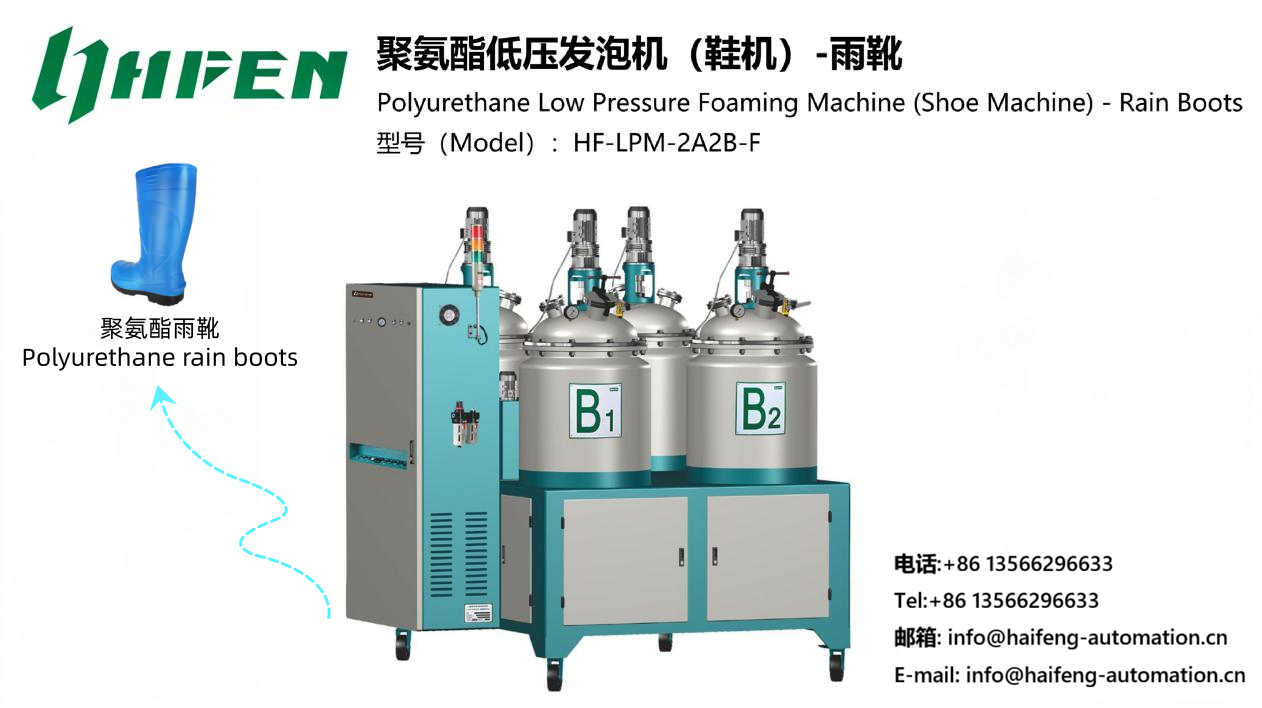
4. Precision Metering & Stable Mixing Performance
Adopts wear-resistant gear metering pump with servo closed-loop control to ensure accurate and stable ratio. Equipped with advanced PLC and constant temperature system to precisely control ratio and material temperature; heat-insulated pressure-resistant material tanks guarantee long-term stability of the PU circulation system.
5. Low Equipment Cost & Easy Maintenance
Low-pressure system reduces power consumption of driving components, saving long-term electricity costs. Low operating pressure reduces equipment wear and extends service life of core parts. The simple structure requires low operator training cost, and daily maintenance is straightforward.
6. Intelligent Control & High Automation
Equipped with intelligent PLC system to realize fully automatic real-time monitoring of pressure, temperature and flow, with traceable historical data for process optimization. Can be matched with automated production lines to realize high-volume mass production and reduce labor costs.