








Haifeng Automation potencia la mejora del interior del automóvil: caso de mejora inteligente de la producción de asientos de poliuretano para automóviles en una fábrica de Jiangsu
Antecedentes del cliente
Located in Changzhou, Jiangsu, the factory covers an area of 28,000 square meters and currently operates 6 semi-automated polyurethane seat production lines, with an annual output of 900,000 sets of full-range products and sales volume exceeding 150 million RMB in 2024. Its core products are high-resilience polyurethane seat components, mainly supplied to second-tier suppliers of automobile enterprises in East China and the refitting market. In recent years, orders for new energy vehicles have surged and the demand for customized seat production in the refitting market has been on the rise. However, its traditional production process fails to meet the stringent requirements of automobile enterprises for the density uniformity of seats and VOCs emission indicators. The enterprise is in urgent need of a low-cost and easily implementable production improvement solution to break through the development bottlenecks.
Resumen del proyecto
This automotive interior parts manufacturer in Jiangsu, with 15 years of industry experience, mainly produces polyurethane automotive seat cushions, backrests and headrests applicable to a variety of models including new energy passenger cars and fuel sedans. As downstream automobile enterprises continue to raise their requirements for seat comfort, environmental protection and production efficiency, and the market demand for multi-model supporting and customized seat production expands, the enterprise’s traditional production mode relying on manual foaming and manual trimming has exposed many shortcomings. Haifeng Automation tailored an integrated targeted improvement solution featuring “precision foaming + intelligent molding + automated post-processing”, and completed the upgrade and transformation of 3 core production lines in only 6 months. This helped the enterprise transform from “extensive processing” to “precision intelligent manufacturing” and successfully become a first-tier supplier of mainstream domestic automobile enterprises.
Principales puntos débiles de los clientes
01
Insufficient foaming precision
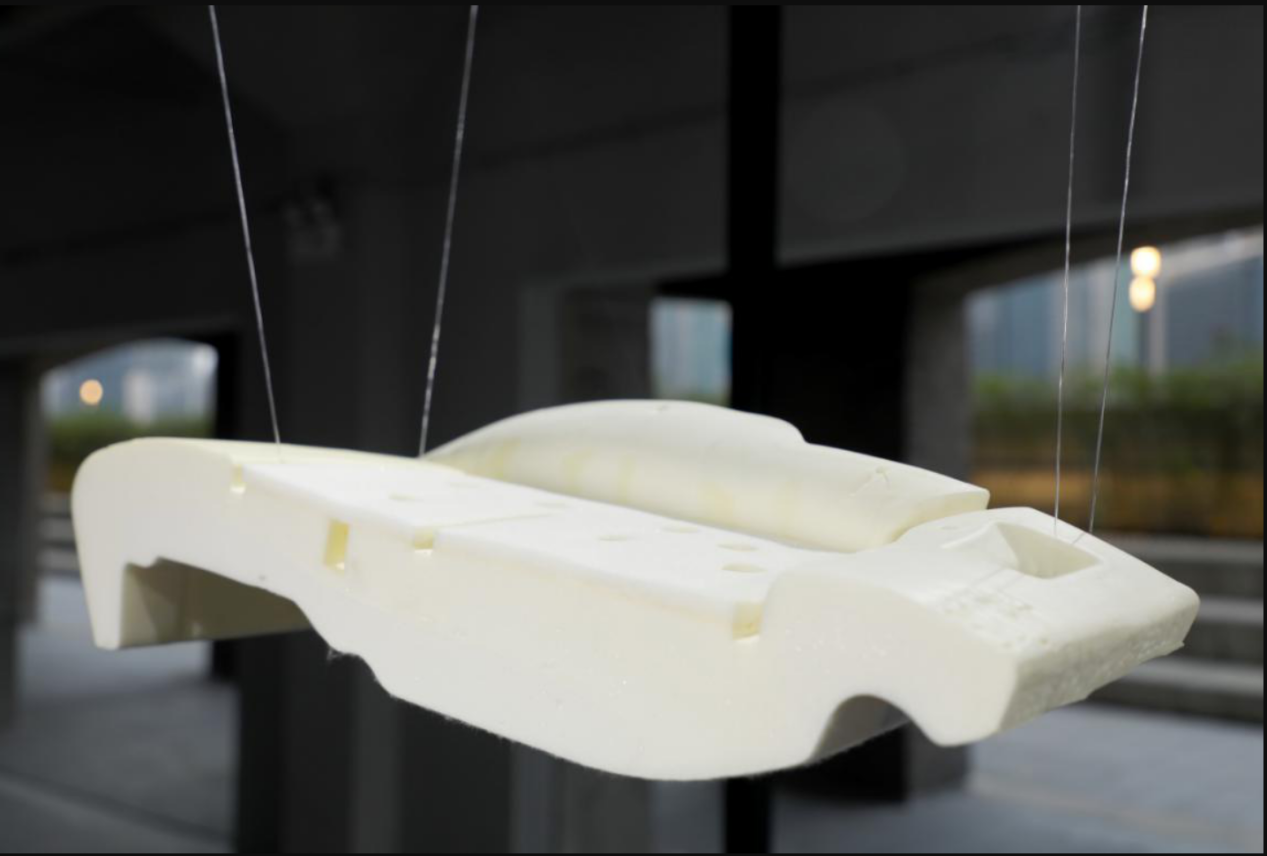
The error of manual control over the proportion of foaming raw materials exceeds ±4%, leading to uneven density and obvious hardness differences of seat cushions, which results in substandard comfort. The dimensional tolerance reaches ±2.5mm, causing frequent fitting problems in the assembly process and a product defective rate as high as 11%. The annual rework loss alone exceeds 7.5 million RMB.
02
Low production efficiency
Each production line requires 10 operators, involving multiple links such as raw material mixing, manual pouring and manual trimming. The foaming + molding cycle of a single set of seats exceeds 40 minutes, with a daily output of only 280 sets. Even in the rare cases of mold changes for new supporting vehicle models or seat facelifts, the lack of standardized parameter presets necessitates repeated manual debugging of foaming and molding related parameters, taking more than 2.5 hours for the entire process. This makes it difficult to quickly respond to the diverse order demands of automobile enterprises and the refitting market, resulting in a 25% production capacity gap for multi-model production.
03
Environmental and cost pressure
The polyurethane raw material waste rate reaches 14%. Based on an annual consumption of 1,500 tons at a unit price of 21,000 RMB/ton, the annual raw material waste cost exceeds 4.41 million RMB. Unorganized VOCs emissions during the foaming process are close to the limit value, leading to the enterprise being interviewed by environmental protection departments. The energy consumption of old equipment remains high, with a daily power consumption of 500 kWh per production line.
04
Poor quality consistency
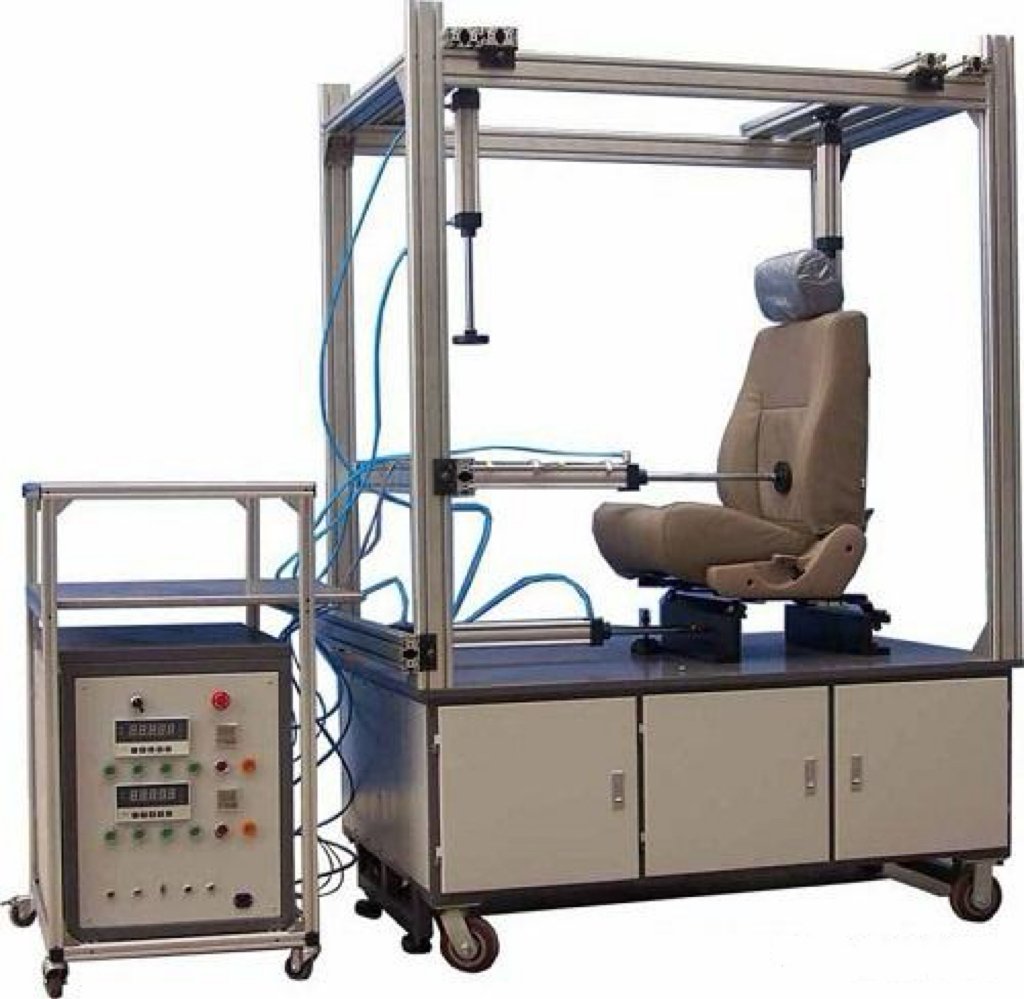
Manual operation leads to significant differences in rebound performance and appearance flatness of seats in the same batch. In addition, the production process lacks a data traceability system, and the enterprise has been restricted many times in the supplier audits of automobile enterprises due to quality fluctuation issues.
Soluciones Haifeng
01
Core equipment upgrade
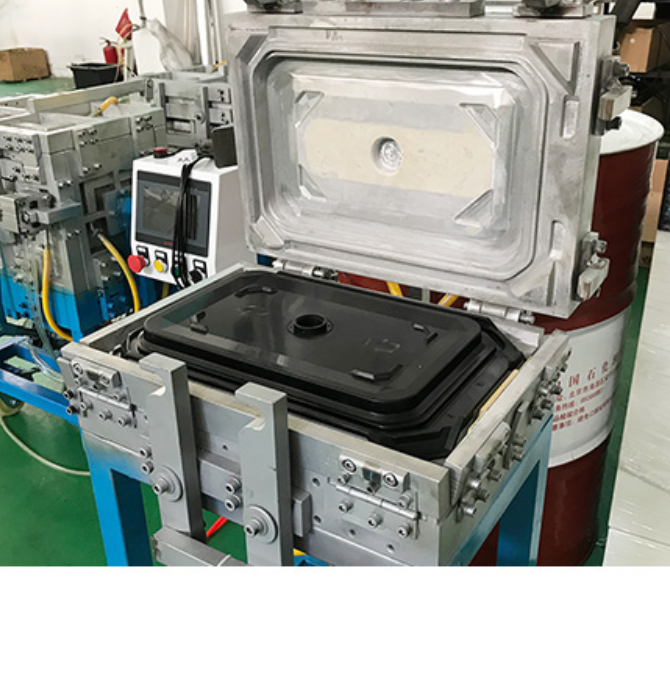
All 3 production lines are equipped with Haifeng JJF-G100 polyurethane high-pressure foaming pouring machines with a metering accuracy of ±0.5%, matched with dynamic mixing heads with a rotating speed of 8600±200 rpm to ensure uniform mixing of raw materials. They are also equipped with 16-station automatic turntable molding machines to realize integrated operations of automatic mold positioning, quantitative pouring and constant temperature foaming, completely replacing manual pouring and mold transfer. The equipment is built with a preset parameter function, which can store the foaming, temperature control and molding parameters of different vehicle models and customized seats in advance. Even when mold change is rarely needed, it can skip the link of repeated manual debugging and quickly complete operation switching, flexibly adapting to the enterprise’s diverse production needs.
02
Process and environmental optimization
The intelligent temperature-controlled foaming system is upgraded with a temperature control error accurately controlled within ±1℃, and 15 sets of foaming curves are preset according to the characteristics of seats of different vehicle models to ensure the density uniformity of seats. Closed foaming boxes and activated carbon + photocatalytic waste gas treatment devices are installed, reducing the VOCs emission concentration to below 35mg/m³. Automatic edge trimmers are configured to replace manual trimming, with the trimming accuracy improved to ±0.5mm, effectively reducing raw material waste.
03
Lightweight digital management and control
A PLC intelligent management and control system is built to record key parameters such as raw material ratio, foaming temperature and molding time in real time by production batch, realizing real-time visualization of production progress and product defective rate, and achieving batch-level data traceability. This accurately meets the traceability requirements of automobile enterprises without the need to invest in complex large-scale systems.
04
Localized service support
4 senior engineers are arranged to be stationed at the factory for 8 days. Adopting a modular installation method, the transformation of a single production line only requires 1.5 days of shutdown, without affecting the normal production of the enterprise. A 4-day practical training is provided for workers, fully covering core skills such as equipment operation, parameter adjustment and daily maintenance. Relying on local service outlets in Jiangsu, the enterprise provides 24-hour technical consultation response, and dispatches personnel to solve conventional faults on site within 2 hours. Meanwhile, it offers 1 year of equipment warranty and 2 free equipment inspections every year.
Principales logros de la ejecución del proyecto
Dual improvement of precision and quality
The density uniformity of seat cushions is increased by 40%, the dimensional tolerance is accurately controlled within ±0.8mm, and the product defective rate is reduced from 11% to 1.5%, cutting the annual cost and loss by more than 6.6 million RMB. The enterprise has successfully passed the first-tier supplier audit of mainstream domestic automobile enterprises, and the proportion of high-end orders has increased from 15% to 50%.
Leap in production efficiency
The production cycle of a single set of seats is shortened from 40 minutes to 25 minutes, and the daily output of a single production line is increased to 550 sets. The annual output of the 3 lines reaches 600,000 sets, a 33% increase compared with that before the transformation. The standardized parameter preset capability of the equipment has greatly improved the operation efficiency of vehicle model switching. The order delivery cycle for new model supporting and customized seats is shortened from 20 days to 10 days, and the on-time delivery rate of all orders reaches over 99%.

Remarkable cost reduction effect
Referring to the annual salary standard of 70,000 RMB for front-line workers in the Jiangsu auto parts industry, the number of operators per production line is reduced from 10 to 5, saving 1.89 million RMB in annual labor costs for the 3 lines. The raw material waste rate is reduced to 5%, saving 3.3075 million RMB in annual raw material costs. The equipment power saving rate reaches 38%, saving 580,000 RMB in annual electricity fees. The total annual comprehensive cost reduction from the three above aspects amounts to 5.7775 million RMB. The total project investment is 4.8 million RMB. Considering that the cost reduction benefit during the first-year running-in period reaches 75%, the actual investment payback period is only 1.1 years.
Compliance and competitiveness upgrade
VOCs emissions meet the standards stably, and the enterprise does not need to invest additional funds in environmental rectification. Digital management has improved the batch quality consistency by 35%. The enterprise has been successfully rated as a demonstration project of Jiangsu Provincial “Intelligent Workshop” and obtained special government subsidies, with its high-end market share increasing by 30% compared with the previous level.