Solvent-Free PU Leather Damp Heat Aging: The Hidden Bottleneck & Engineering Solutions
However, many manufacturers face a hidden but fatal quality dilemma: The newly produced solvent-free leather has perfect hand feel, tensile strength and surface appearance, and passes all factory incoming inspection standards. But after long-term use, especially in high-temperature and high-humidity regions or seasonal humid environments, the leather gradually hardens, becomes brittle, cracks, or even tears with slight pulling force. This common failure is defined as damp heat aging, the biggest hidden bottleneck restricting the long service life of solvent-free PU leather.
1. Microscopic Mechanism of Damp Heat Aging Failure
Different from traditional solvent-based PU with solvent volatilization and porous structure, solvent-free PU adopts full two-component reactive cross-linking molding. Its molecular density is higher and the network structure is tighter, but it is far more sensitive to high temperature and humidity changes. Aging failure mainly includes three core microscopic modes.
1.1 Polymer Chain Hydrolysis & Chemical Attack
The essence of damp heat aging is the nucleophilic attack of water molecules on polyurethane molecular chains under high temperature and humidity. Water molecules penetrate into the material interior and react with ester bonds and urethane bonds in the molecular chain, directly causing molecular chain breakage.
- Ester-based polyurethane: Has extremely high hydrolysis sensitivity. After hydrolysis, it will generate carboxylic acid substances, which will further catalyze continuous hydrolysis, forming an irreversible auto-catalytic degradation loop.
- Ether-based polyurethane: Has better hydrolysis stability, but its thermal oxidation resistance is weak and easy to age and deteriorate in long-term high-temperature environments.
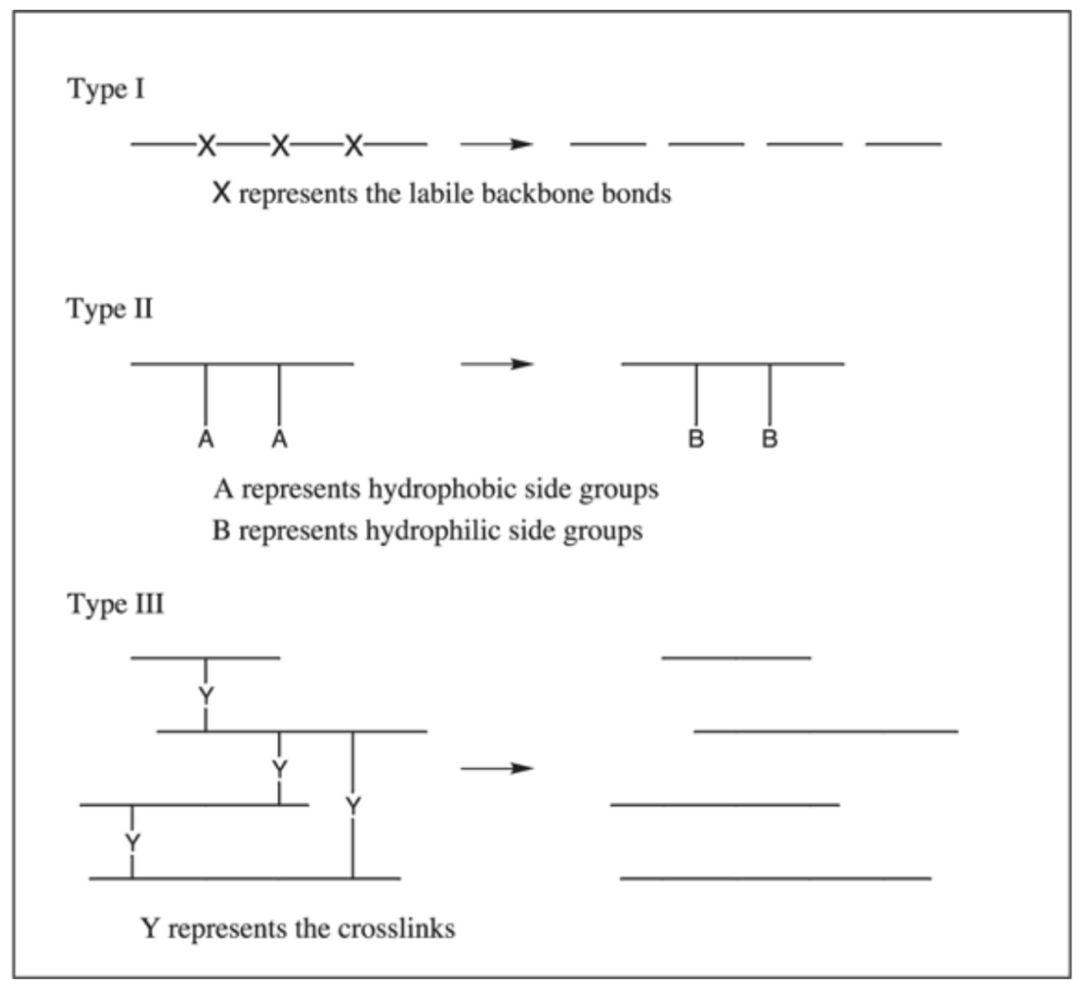
Fig 1. Schematic diagram of polymer chain hydrolysis degradation (Chemical Attack).
1.2 Cross-Linked Network Structural Collapse
The high cross-linked three-dimensional network is the core advantage of solvent-free leather in terms of strength and chemical resistance, but it also brings unique aging risks.
Hydrolysis damage is divided into two forms: chain segment fracture and cross-link point fracture. Chain fracture mainly reduces tensile strength and elongation at break; cross-link point damage directly leads to the decline of elastic recovery and creep resistance.
The initial high cross-link density can hinder water molecule infiltration, but once local hydrolysis occurs and micro-shrinkage is formed, new permeable channels will be generated, accelerating water invasion and forming a vicious cycle of accelerated aging.

Fig 2. Schematic diagram of cross-linked network deterioration (Structural Collapse).
1.3 Interface Layering & Filler Migration Failure
Solvent-free leather is mostly multi-layer composite structure including surface layer, foamed layer and base fabric layer. Under damp heat conditions, the difference in thermal expansion and moisture absorption between layers will generate interface stress, resulting in delamination, blistering and peeling.
In addition, inorganic fillers such as calcium carbonate and talc added to the formula will separate from the polymer interface under the erosion of water molecules. Acidic substances generated by hydrolysis will even dissolve part of the fillers, forming internal microscopic defects and further aggravating material aging and damage.

Fig 3. Schematic diagram of interface compatibility and filler migration (Composite Failure).
2. Multi-Dimensional Engineering Improvement Solutions
To fundamentally solve the damp heat aging problem, it is necessary to carry out overall optimization from molecular design, additive system, production environment and equipment process four dimensions.
2.1 Molecular Structure Optimization & Raw Material Matching
- Polyol System Blending: Replace part of polyester polyol with polyether polyol. When the polyether segment ratio is controlled at 40%-60%, the aging strength retention rate can be increased from 55% to more than 82%.
- High-End Raw Material Selection: Polycarbonate diol and polycaprolactone diol copolymer polyols balance hydrolysis resistance and mechanical strength, suitable for high-end automotive and furniture leather.
- Isocyanate Optimization: Aliphatic isocyanates have better hydrolysis and yellowing resistance than aromatic isocyanates, especially suitable for light-colored and white leather products.
- Cross-Link Density Control: Control the molecular weight between cross-linking points at 2000-4000 g/mol, balancing flexibility and damp heat aging resistance.

Fig 4. Schematic diagram of molecular structure optimization design for aging resistance.
2.2 Advanced Additive Formula Optimization
- Hydrolysis Stabilizer: Add 1%-3% carbodiimide compound to neutralize hydrolytic acid, cut off the auto-catalytic loop, and extend the service life by 2-3 times.
- Antioxidant & UV Synergist: Compound hindered phenol antioxidants and UV absorbers to suppress thermal oxygen and photo-aging, suitable for outdoor application scenarios.
- Surface Hydrophobic Treatment: Adopt fluorine and silicon-based hydrophobic agents to reduce surface water absorption and delay the initial aging process.
2.3 Production Environment & Raw Material Control
- Constant workshop temperature at 25±2℃, relative humidity controlled at 40%-50%.
- Strictly control raw material moisture below 0.05%, sealed and moisture-proof storage.
- Dynamically adjust formula and line parameters according to seasonal temperature and humidity changes.
2.4 Equipment & Process Precision Adjustment
- Low-Pressure Uniform Mixing: Adopt high-precision low-pressure mixing technology to ensure uniform reaction of A/B components and avoid premature reaction caused by overheating.
- Gradient Curing Oven: Optimize multi-stage temperature curve to make cross-linking reaction sufficient and stable.
- Post-Curing Process: Maintain 80-90℃ constant temperature curing for 24-48 hours to further improve cross-link density and aging resistance.
- Base Fabric Pretreatment: Plasma treatment and special primer coating enhance interlayer bonding strength and avoid damp heat delamination.
Frequently Asked Questions
Q1: What is the qualified standard of damp heat aging strength retention rate for solvent-free PU leather?
Q2: Can traditional solvent-based production lines transformed into solvent-free lines produce aging-resistant products?
Q3: Will improving hydrolysis resistance increase the production cost significantly?
Q4: How to quickly judge the hydrolysis resistance of finished products in factory?
Q5: What is the most common mistake in factory production that leads to poor aging resistance?
Q6: Can Haifeng provide process debugging service for aging resistance optimization?
Struggling with Damp Heat Aging?
Improve your strength retention rate above 85% with Haifeng’s professional equipment, formula and process optimization solutions.