Wet vs Dry Process in Leather Manufacturing: Full Comparison, Trends and Factory Selection Guide
Wet process is the mature industry standard you’ve run for decades — stable quality, high fault tolerance, but rising environmental compliance and wastewater treatment costs every year.
Dry process is the policy-backed green direction, with massive water and energy savings, but higher upfront investment and steeper technical learning curve.
1. Global Leather Market Landscape & Transition Background
The global leather market is growing steadily. According to Fortune Business Insights 2025 data, the global leather goods market is valued at $531.1 billion, projected to reach $982.4 billion by 2034 with a 7.13% CAGR. Europe dominates with 37.31% market share, driven by luxury demand and strict environmental standard systems.
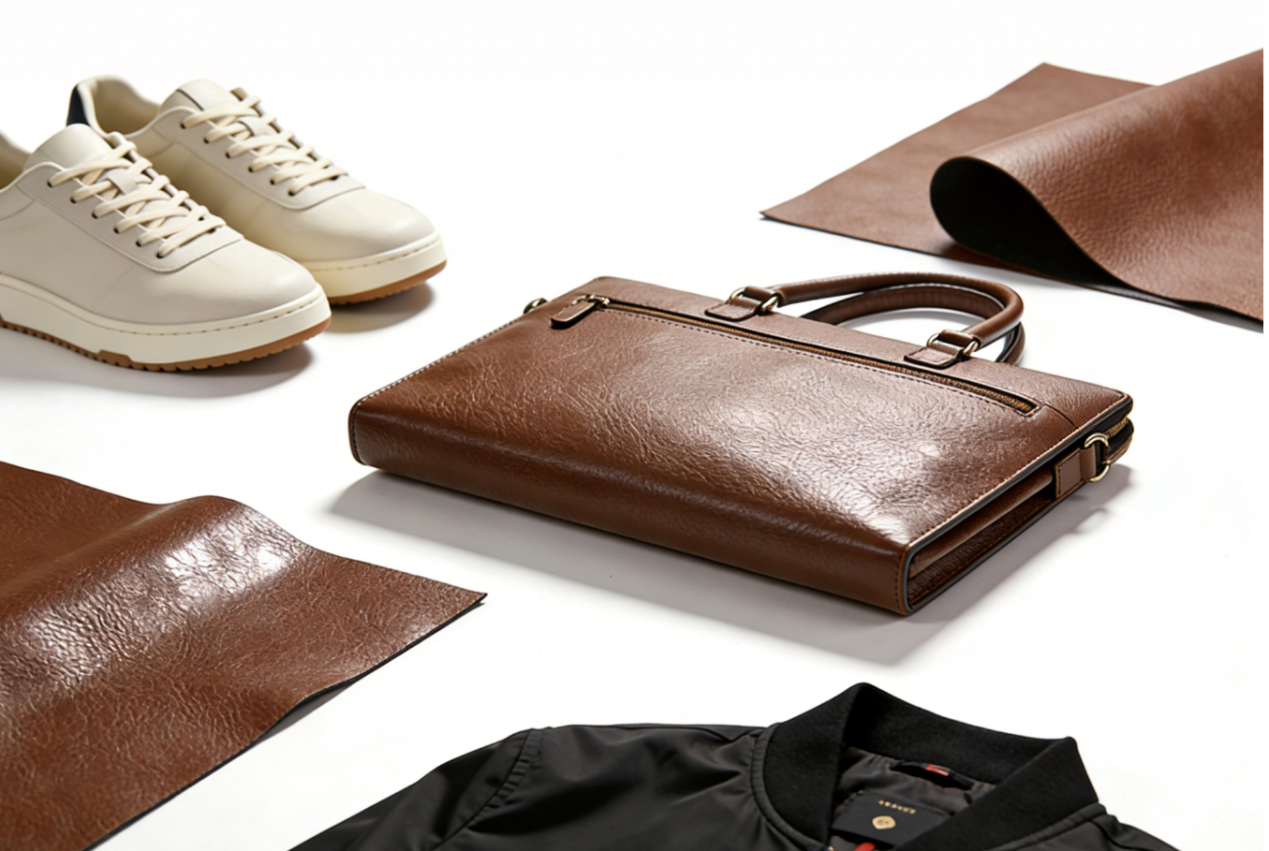
Footwear remains the largest segment (45% of market share), followed by bags and apparel. Synthetic leather and bio-based leather are growing extremely fast; especially the boom in new energy vehicles has drastically increased demand for low-VOC, eco-friendly coating materials for automotive interiors.
The core transition logic for the entire industry is clear: environmental compliance is no longer a bonus — it is the price of admission. EU REACH, LWG Leather Working Group certification, and ZDHC are now mandatory export requirements.
2. Wet Process: The Mature Industry Foundation
Wet process is the traditional mainstream route used for decades, with water as the core processing medium:
- For natural leather: Soaking, tanning, dyeing via aqueous steps
- For synthetic leather: DMF & water miscibility to form porous PU film
Standard Process Flow
- Preparation: Soaking, unhairing, liming
- Tanning: Deliming, bating, pickling, tanning
- Wet Finishing: Retanning, neutralization, dyeing, fatliquoring
- Pre-Drying: Samming, setting out, vacuum drying

Core Advantages
- Stable & consistent batch quality
- Uniform chemical fiber penetration
- Suitable for high-end full-grain leather
- Wide raw material adaptability
Core Disadvantages
- 30-50m³ water per ton raw hide
- Heavy wastewater & environmental burden
- Long production cycle 3-7 days
- High overall energy consumption
3. Dry Process: Green Efficient Transition Direction
Dry process minimizes or completely replaces water medium via physicochemical treatment:
- Natural leather: Chrome-free dry tanning
- Synthetic leather: Direct coating & lamination without aqueous solidification
Standard Process Flow
- Raw Material Mechanical Cleaning
- Dry chrome-free / low-chrome tanning
- High pressure & ultrasonic treatment
- Dry spraying, roller coating & embossing

Core Advantages
- 70%+ water saving
- Production cycle only 8-24 hours
- 30%+ lower energy consumption
- Low pollution & small workshop footprint
Core Disadvantages
- 30-50% higher equipment investment
- High technical operation threshold
- Limited ultra-soft high-end leather performance
- Less chemical penetration uniformity
4. Full Dimensional Comparison
| Comparison Dimension | Wet Process | Dry Process |
|---|---|---|
| Water Consumption per Ton | 30-50 m³ (High) | ≤10 m³ (Low) |
| Overall Energy Consumption | Relatively High | 30%+ Lower |
| Pollutant Emissions | High Chromium Wastewater | Low Mainly Solid Waste |
| Production Cycle | 3-7 Days | 8-24 Hours |
| Product Consistency | High & Stable | Strict Control Required |
| Equipment Investment | Medium | 30-50% Higher |
| Environmental Pressure | High | Minimal |
5. Industry Trends & Future Outlook
Currently 85% of global leather adopts wet process, dominating automotive, furniture, footwear mid-to-high-end markets.
The mainstream development trends:
- Wet-Dry Hybrid becomes mainstream
- Clean upgrading for both lines
- Intelligent & digital manufacturing
- Bio-based & circular economy transition

6. Factory Process Selection Guide
No absolutely better process — only the one matching your positioning, budget and compliance needs:
- Product Positioning: Luxury/automotive → Wet / Wet-Dry Hybrid; Mass eco goods → Dry Process
- Export Compliance: EU REACH/LWG → Dry or upgraded clean wet line
- Resource & Policy: Water-scarce strict areas → Priority dry
- Budget & Tech: Limited budget → Upgrade existing wet line
- Customer Carbon Demand: Low-carbon certification → Dry Process
Final Conclusion
Wet and dry processes will coexist complementarily long-term.
Wet process retains advantage in high-end leather quality stability; Dry process leads green, low-water, high-efficiency development.
Factories do not need blindly follow trends — choose single or hybrid route according to actual conditions to achieve compliance and profit win-win.

Frequently Asked Questions
Q: Can we convert wet line to dry process?
Q: Is dry process mandatory for EU export?
Q: Dry process line payback period?
Q: Does wet-dry hybrid increase complexity?
Leather Production Line Environmental & Process Upgrade Solutions
Haifeng Machinery provides one-stop turnkey solutions: wet line upgrading, dry line construction, wet-dry hybrid commissioning.