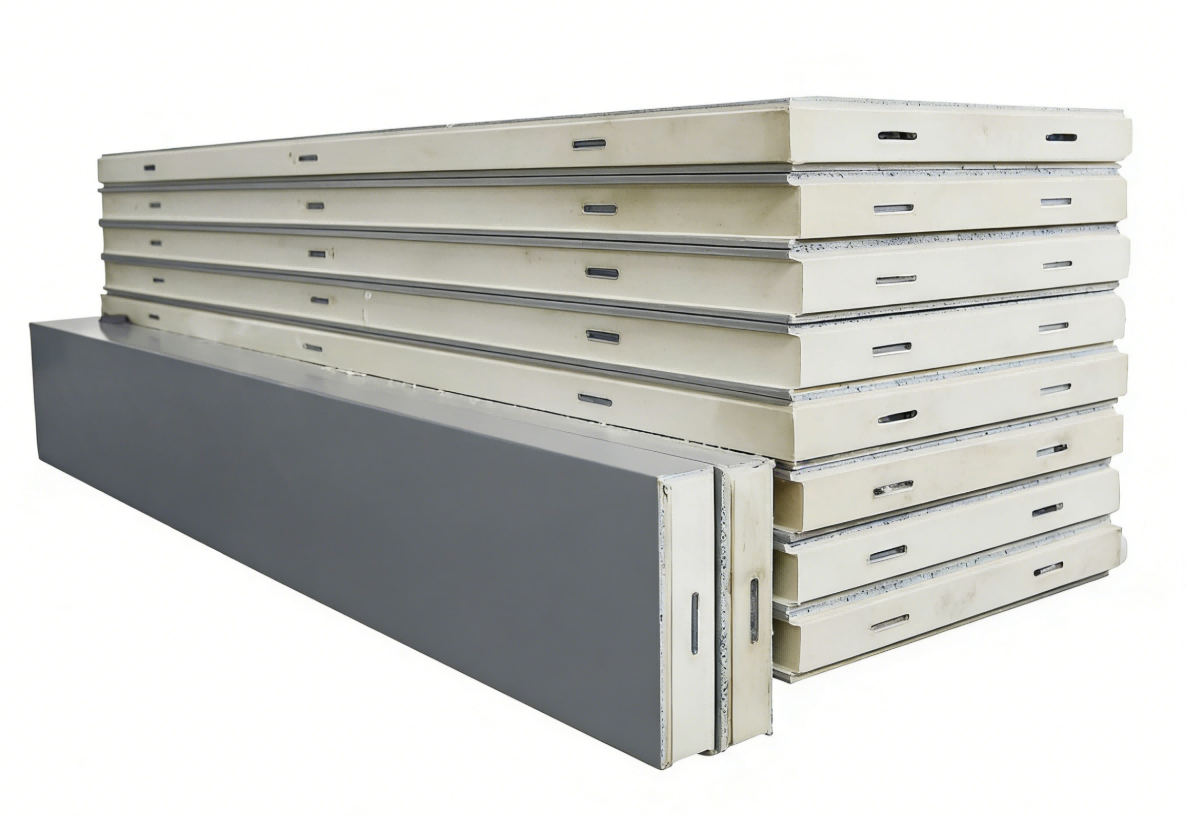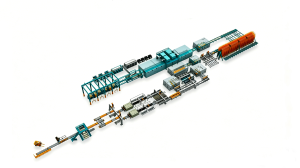
Planning a sandwich panel factory is not just about picking a production line from a catalog. It is about aligning machinery with your product range, available factory space, utility capacity, and — most critically — the panel quality your market actually demands. A small mismatch in metering accuracy or curing oven length can turn a 6‑second cycle into a consistent 2‑mm thickness drift that customers reject.
This article breaks down the real‑world machine configuration, layout logic, and investment planning needed to take a turnkey PU/PIR sandwich panel factory from concept to first commercial panel.
Step One: Define Your Product Scope and Target Output
Before any machine selection, pin down three fundamentals:
- Panel types and dimensions — wall, roof, cold‑room, or fire‑rated panels? Width from 600 mm to 1 250 mm? Thickness 30 mm to 200 mm?
- Core material — PU, PIR, rock wool, or hybrid. PIR demands higher processing temperatures and more aggressive mixing than standard PU; rock wool lines need additional edge‑sealing and facing preparation.
- Target annual capacity — a small‑to‑medium plant might produce 500 000 m² per year on a single shift; a high‑output continuous line can exceed 2 000 000 m² with three shifts.
A continuous line running at 6 m/min with 1.2‑m‑wide panels can output roughly 300 m² per hour net, assuming 85% uptime. That is a solid baseline for planning.
Core Machine Configuration for a Continuous PU/PIR Sandwich Panel Line
A standard continuous line is a unified sequence of stations. Below is the configuration I see as necessary for a flexible, industrial‑grade operation.
1. De‑coiler and Metal Sheet Uncoiling
Two independent hydraulic or pneumatic de‑coilers (top and bottom facing) feed steel or aluminium coil into the line. Key requirements: tension control to prevent wrinkling and automatic coil edge alignment.
2. Roll‑forming and Profiling Unit
Depending on your panel profile — trapezoidal, corrugated, micro‑ribbed, or flat — the forming station consists of a series of profiled roller cassettes. A cassette‑changing system can reduce profile switch time to under 30 minutes, a critical factor for small batch diversity.
3. Preheating and Surface Treatment
Metal facings must be pre‑heated to 35–50 °C before foaming to ensure proper adhesion. Some lines also integrate a corona treatment unit for aluminium or pre‑painted steel surfaces that need enhanced bonding.
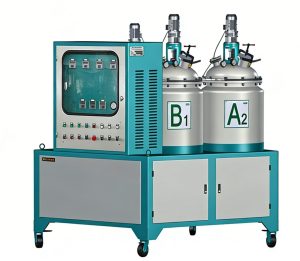
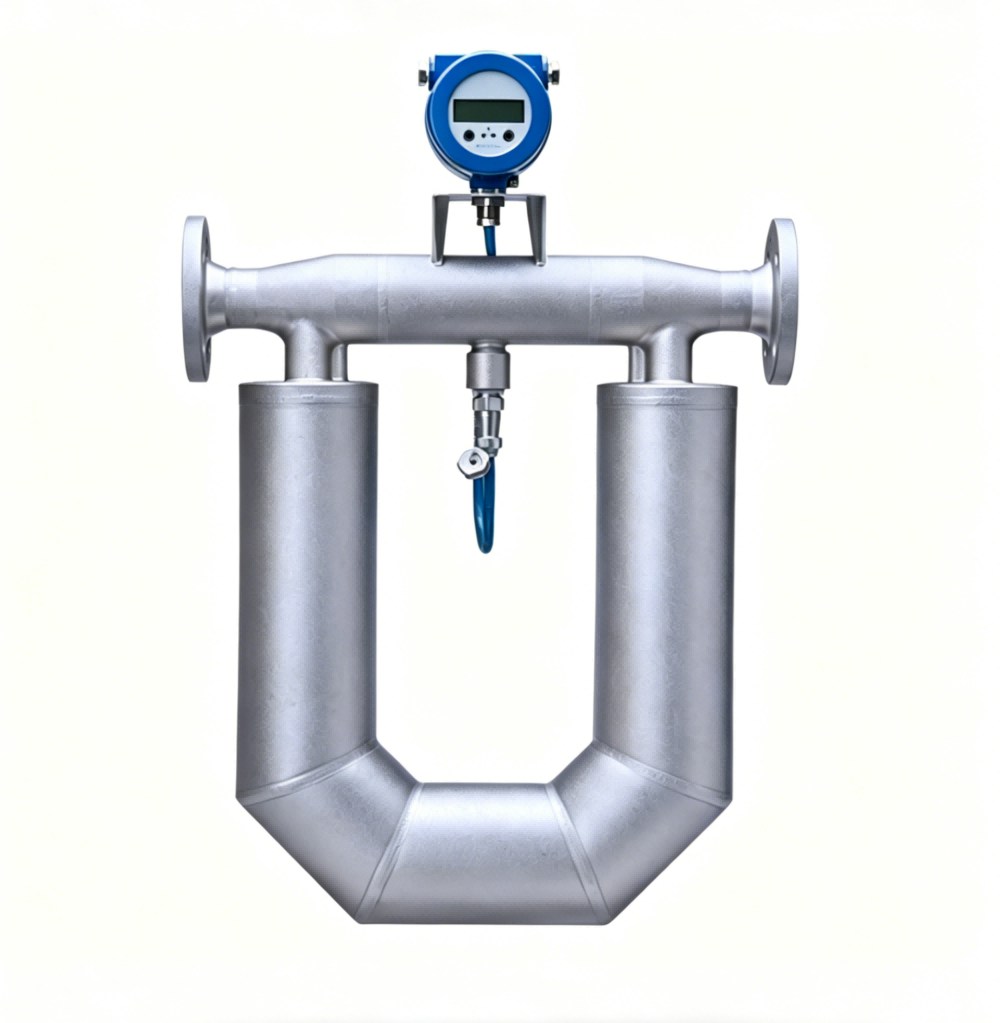
4. Polyurethane Metering and Mixing Station
This is the heart of the line. For a continuous sandwich panel process, I recommend a high‑pressure metering system with the following characteristics:
– Servo‑driven plunger or gear pumps with closed‑loop flow control.
– A/B component ratio deviation ≤ ±0.5%.
– Mixing head that can handle viscosities up to 2 000 mPa·s across varying temperatures.
– Raw material tank conditioning — temperature control to ±1 °C and continuous circulation — to avoid hard‑segment crystallization.
The mixing head traverses across the panel width, laying foam evenly onto the lower facing before the upper facing is applied. An improperly maintained mixing head with recirculation dead zones can cause pre‑reaction and streaks; plan for automated flushing and daily inspection.
5. Double‑Belt Laminator and Curing Oven
The poured liquid mixture rises and solidifies between two moving conveyor belts, often called a double‑belt press. Three aspects matter more than the brand name:
- Belt parallelism — any misalignment creates a wedge‑shaped panel.
- Temperature zones — the curing oven gradient should start at 40‑50 °C and peak at 60‑65 °C for PU, or up to 75 °C for PIR. Heating must be uniform across the entire width to avoid uneven foam rise.
- Oven length — directly determines your maximum line speed. A 24‑m oven can support 5‑7 m/min for 100‑mm‑thick panels; if you need 10 m/min, expect a 36‑m oven or longer.
6. Flying Cut‑Off Saw and Cooling Conveyor
Panels are cut on the fly by a servo‑controlled saw synchronized with line speed. Tolerance should be within ±1 mm over a 12‑m panel. The cooling conveyor then brings panel temperature below 30 °C before stacking to prevent post‑production bowing.
7. Automatic Stacking and Packaging
A vacuum or mechanical stacker builds pallets of finished panels. Edge protection and weather‑resistant wrapping are part of this station if you ship to humid regions.
Supporting Auxiliary Equipment
- Raw Material Pre‑mixing and Refilling Station — day tanks for the metering machine must be refilled automatically from IBCs or drums. A conditioning station that stirs and circulates material prevents glycol separation in the polyol blend.
- Preheating Ovens — dedicated ovens for 200‑kg drums ensure material temperature uniformity before pumping.
- Air Compressor and Drying System — the entire line, especially pneumatic controls and cleaning cycles, needs stable clean dry air. A 15‑22 kW screw compressor with refrigerant dryer is typical.
- Edge‑Sealing Glue Applicator (for Rock Wool or Hybrid Panels) — if you produce rock wool‑cored or mineral‑wool edge‑sealed panels, you need a dedicated polyurethane edge‑sealing station that precisely applies reactive foam along the panel edges to lock the core and prevent thermal bridging.
Factory Layout: Space, Flow, and Utilities
A well‑designed layout reduces material handling and safety risks. Here is how I approach the floor plan for a typical 50‑m‑long line.
Minimum Hall Dimensions
- Length: line length (40–60 m) plus raw material area (10 m) and finished goods buffer (15 m) — 75 to 90 m.
- Width: allow 4‑5 m for operator walkways on both sides of the line, plus space for coil storage and auxiliary equipment — 18 to 22 m.
- Ceiling height: the curing oven and some roll‑forming equipment may require 6 m clearance.
Zoning
- Raw material receiving zone — separate from production hall with proper ventilation for isocyanate handling.
- Coil storage — near the de‑coiler, with a 5‑ton overhead crane for loading.
- Main production line — linear flow from uncoiler to stacker. Avoid right‑angle bends that distort panel handling.
- Quality control station — a dedicated area at the end of the line for thickness check, adhesion test, and density sampling.
- Waste and trimming management — foam trimmings and start‑up waste need a dedicated collection system.
Utilities
- Electrical load: a complete line may draw 250–350 kW; verify transformer capacity early.
- Cooling water: for mixing head and hydraulic systems, a closed‑loop cooling tower is sufficient.
- Ventilation: PU foaming releases small quantities of blowing agent; local exhaust ventilation above the pouring area and curing oven is mandatory.
Investment Planning: What You Are Really Paying For
A turnkey sandwich panel factory budget has five layers. Quoting only the “line price” is the fastest way to exceed your real budget.
1. Core Line Equipment (40–50% of total)
Continuous double‑belt line with high‑pressure metering. The cost scales with line width, oven length, and automation level. A 6‑m/min, 1.2‑m‑wide line with basic stacking will sit in a different bracket than a 10‑m/min, 1.25‑m line with fully automatic cassette changing and robot stacking.
2. Auxiliary Systems (5–10%)
Pre‑mixing stations, tank farms, preheaters, compressed air, edge‑sealing stations, and laboratory testing equipment.
3. Installation, Commissioning, and Training (8–12%)
This is the turnkey component. It includes mechanical installation, electrical integration, process debugging with your chosen formulations, and operator training. Skipping or under‑budgeting here is a common source of delayed start‑up. One project I consulted on took four extra months because the buyer tried to install the line with a local team unfamiliar with PU process control. The metering calibration alone took two weeks longer than it should have.
4. Civil Works and Factory Modifications (20–30%)
Foundations, crane beams, floor load capacity (some oven sections weigh over 20 tonnes), ventilation ducting, and fire‑protection systems. In my experience, floor flatness tolerance of ±3 mm over 20 m is often underestimated — it directly affects double‑belt alignment.
5. Working Capital and Initial Raw Material Inventory (10–15%)
You will need enough polyol blend, isocyanate, facing coil, and packaging material for at least one month of operation, plus buffer stock for formula validation runs.
A realistic total investment for a complete, ready‑to‑produce turnkey sandwich panel factory starts from a seven‑figure USD range and can go well beyond depending on automation and capacity desires.
Common Mistakes That Delay Start‑Up or Kill Profit Margins
- Buying on speed alone — a line that runs at 12 m/min but produces density waves and thickness variation will generate more scrap than a slower, stable line.
- Ignoring the mixing head’s maintenance schedule — hardened buildup inside the mixing chamber reduces mixing quality over weeks, not months. Daily purging is non‑negotiable.
- Underestimating upstream raw material conditioning — if your polyol arrives at 10 °C and the machine expects 25 °C, the ratio control will oscillate. Your pre‑heating and conditioning capacity must match your hourly consumption.
- No local process support — a turnkey supplier should offer remote diagnostics, parameter support, and on‑site process engineers for ramp‑up. Ask specifically about post‑commissioning support structure, not just warranty clauses.
What to Look for in a Turnkey Partner
A sandwich panel line is not a purchase; it is a 10‑ to 15‑year production partnership. When evaluating suppliers:
- Do they understand your local raw material characteristics? A formulation that works in one region might fail with a different supplier’s polyol due to catalyst sensitivity.
- Can they provide factory layout drawings, utility load lists, and foundation plans before final order? This is a test of real EPC capability.
- What is their track record with lines of similar capacity and panel type? Ask for line performance data, not just installation photos.
From my two decades of working with polyurethane equipment, the most profitable sandwich panel lines are not the fastest ones. They are the ones where metering accuracy, curing oven thermal stability, and operator training have been engineered together from day one.
Frequently Asked Questions
What is the minimum space needed for a sandwich panel factory?
For a complete continuous line with raw material storage and finished goods staging, plan for a minimum building footprint of approximately 1 500–2 000 m² (75–90 m long × 18–22 m wide) with clear height of 6 m or more.
Can one line produce both PU and PIR sandwich panels?
Yes, but you need a mixing head and metering system capable of handling the higher material temperatures and different reactivity profile of PIR. The curing oven must also reach and maintain the higher temperatures required for PIR crosslinking.
How long does it take to install and commission a turnkey line?
From equipment arrival to first commercial production, expect 3 to 5 months assuming the civil works are ready. Process commissioning — tuning foam density, adhesion, and thickness control — can take an additional 4 to 6 weeks.
Do I need a separate edge‑sealing station?
If you plan to produce rock wool sandwich panels or hybrid panels with a mineral wool core, an edge‑sealing station is essential to fill the panel edges with PU foam and prevent moisture ingress and thermal bridging.
What is the most overlooked ongoing operating cost?
Scrap rate. A poorly calibrated metering system or an unstable oven can easily generate 3‑5% waste, which directly eats into your material margin. Investing in precision pays back within months.
For a factory configuration built around your product and capacity targets, work with an engineering team that can deliver the complete line, auxiliary systems, and the process recipes that make it run profitably from day one.