After spending two decades troubleshooting PU processing lines, I can tell you this: when a cold room panel fails insulation tests, the root cause is rarely just a bad formula. It’s almost always an interaction between metering accuracy, temperature stability, and line speed that no one bothered to measure correctly.
High-performance PU/PIR insulation panels don’t just happen because you bought the right chemicals. They happen because your production line controls density within ±1 kg/m³, adhesion across every square centimeter of metal sheet, and foam rise profile exactly in the curing window. Miss one of those, and you’re not making premium cold storage panels — you’re making scrap that costs you profit.
This guide walks through the line sections, critical process parameters, and equipment decisions that separate consistent producers from constant troubleshooters.
What “High Performance” Actually Means for Cold Room Panels
A cold storage panel is not a decorative wall board. It must:
- Maintain low thermal conductivity (≤0.022 W/m·K for PIR, slightly higher for standard PU) over years of thermal cycling.
- Withstand negative pressures during door operation without delamination.
- Achieve the fire rating demanded by local codes (B2, B1, or even A-level via composite core).
- Stay flat — because an uneven panel turns into an installation nightmare on site.
These properties trace back to foam cell structure, density distribution, and adhesion quality, all governed by the production line’s metering, mixing, and curing stations.
Core Sections of a Cold Room Panel Production Line
A continuous sandwich panel line is a synchronized chain. If one section drifts, the whole line drifts.
1. Decoiling and Roll-Forming
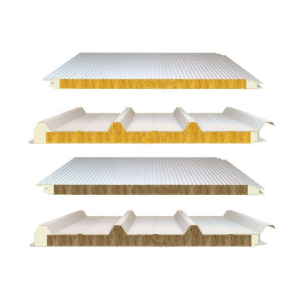
The upper and lower metal sheets (typically 0.4–0.8 mm galvanized steel or aluminum) unwind from coils and pass through roll-formers that shape the profile — flat, micro-ribbed, or corrugated. The forming precision determines inter-panel fit and foam distribution later. Misaligned profiles create uneven cavity depth, which means uneven foam thickness and thermal bridging.
2. Preheating
Most producers learn the hard way: cold metal kills adhesion. Preheating the metal sheets to 35–50°C before the pouring point is essential for proper foam bonding. When the metal temperature fluctuates (e.g., morning shift vs. winter morning), adhesion quality fluctuates with it. A closed-loop preheating system with infrared or hot air, linked to line speed, is worth every cent.
3. Metering and Mixing Station
This is where panel quality is won or lost. A polyurethane or PIR system requires two or three components (polyol, isocyanate, and typically a catalyst/blowing agent package) to be metered in precise ratio and mixed to homogeneity within seconds.
For high-performance panels, look for:
- High-pressure impingement mixing heads (not low-pressure mechanical stirrers) that self-clean and maintain ratio stability even during momentary speed changes.
- Servo-driven metering pumps with closed-loop flow control — not just open-loop gear pumps that drift over time. A metering accuracy of ±0.5% is the practical baseline for density repeatability.
- Real-time monitoring of throughput, pressure, and temperature at each component stream. When the ratio shifts by 1%, final density can shift by 2–3 kg/m³, which is enough to fail a customer’s thermal spec.
4. Pouring and Lay-Down
The mixed liquid is dispensed through a traversing head onto the moving bottom metal sheet. The pour pattern, traverse speed, and nozzle height must be tuned to the panel width and line speed. The goal: create a uniform liquid distribution that fills the cavity with minimal waste and no pre-foaming outside the press.
I’ve seen lines where a poorly calibrated traverse caused 5% excess material at the panel edges — month after month — simply because no one checked the nozzle position with a dummy run.
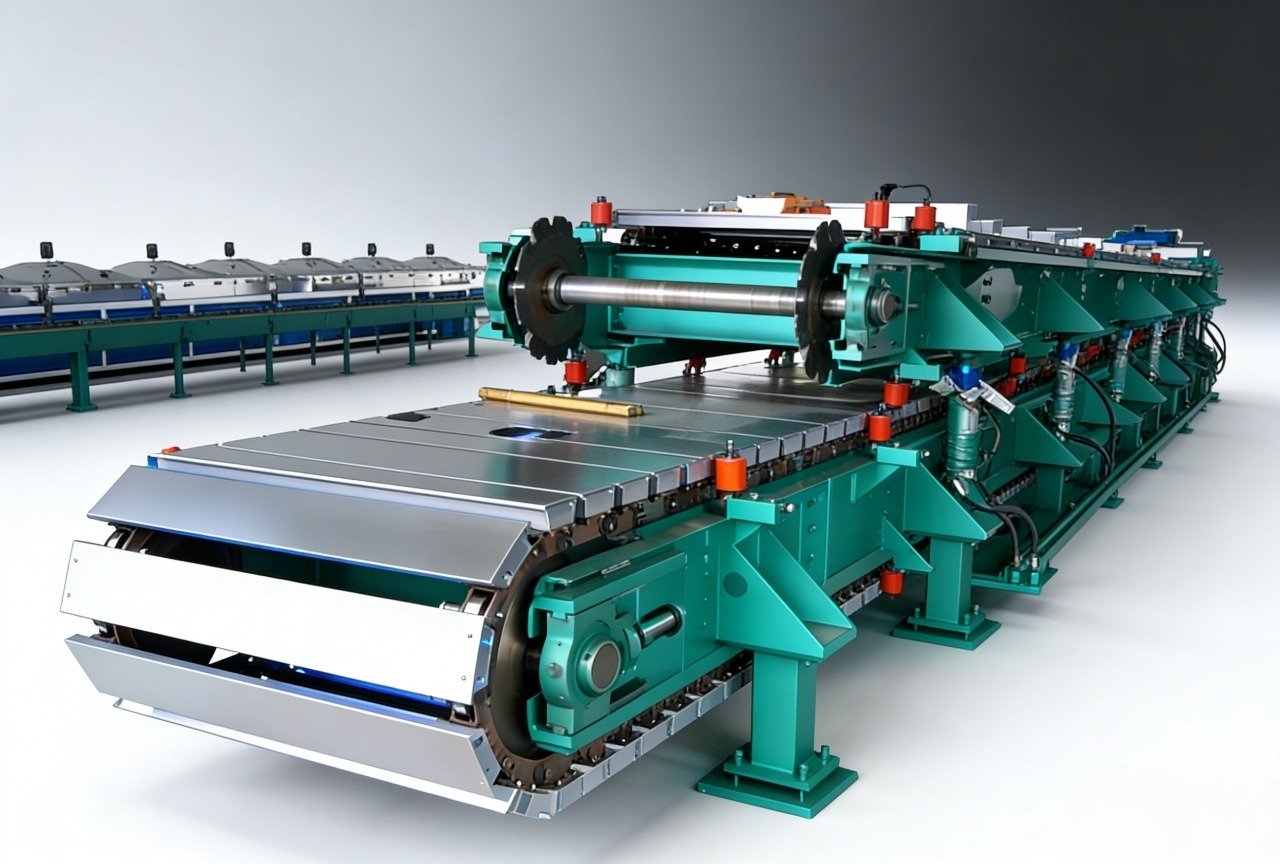
5. Double-Belt Press and Curing
The foam rises and cures under controlled temperature (typically 45–65°C) while a continuous double-belt conveyor applies uniform pressure, shaping the panel thickness and ensuring full adhesion. Key here:
- Belt flatness and temperature uniformity across the width. A hot spot can overcure the foam surface, reducing bond strength.
- Consistent belt speed synchronization with the upstream forming section. Any mismatch leads to internal shear stress in the foam, which shows up later as warping.
6. Cutting and Stacking
After exiting the press, the continuous panel ribbon is cut to length by a flying saw or guillotine. Dimensional tolerance relies on encoder feedback and smooth acceleration control to avoid micro-cracks at the cut edges. Panels are then stacked and allowed to post-cure for 24–48 hours before shipping.
PU vs. PIR: How Core Material Choice Affects Production
PIR (polyisocyanurate) panels offer better fire resistance and lower smoke generation than standard PU, making them the go-to choice for many cold storage projects. However, PIR systems are more demanding:
- Higher reaction exotherm: requires tighter temperature control or risk scorching.
- Narrower processing window: the cream time, gel time, and rise time are shorter and more sensitive to component temperature fluctuations.
- More catalyst sensitivity: ratio deviations affect not just density but also the isocyanurate ring formation that defines PIR’s fire performance.
If your line was designed only for PU, switching to PIR often requires upgraded metering pumps, more responsive temperature control, and possibly a different mixing head geometry. I’ve seen factories attempt PIR on legacy equipment and end up with panels that passed density tests but crumbled under fire testing because the trimerization didn’t complete properly.
Critical Parameters for High-Performance Panel Production
Density Control: The Foundation of Insulation Value
Target density for cold room panels typically ranges from 38 to 45 kg/m³. Lower density saves material cost but can compromise compressive strength and insulation aging. The production line must maintain this target across the entire panel length and width. This means:
- Metering ratio closed-loop correction every revolution of the pump — not every batch.
- Automatic adjustment when line speed changes (e.g., during startup or slowing).
- No “human factor” override that allows an operator to tweak the ratio without logging the change.
Adhesion Strength: Bonding Between Metal and Foam
Adhesion failure between metal facings and foam core is a warranty expense waiting to happen. It typically presents as delamination at panel corners after a few thermal cycles. Root causes from the line perspective:
- Metal temperature below dew point or too low for the foam system.
- Insufficient pour volume at edges (often a traverse pattern issue).
- Contamination on metal surface (oil, rust, condensation).
- Using a PIR formulation designed for lamination without an adhesion promoter or primer.
Flatness and Thickness Tolerance
Cold room panels must fit tightly during assembly. A thickness variation of more than ±1 mm across the width often traces back to:
- Uneven pressure in the double-belt press (check hydraulic or pneumatic pillows individually).
- Inconsistent foam rise due to ratio drift.
- Uneven preheating across the metal sheet width.
Common Production Defects and Their Equipment Roots
When I visit a line that’s producing bad panels, I look at three things first: the mixing head last cleaned, the latest density chart, and the metal sheet temperature at the far edge of the preheating zone. Here’s a short troubleshooting map:
- Uneven density (soft spots): Metering pump hysteresis or a partially clogged mixing chamber port.
- Surface depressions or “sink marks”: Premature skin formation due to excessive heat; or uneven foam shrinkage from incorrect ratio.
- Voids and blowholes: Air ingestion through loose joints in the feedstock piping, or moisture contamination.
- Poor edge fill: Traverse timing off, or pour volume insufficient for increased line speed.
- Panel bowing after cutting: Internal stress from unmatched curing rate — usually lower belt temperature vs. upper belt.
How to Choose a Production Line That Delivers Consistency
Spec sheets can be deceiving. A machine rated for “2000 kg/h throughput” means little if it cannot hold ratio during speed ramps. When evaluating a line, focus on:
- Metering pump type: Piston pumps with linear motors or precision gear pumps with servo drives — avoid simple positive displacement pumps without feedback.
- Mixing head design: High-pressure, self-cleaning mixing heads with their own recirculation circuit minimize solvent use and downtime. Look for component pressure balance monitoring.
- Control architecture: PLC-based with full data logging of temperature, flow, pressure, and line speed. This data is your insurance when a customer questions batch quality.
- Integration integrity: A line assembled from parts sourced from five different suppliers often suffers from communication lags. A single-source integrator who takes responsibility for the entire line startup is the difference between three weeks of fine-tuning and six months of finger-pointing.
- After-sales support: Ask for a local service reference. A quick phone call to a running factory will tell you more about response time than any sales presentation.
Maintenance Checklist to Protect Your Output
High-pressure lines are reliable when maintained, but they’re unforgiving of neglect:
Daily:
– Check mixing head nozzle orifices for buildup — even a slight blockage shifts flow ratio.
– Record pump suction and discharge pressures; trend deviations indicate seal wear.
– Verify preheater temperatures at multiple positions.
Weekly:
– Calibrate flow meters against a graduated catch test (under actual operating pressure).
– Inspect belt surface condition and alignment.
– Test emergency stop and material recirculation systems.
Monthly:
– Replace inline filters, even if they look clean.
– Run a full-axis test on traverse motion — ensure smooth reversal at panel edges.
– Check hydraulic oil condition if using hydraulic servo pumps.
FAQ
What is the typical line speed for cold room panel production?
Modern lines run at 4–10 m/min continuously, depending on panel thickness and foam system reactivity. Thicker panels (100–200 mm) require slower curing, so line speed drops.
Can one line produce both PU and PIR panels?
Yes, but only if the metering system can handle the catalysts and higher temperatures needed for PIR. Confirm with the equipment builder that the mixing chamber and temperature control are rated for PIR’s exotherm.
How important is metering accuracy really?
It determines your scrap rate, material cost, and customer trust. A ±0.5% accuracy pump adds a few thousand to upfront cost but often pays back within a year in reduced raw material waste and fewer warranty claims.
What panel thickness can a standard line handle?
Most lines cover 50–200 mm. Changing thickness usually requires adjusting the double-belt opening and potentially modifying the traverse head nozzle. Confirm the range and changeover time.
Do I need a cleanroom environment for panel production?
Not for standard cold room panels, but consistent temperature and humidity control in the production hall improve foam quality and reduce condensation issues on metal sheets.
Your Production, Built on Measured Facts
High-performance cold room panels aren’t an accident. They’re the output of a production line where every pump revolution, every degree of preheat, and every millimeter of traverse travel is measured and controlled.
When you’re ready to move beyond brochure numbers and have a real conversation about the process parameters that matter for your panel spec and your target output, that’s where my team at Haifeng comes in. We configure metering stations, mixing heads, and full turnkey lines around your reality — not a generic template. Reach out with your panel design, and let’s walk through what your line needs to look like before you sign a purchase order.