Production managers and plant owners considering a polyurethane foam machine usually focus first on throughput and price. That approach costs money. I have seen lines where a 2 percent metering error on the isocyanate side turned what looked like a strong foam block into scrap at the trimming station — a 5 percent yield loss per batch that no purchase discount could offset. Choosing the right polyurethane foam equipment comes down to matching the machine’s process capability to your specific foam chemistry, part geometry, and production rhythm, not to the biggest number on a datasheet.
Matching Machine Type to Your Production Process
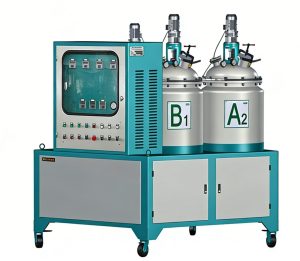
A polyurethane foam machine is not a single category of equipment. The gap between a low-pressure open-pour unit and a high-pressure closed-mold injection system is comparable to the gap between a manual lathe and a CNC machining center. The first decision is which machine type fits your process.
| Machine Type | Typical Application | Key Strength | Typical Metering Precision |
|---|---|---|---|
| Low-Pressure Foaming Machine | Furniture foam, small molded parts, prototyping | Simple operation, lower upfront cost | ±0.5% with servo-controlled gear pumps |
| High-Pressure Foaming Machine | Car seats, steering wheels, medical sponges, elastomer parts | Fast cycle times, fine cell structure, high mold fill consistency | ±0.5% with closed-loop control |
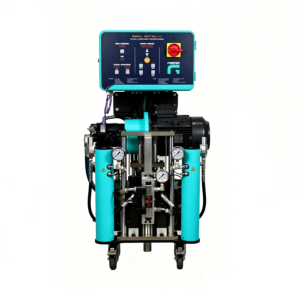
| PU Spraying Machine | Building insulation, waterproofing, automotive interior spraying | Handles complex surfaces, uniform coating thickness | ±1% with patented nozzle technology |
| Elastomer Casting Machine | Industrial rollers, seals, photovoltaic guide rollers, weighing wheels | Handles high-viscosity prepolymers and dual chain extenders | ±0.5% |
A furniture manufacturer running flexible foam in open molds at 50 parts per shift will rarely benefit from a high-pressure machine. The maintenance overhead and tooling cost would not be justified. A Tier-1 automotive supplier molding high-resilience seat cushions at one part every 90 seconds cannot function without one. I have walked into plants in both situations and seen the consequences of the wrong choice — under-utilized capital on one side, cycle-time bottlenecks on the other.

Flow Rate, Throughput, and Real Cycle Time
Spec sheets list maximum flow rates, but no production line runs at maximum with stable quality. The usable output of a polyurethane foaming machine depends on shot weight, demolding time, and how well the mixing head handles material that has been recirculating at temperature for hours.
For a continuous line producing foam blocks, flow rate — measured in kilograms per minute — directly determines output. That number alone is not the whole picture. A machine that can deliver 120 kg/min but requires a 20-minute pause every two hours for mixing head cleaning will deliver less foam per shift than a 90 kg/min machine with an automatic cleaning cycle. I have measured the difference more than once: the faster machine lost 80 minutes of production per shift, netting less finished foam over a month.
For discrete molding, figure out the required shot volume per cavity, factor in pour time and demolding time, then add at least 15 percent headroom on the metering pump capacity. A machine running at 95 percent of its rated flow all shift will display ratio drift by mid-afternoon as pump internal clearances heat up. The Haifeng HF-LPM-1A1B-LO high-flow box block foaming machine, for example, is built to sustain 24/7 production with fast formula switching, but even it will eventually show variance if pushed past 85 percent of rated capacity for weeks without recalibration.
Metering and Mixing: What Determines Foam Quality
Every foam defect that cannot be traced to mold temperature or material condition ultimately goes back to two things: ratio error and mixing quality. A deviation of one percentage point in the polyol-to-isocyanate ratio can shift final foam density by more than 3 kg/m³ and change the compression set behavior well outside the specification window. The difference between a ±0.5% metering system and a ±1% system is not academic — it is the difference between shipping a full container and paying for rework on half of it.
Four elements of the metering and mixing system deserve close attention when evaluating a machine:
- Pump type: Servo-driven gear pumps with closed-loop feedback maintain ratio across viscosity changes better than fixed-displacement pumps with open-loop control. Over an 8-hour shift where material temperature rises from 22°C to 28°C, the servo system compensates; the open-loop system does not.
- Mixing head design: For high-pressure machines, look at the impingement nozzle geometry and chamber volume. Too large a chamber creates pre-flow that leads to density gradients at the start of the pour. The E-type mixing head in some high-end systems uses a multi-stage spiral dynamic mixing design achieving ≥99.5% mixing uniformity, which matters when you are pouring 30-second gel-time foam into a complex mold.
- Temperature control: The mixing head chamber temperature should hold within ±0.5°C. Wide temperature swings cause viscosity shifts that amplify metering errors. A dedicated PID-controlled chamber with constant-temperature water jacket is a minimum for precision molding.
- Cleaning design: For multi-shift operation, look for automatic mixing head cleaning — air purge followed by solvent flush and a rotating air purge cycle. Manual cleaning between shifts adds labor and exposes the head internals to gradual build-up, which eventually throws off the pour pattern.
Evaluating Turnkey Capabilities and After-Sales Support
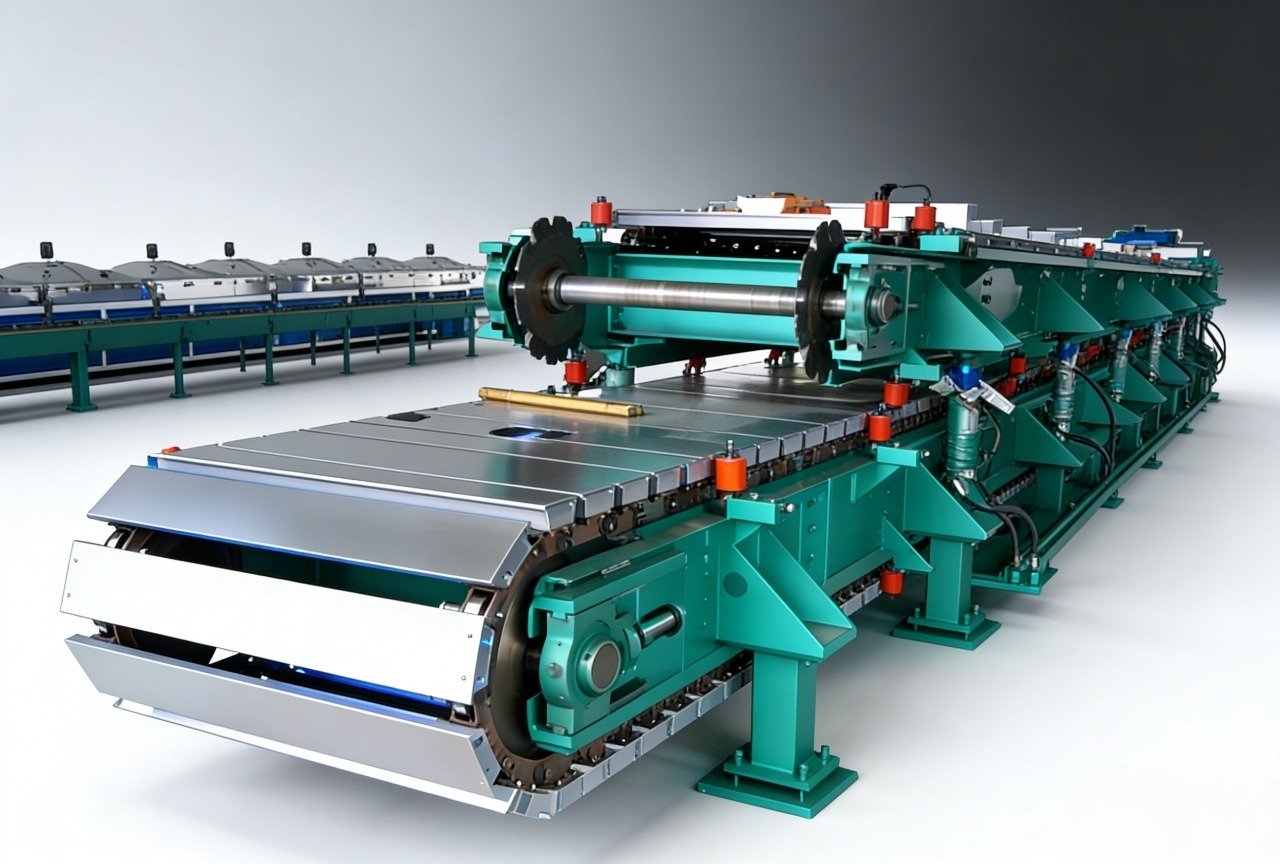
A polyurethane foam machine is rarely a stand-alone purchase. Most production lines require material preheating ovens, premixing stations, conveyors, mold carriers, and sometimes robotic pouring integration. A supplier that can deliver the full line with a single-point commissioning team eliminates weeks of coordination delays. This is where the difference between a machine vendor and a turnkey systems integrator becomes visible.
When I ship a line that includes a 6-axis robotic pouring system with ±0.05mm repeatability, the customer’s project schedule is already tight. If the robot integration is handled by a third party, any interface issue — communication protocol mismatch, safety interlock conflict — becomes a three-company email chain that eats days. I strongly prefer working inside a single team that owns the mechanical, electrical, and control logic from the raw material drum to the finished part conveyor.
Check three things before placing an order:
- Factory acceptance test: Does the supplier run the full line at their facility with your actual material formulation before crating it? A simulation with surrogate fluid tells you half the story. Real polyol and isocyanate reveal how the premixing station’s agitation schedule affects nucleation.
- On-site commissioning: How many engineering days are included? For a turnkey continuous foam line, less than 15 days of on-site support is rarely enough to move from mechanical installation to stable production.
- Spare parts inventory: What is the lead time on mixing head seals, pump check valve cartridges, and PLC I/O modules? If the answer is more than five working days for wear parts, you will eventually carry your own inventory. Factor that cost into the overall budget.

Cost Structure: What You Pay For Beyond the Machine Price
The purchase price of a polyurethane foam machine typically represents 45–60% of the total investment needed to bring a line into production. The remainder breaks down across ancillary equipment, installation, training, and the first three months of spare parts.
A polyurethane raw material preheating oven capable of holding four 200 kg drums at a stable 60°C costs several thousand dollars, but it prevents cold-material startup defects that can ruin the first pour of every shift. Polymer premixing stations that automatically refill day tanks from IBCs keep the line running during drum changeovers — a detail that becomes critical once the line is producing against a delivery deadline.
If your facility requires compressed air for the line’s pneumatic actuators and mixing head cleaning cycles, the air compressor must be sized for continuous duty at the line’s peak demand plus a 20% margin. A 30 kW screw compressor with a refrigerant dryer and multi-stage filtration will add to the total project cost, but skipping proper air treatment introduces moisture into the cleaning air circuit, which eventually contaminates the mixing head.
Common Questions About Choosing a Polyurethane Foam Machine
What is the one specification I should never compromise on?
Metering precision. Output can be scaled with parallel lines. Automation can be added later. But if the base machine cannot hold the A/B component ratio within ±0.5% across an 8-hour shift, every other specification becomes irrelevant. I have replaced machines for customers where the only fault was metering drift that turned consistent foam into a gamble.
Do I need high pressure if I only run small batches?
Not usually. Low-pressure machines using high-shear mechanical mixing produce fine cell structures for parts with moderate flow paths, and they cost significantly less to purchase and maintain. The breakpoint is when you need to fill a complex mold in under three seconds, or when your foam system uses a fast-gel formulation that demands high-pressure impingement mixing to avoid pre-cure. If your shot weight is under 2 kg and your mold is open, a low-pressure machine with a servo metering system will cover most requirements.
What is the difference between a spraying machine and a pouring machine?
A spraying machine atomizes the mixed material and applies it as a coating, suitable for insulation, waterproofing, and surface protection. A pouring machine delivers a controlled stream into a mold or onto a moving substrate. The metering requirements are similar, but the mixing head design and flow control differ substantially. A spraying machine like the Haifeng PU spraying system uses a patented nozzle to hold coating thickness within ±2%, which is critical when applying 50 mm of insulation to a 200 m² roof. A pouring machine does not need that capability; it needs precise shot-size control and a clean cutoff.
When does a robot make sense for foam pouring?
When your part has a complex 3D surface that cannot be filled evenly with a stationary pour, or when you need to vary the pour pattern between different parts without changing fixed tooling. A 6-axis robot pouring system with automatic tool offset compensation can pour a gasket path into a mold with less than 0.5 mm of deviation, which is not achievable with a fixed-pattern gantry. The robot also allows color change and formulation switchovers in under three minutes, compared to 20 minutes on some fixed-head systems. The cost is higher, but so is the flexibility. If your product family changes seasonally, the robot payback can be under 18 months.
Can I use the same machine for different foam densities?
A well-designed machine with programmable recipe management can handle density changes as long as the flow rate and mixing head configuration stay within the machine’s operating window. The controller stores multiple recipes with target flow ratios, pour rates, and head speeds. The switchover time is typically less than five minutes if the system includes automatic cleaning. I work with multiple customers who run memory foam at 45 kg/m³ and high-resilience foam at 55 kg/m³ on the same low-pressure machine with only a recipe change. The real limit is chemistry compatibility — switching from polyester to polyether polyol requires a thorough flush cycle to prevent cross-contamination.
Matching Machine Capability to Your Production Reality
A polyurethane foam machine is a precision metering system that happens to produce foam. The specification that matters most is the one that keeps your reject rate under 0.5 percent, not the one that looks best in a comparison table.
If you run a continuous line producing 300 kg/hour of flexible foam blocks, focus on metering stability at steady state and the mixing head’s ability to maintain cell structure without air entrainment. If you mold high-resilience automotive seat cushions at 30-second cycle times, the pour accuracy and mixing head cleanability become primary.
I have helped manufacturers specify machines for everything from medical-grade sponges with zero extraneous matter requirements to industrial sealing strips poured at 12 meters per minute. The ones that succeed do not start with a list of machine brands. They start with a clear definition of their process window — required flow rate range, acceptable ratio tolerance, cycle time ceiling, and material changeover frequency — then find the machine that operates comfortably inside that window.
For a production line where the downstream investment in molds, conveyors, and labor exceeds the machine cost by a factor of five, a 15 percent higher machine price to secure ±0.5 percent metering precision over a 10-year service life is a rounding error. The decision is not about price; it is about process risk.
Share your part geometry, target output, and material system and we will help you identify the machine configuration that matches your production reality. Reach our engineering team at info@haifengmachine.com or call +86-577-8829-8686.