Upgrading an old sponge foaming factory to a continuous PU foam line rarely stalls on equipment price. It stalls because the existing building, raw material handling, and metering setup were built for batch pouring, and these constraints decide whether the new line ever reaches stable density. This guide works through the retrofit sequence I use when assessing a plant: site checks first, then material flow, metering, utilities and commissioning, and budget. The point is to avoid paying for a line that cannot actually run continuously in the space you already have.
Can Your Old Sponge Factory Building Handle a Continuous PU Foam Line?
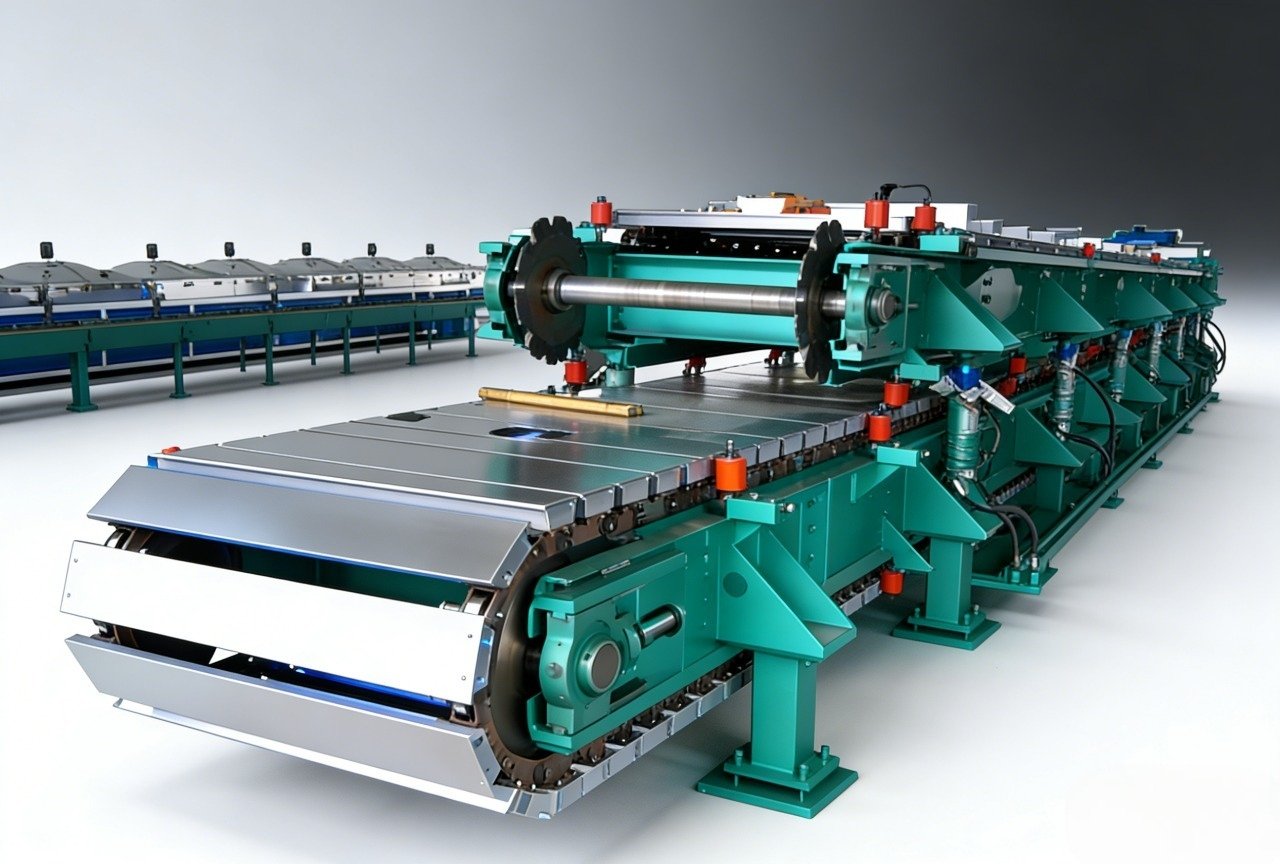
A continuous line changes the spatial logic of the building. A batch plant can tolerate a narrow aisle because raw materials are staged in drums and boxes are moved by forklift. A continuous line needs a straight conveyor path, a graded floor for drainage, and enough headroom above the pour zone for the full block rise. I check three dimensions before any equipment discussion: usable length, clear height above the conveyor, and floor load at the mix head and curing area.
| Factor | Typical batch setup | Continuous PU foam line requirement |
|---|---|---|
| Layout axis | Forklift aisles and box cells | Straight conveyor path with a fixed pour station |
| Headroom | Low box rise | Full block rise plus 1 m clearance |
| Floor load | Box storage and lift trucks | Conveyor supports, cutting section, block storage |
| Drainage | Local wash-down | Graded trough under the conveyor |
| Power | Mixer and local circuits | Metering, conveyor, ventilation, cutting, PLC |
One of the first calculations is not simply whether the machine fits, but what output the existing building can move without turning cutting and handling into the bottleneck. <Continuous PU Foam Line Capacity Guide: How Much Foam Can One Line Produce?> covers how conveyor speed, block width, and density combine into practical daily output, and why a line rated for high capacity can underperform in a narrow existing factory.
Why Does a Continuous Line Need a Fixed Pour Station?
The pouring head in a continuous line is not moved from box to box. It stays fixed while the conveyor carries the paper and rising foam through the process. That fixed position changes how the building is used. The pour station needs a dedicated floor area for mix head maintenance, raw material take-off points, and operator access. If the old plant has no straight run from the pour point to the cutting area, the upgrade usually costs more in civil work than in machinery.
How Does Continuous PU Foam Production Change Raw Material Handling?
Continuous pouring consumes material faster than batch work and is less forgiving of viscosity swings. The old method of pulling polyol from a drum beside the mixer works until a tank runs low mid-run, changes temperature, and the density shifts before anyone notices. I recommend a preheating oven matched to the supplier’s viscosity window, a buffer tank, and an automatic filling station so the metering unit never pulls from a cold drum.
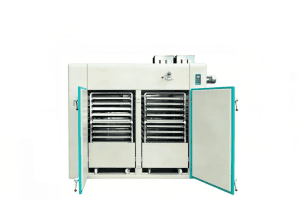
A 200 kg drum preheating oven can hold material at the required temperature before it reaches the day tank. The oven’s upper rating is 90 °C, but in practice the correct set point follows the polyol viscosity curve, often between 25 and 45 °C depending on grade. Too much heat is as troublesome as too little because it accelerates reaction at the mixing head and shortens the cream time.
Treating the upgrade as a one-for-one replacement creates a bottleneck because batch foaming and continuous foaming do not reward the same controls. <Continuous Foaming vs Batch Foaming for Sponge Production> covers why continuous processing shifts the priority from box cure time to steady-state metering, conveyor speed, and rise profile, and what that means for the raw material buffer you keep.
What Temperature Window Should You Hold for Polyol and Isocyanate?
The exact window depends on the formulation, but the goal is steady viscosity at the metering pumps. Polyol that sits too cool becomes harder to meter consistently, while isocyanate that runs hot can trigger side reactions and pressure build-up. I prefer to hold both components in separate day tanks with independent temperature control, and to use the preheating oven for incoming drums rather than forcing the metering unit to tolerate cold material.
Which Metering Retrofits Keep Continuous PU Foam Density Stable?
Once the line runs, density variation is usually the first quality problem. In continuous pouring, the mix head receives a stream rather than a batch, so a small ratio error is continuous and cumulative. A metering pump rated at ±0.5% accuracy still permits density drift if the calibration moves under heat load. We use closed-loop servo metering on high-flow box block machines because it corrects flow errors in real time, and we pair it with a high-shear dynamic mixing head. A deviation of one percentage point in the component ratio can shift final foam density by more than 3 kg/m³.
If your existing line drifts after the first hour of pouring, do not order a new line before measuring the pressure drop and temperature rise at the metering pumps. Send your current component ratio, flow rate, and viscosity to info@haifengmachine.com and we can confirm whether a metering retrofit or a full continuous line is the lower-risk path.
When Should You Choose Closed-Loop Servo Metering?
Closed-loop servo metering matters most when the line must hold a narrow density tolerance for long runs. If the product is standard furniture foam with a wide tolerance, a well-calibrated gear pump system may be enough. If the block is high-resilience foam or memory foam with tight cell structure requirements, servo correction is the safer choice because it compensates for drift in real time instead of waiting for an operator to notice a density shift.
What Utility and Commissioning Preparations Does an Old Sponge Factory Need?
Continuous production pushes ventilation, power quality, and compressed air harder than batch work. The pour zone releases volatiles continuously rather than in short bursts, so the extraction system must handle a steady load. Older factories often keep the same point extraction when they add a line, and within a few weeks operators report odor complaints or fogging in the cutting area. I look at air exchange rate, not just duct size, because continuous pouring changes exposure time.
Compressed air is another hidden constraint. A continuous line uses pneumatic control and mixing head actuation, and a compressor that managed batch pouring may not hold stable pressure during nonstop operation. We specify air systems rated at 0.8 to 1.0 MPa with enough receiver volume to avoid pressure dips when several valves open at once. The same upgrade should include drying and filtration because moisture in control air can damage solenoid valves and contaminate the mixing head purge circuit.
How Should You Commission the Line Before Full Output?
A new line should not go straight into commercial production. I run a dry sequence first, then a water or polyol trial, then a short foam trial. The numbered checks below are the minimum before the line takes over existing orders.
- Confirm conveyor tracking and paper feed with no product.
- Calibrate pump output against a weight scale at two flow rates.
- Run a ratio check with a non-foaming fluid and compare against the recipe.
- Pour a short foam block and measure density at the leading edge, middle, and tail.
- Cut the block open and check cell structure across the full width.
- Hold the line at running speed for at least four hours and record metering pressure, temperature, and density every 30 minutes.
Scrap rate is the only commissioning number that matters in the first month. A stable line should not produce off-spec blocks because the operator made a manual ratio adjustment during the run. If density variation appears after the line has been running for more than an hour, stop and check the metering temperature and return pressure before blaming the formulation.
What Counts as a Passing Continuous Foam Trial?
A passing trial is not a block that looks acceptable. It is a block that meets the density, hardness, and air permeability targets after the line has run continuously for at least half a shift. If the line only passes during the first hour, the metering or temperature control is drifting. If it passes only at low speed, the mixing head or ventilation is likely undersized for the target output.
What Budget and Payback Sequence Makes the Continuous PU Foam Line Upgrade Practical?
Owners usually budget for the machine and then treat utility and handling work as extras. That order causes delays because civil work, ventilation, and power upgrades sit on the critical path. I reverse the sequence: first confirm the building can accept the line, second size utilities, third fix raw material handling, fourth buy the line, and fifth fund commissioning and operator training. That way the machine arrives after the site is ready to run it.
Most of the final budget turns on the machine selection criteria, not just the quoted price. <Polyurethane Foam Machine Selection: A 2026 Buyer’s Guide> covers how to weigh metering type, heating capacity, and controls against the grades you actually run, and why the lowest quote can become the most expensive retrofit in a continuous line.
| Spend area | Why it matters | When to allocate |
|---|---|---|
| Civil and conveyor path | Determines whether the line fits at all | Before machine order |
| Ventilation | Controls continuous fume load | Before first pour |
| Compressed air | Keeps mixing and purge circuits stable | Before commissioning |
| Raw material heating | Stabilizes viscosity at metering pumps | Before production |
| Metering retrofit | Holds density across the block | With line purchase |
Upgrading an old sponge factory to a continuous PU foam line fails when the budget fixes the machine and ignores everything around it. The owners who get the cleanest start spend on the building, utilities, and material handling first, then keep the machine matched to the existing space. Send your building span, current batch mixer model, target block width, and density range to info@haifengmachine.com and we will confirm what has to change before you commit to civil work. You can also call the Haifeng engineering team at +86-577-8800-6000.
What Else Do Factory Owners Ask About Continuous PU Foam Line Upgrades?
Does a continuous PU foam line require a full building modification?
Only in some factories. A plant with a long, straight production hall can often upgrade with modest floor drainage and ventilation work. A plant with low headroom or a cramped cutting area may need more extensive civil changes before the conveyor has a straight path. The fixed pour station and full block rise are the two features that create the most site work, so measure those first.
Many owners assume continuous foaming means better for every product, but is that correct?
That assumption is too broad. Continuous foaming rewards products with stable formulations, predictable block dimensions, and enough daily volume to keep the line running. Short runs, frequent grade changes, or special foam structures may still favor batch boxes because the changeover and cleaning time on a continuous line can erase the speed advantage. The better choice depends on which constraint your current plant actually faces.
What foam densities can one continuous line produce for sponge?
It depends on the recipe range and the metering system more than the conveyor itself. A standard flexible foam line can pour low-density grades for cushions and higher-density grades for seating, but the density window is not unlimited. The practical limit comes from the cream time, rise profile, and cutting hardness. If the plant needs to switch between very different grades daily, the line must have fast formula switching and a mix head that drains cleanly between recipes.
In plants you have assessed, how long does it take for an upgraded line to reach stable scrap rates?
Usually one to four weeks after the utility and metering checks are complete. The fastest stabilizers are the ones that run the commissioning sequence in this guide before taking commercial orders. The slowest cases involve a metering pump that passes a short test but drifts under heat load, producing off-spec blocks after the operator leaves the line running. Share your current batch mix ratio and target density range, and we can confirm whether closed-loop metering and the ventilation changes described here are enough for your site.
If you’re interested, check out these related articles:
Rain Boot Factory Investment Cost
Phenolic Sandwich Panel Production Line vs PU/PIR Panel Line: Key Differences for Factory Investors
Rotary vs Linear PU Shoe Machines