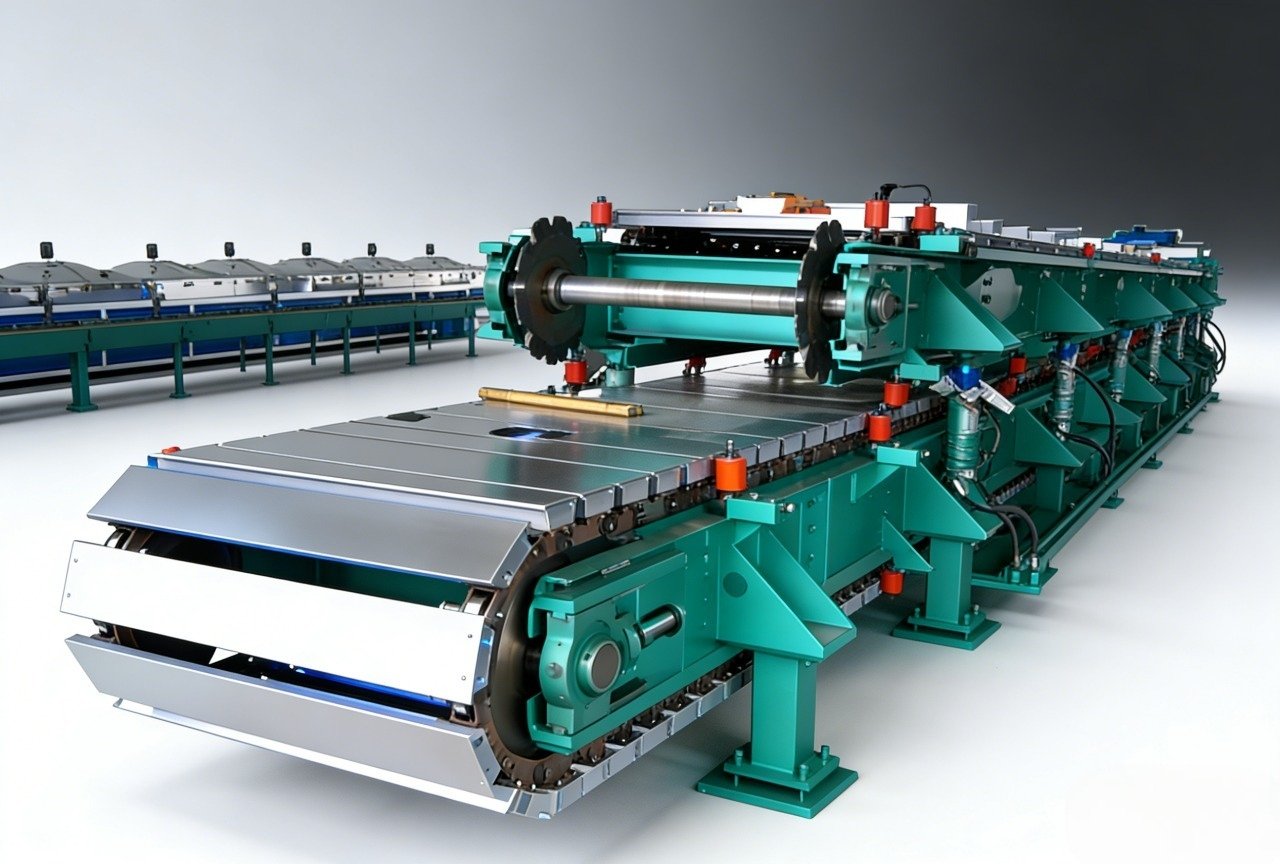
Most high-pressure PU machine quotes fail not because the machine lacks capacity, but because the checklist was written after the deal closed. A machine that meters well on a single-shot test can still lose ratio when an automated mold carrier tightens the cycle or when a robot asks for a different shot weight every 11 seconds. This article reverses that sequence: start with the part and the line, then force the equipment to prove it can hold the operating window.
Start With the Part, Not the Machine Specification
Before comparing pumps, mixing heads, or prices, define the actual shot the machine must deliver. That means shot weight, cycle time, material system, mixing ratio, viscosity range, filler loading, and whether the pour is open or closed mold.
For automated production, two numbers matter more than maximum output. First is the continuous shot envelope: the machine must hold ratio across the smallest and largest shot the line will call for, not only at the catalog maximum. Second is cycle stability: a mold carrier moving at 15 seconds per station creates a much stiffer start-stop pattern than a manual operator filling the same mold every 45 seconds.
Also define every component stream. A basic 2K system is polyol plus isocyanate. A fully automated line often adds color paste, blowing agent, catalyst, or a third polyol stream. If the quotation is built around 2K and the real process is 3K or 4K, the price comparison is invalid from the start.
Pressure, Metering Accuracy and Ratio Control
High-pressure impingement mixing is not a stronger version of a low-pressure stirrer. The components are brought to a high pressure—commonly in the 10–20 MPa range—and forced through opposing nozzles so the mixing energy comes from collision rather than an external agitator [1]. That makes pressure balance a process variable, not merely a pump setting.
If the polyol stream enters the mixing chamber at 14 MPa and the isocyanate stream enters at 11 MPa, jet penetration changes. Mixing is no longer symmetric, and the resulting part may show density variation, poor cell structure, or surface defects even though each pump is within its own pressure specification. Selection should therefore ask how the machine measures and holds component pressure balance during a changing shot sequence, not just in steady state.
Metering repeatability is the next gate. A conservative requirement for automated high-pressure work is that a 30-cycle sequence shows a repeatability band tight enough to stay inside the material supplier’s ratio tolerance. One demonstration shot is not evidence. Ask for a consecutive-cycle test with shot weight and ratio recorded, because wastewater and scrap from ratio drift usually appear before a pump fault.
Ratio drift usually appears as density scatter and scrapped parts long before a pump alarm. <Polyurethane Foam Machine Types: The Scrap Cost of Inaccurate Metering> covers the scrap cost mechanics and how to attach a cost to each ratio deviation.
If you already have the part drawing and material TDS, send the target shot profile to info@haifeng-automation.cn or WhatsApp +86 13566296633. A short specification review can show whether the quoted machine holds the operating window before the contract is signed.
Mixing Head and Multi-Component Handling
The mixing head is the point where machine capability either becomes part quality or becomes scrap. For automated production, verify that the head can operate in the line’s pour pattern: continuous pour, individual shot pour, or a sequence of different shot sizes. Self-cleaning piston function, nozzle wear, and recirculation during idle are difficult to retrofit cleanly.
Multi-component handling changes the head selection quickly. Color paste and catalyst streams are low-flow and sensitive to residence time. A machine may specify excellent accuracy for the main polyol and isocyanate streams, but the low-flow additive pump can become the limiting accuracy of the whole system. Confirm that additive metering is part of the same closed-loop control philosophy, not an afterthought.
Filled materials matter here as well. If the polyol side carries fillers or high-viscosity components, the mixing head passages, filters, and recirculation loop must be sized for the worst cold-start viscosity, not the warmed steady-state value. High-pressure is not automatically the right baseline for every filled or elastomer process.
For filled, high-viscosity or lower-output polyurethane systems, high pressure is not automatically the best baseline. <The Ultimate Guide to Low-Pressure Foaming Machines for PU Elastomers> covers dynamic mixing, RPM and cleaning trade-offs for elastomer casting.
Automation Integration and Safety Interfaces
In an automated line, the high-pressure machine is one station among robots, mold carriers, preheat ovens, and downstream presses. The first integration question is not whether the machine has a PLC, but whether it can accept cycle commands and return status without operator interpretation.
Confirm that the machine can handshake with the upstream mold carrier: start permission, shot complete, alarm, abort, and cycle counter. If the line uses recipe selection, the machine should switch recipe by part number and automatically load the associated ratio, shot size, pressure settings, and pour trajectory. A machine that stores recipes locally but requires manual selection will quickly become the bottleneck.
Safety-related control functions should be evaluated under an ISO 12100 risk assessment and, where relevant, ISO 13849-1 performance-level logic [2][3]. Electrical interlocks, emergency stop circuits, and guarding should follow IEC 60204-1 [4]. High-pressure mixing heads add a specific hazard: an unintended high-pressure stream or a failed interlock can cause injection injury. The risk assessment must cover nozzle access, maintenance position, and energy isolation.
A machine that cannot handshake with the upstream line will become the bottleneck, even if its metering is excellent. <How to Design a PU Shoe Factory Layout> covers station spacing, mold logistics and utility placement for automated polyurethane production.
If your line includes robot in-feed or a servo mold carrier, include the interface list in the inquiry. A machine review that ignores the automation protocol usually underestimates startup time by weeks.
Acceptance Testing and Site Readiness
The best procurement checklist defines what a passing machine looks like before the order, not after delivery. Three tests belong in the contract for high-pressure automated machines.
First, shot weight repeatability over at least 30 consecutive cycles. Record average, range, and standard deviation. A single warm stable sequence is not enough; the test should include a start-up sequence and a short idle period if the line will operate that way.
Second, ratio verification against the material formulation. This should be done by weight or flow measurement on each component, not inferred from pressure. The acceptance criteria should be written as a tolerance band, for example the ratio must remain within the raw material supplier’s allowable deviation across all test cycles.
Third, pressure balance during a pour sequence. The machine should demonstrate that both components reach their set pressure range and remain balanced through the shot, with a defined alarm if one side falls outside the window. This is more useful than a pressure reading at idle.
Site readiness is part of the same gate. Power, compressed air, cooling water, hydraulic supply, ventilation, and raw material storage must be confirmed for continuous duty, not for a two-hour demonstration. A machine accepted in ideal conditions often fails later because the site could not maintain inlet pressure or material temperature.
Before acceptance, the operator team needs a diagnostic path for the same variables the contract is testing. <PU Low Pressure Foaming Machine: Maintenance Checklist & Troubleshooting Guide> covers the daily checks that prevent small metering faults from becoming batch failures.
Selection Checklist for Automated Production
Work through this table before comparing final quotations. If a supplier cannot answer an item with a measurable value, mark it as unresolved rather than assuming it is acceptable.
| No. | Check | What to confirm |
|---|---|---|
| 1 | Shot and cycle range | Smallest and largest shot stay within the machine’s continuous operating window |
| 2 | Component streams | Polyol, isocyanate, color, catalyst and additive streams are included, not assumed 2K |
| 3 | Viscosity and fillers | Pumps, filters and mixing head cover cold-start and filled-material cases |
| 4 | Metering repeatability | Consecutive-cycle data over 30 shots, with shot weight and ratio recorded |
| 5 | Pressure balance | Both streams reach set range and remain balanced through a normal pour sequence |
| 6 | Automation interface | Robot or mold carrier handshake, recipe selection, alarm and cycle signals are defined |
| 7 | Safety controls | Risk assessment and safety-related controls follow ISO 12100, ISO 13849-1 and IEC 60204-1 |
| 8 | Utilities | Power, air, cooling, hydraulic and raw material supply support continuous production |
| 9 | Acceptance criteria | FAT and SAT pass/fail values are written into the contract before delivery |
| 10 | Documentation and training | PFD, P&ID, spare parts list, maintenance plan and operator procedure are included |
If more than three rows are “to be confirmed,” stop the quotation comparison and resolve them before choosing a machine. For a configuration review against this checklist, send the part drawing, material TDS, target cycle and automation interface list to info@haifeng-automation.cn or WhatsApp +86 13566296633 with “HP selection checklist” in the subject line.
FAQ
What is the difference between high-pressure and low-pressure PU machines?
High-pressure machines mix by impingement: two component streams are pressurized and forced together in a mixing chamber, usually without a motor-driven agitator. Low-pressure machines typically use mechanical stirring or a dynamic mixer. The choice depends on output, cycle time, material system, fillers, and whether the process benefits from the fast self-cleaning behavior of a high-pressure head.
Which specification matters most in an automated high-pressure PU machine?
Repeatability across consecutive cycles matters more than a single maximum-output figure. The machine must hold shot weight, mixing ratio and pressure balance across the line’s actual shot sequence, including start-up and short-idle periods.
How should metering repeatability be tested before acceptance?
Run at least 30 consecutive cycles and record shot weight and component ratio for each cycle. The acceptance limit should be tied to the material supplier’s allowable ratio tolerance, plus the part’s quality window. One successful demonstration shot is not an acceptance test.
What automation interface should a high-pressure PU machine include?
At minimum, the machine should accept cycle commands and return status to the upstream robot or mold carrier, switch recipes by part number, and produce shot records for traceability. Electrical and safety interlocks should follow IEC 60204-1 and the relevant ISO safety standards [3][4].
When should a high-pressure machine be rejected?
Reject or delay selection when the supplier cannot demonstrate consecutive-cycle repeatability, when pressure balance drifts during a shot, when safety-related controls are not documented, or when the machine cannot handshake with the automation line. A lower price rarely compensates for an undefined operating window.
References
[1] G. Oertel, Polyurethane Handbook, 2nd ed. Munich, Germany: Hanser Publishers, 1994.
[2] Safety of Machinery — General Principles for Design — Risk Assessment and Risk Reduction, ISO 12100:2010, International Organization for Standardization, Geneva, Switzerland, 2010.
[3] Safety of Machinery — Safety-Related Parts of Control Systems — Part 1: General Principles for Design, ISO 13849-1:2023, International Organization for Standardization, Geneva, Switzerland, 2023.
[4] Safety of Machinery — Electrical Equipment of Machines — Part 1: General Requirements, IEC 60204-1:2016, International Electrotechnical Commission, Geneva, Switzerland, 2016.
If you’re interested, check out these related articles:
Cost of a Tire Foam Filling Machine
How to Start a PU Safety Shoe Manufacturing Business