Fire-rated sandwich panel production lines succeed or fail on the core material decision and how precisely the foaming and lamination equipment controls that material. PU, PIR and rock wool cores respond differently to temperature, blowing agent chemistry and compression, so a line that runs PU well will not automatically produce a passing PIR panel or a dimensionally stable rock wool panel. I have seen factories buy a general continuous panel line, then spend months adjusting pressure and curing time because the core choice was treated as an afterthought. This article explains the three core options, the failure modes, and the line specifications that matter before you commit.
Fire-Rated Sandwich Panel Production Lines Start With the Core Material, Not the Conveyor
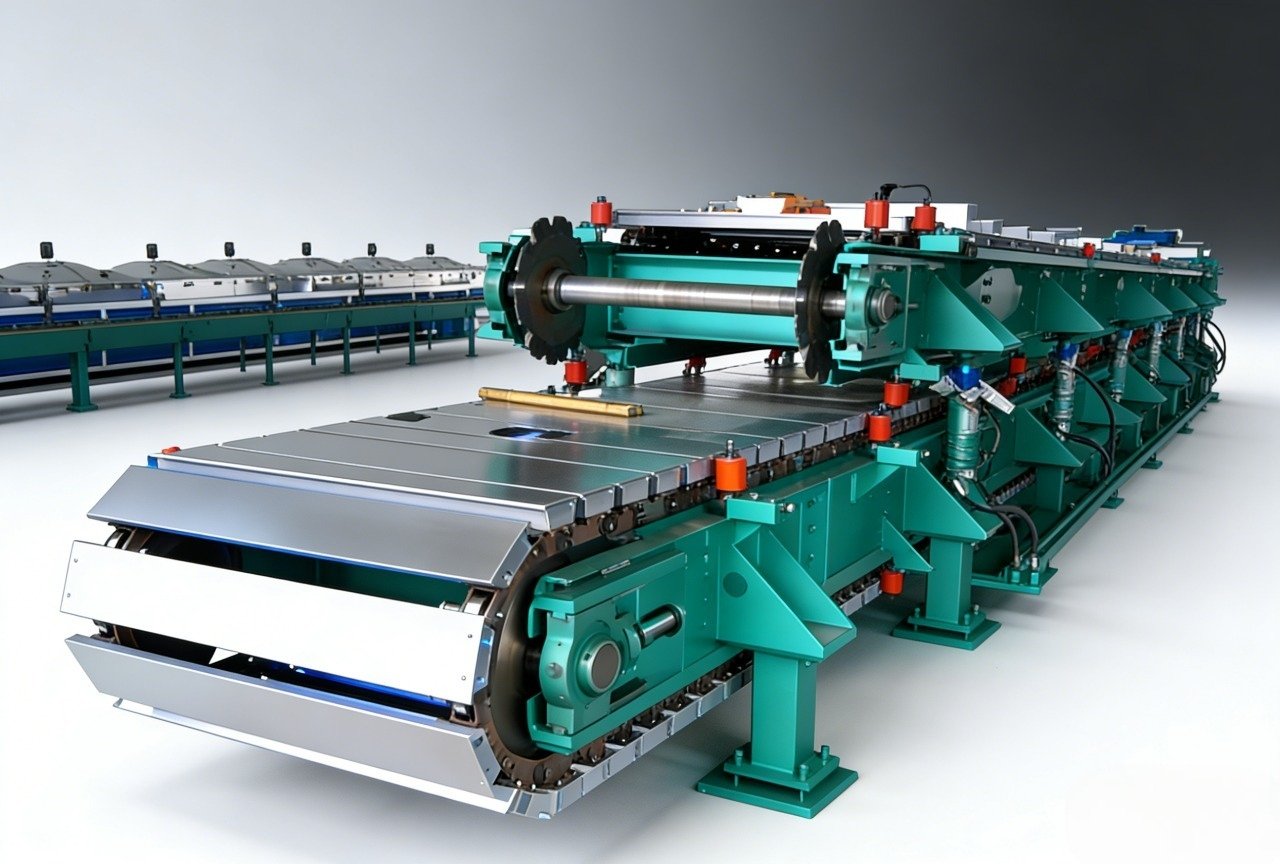
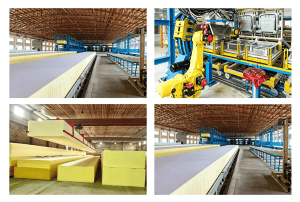
A continuous panel line looks simple from a distance. Coils enter, foam or mineral wool fills the center, and panels leave the double belt. The part most buyers skip is the order of decision. The core determines the pouring method, the belt pressure, the temperature curve, and the cutting tolerance long before the first panel is produced. If the line cannot maintain even pressure while the core matures, you get delamination, thickness drift, or poor insulation. I have seen a PU line switched to PIR trials without recalibrating the pour pattern; the result was an uncured band along the edge of every test panel. Rock wool is even less forgiving because the mineral wool slab must be pre-cut, corrugated, and held under compression while the adhesive cures. The conveyor is not the hard part. The core handling and reaction control are the hard part.
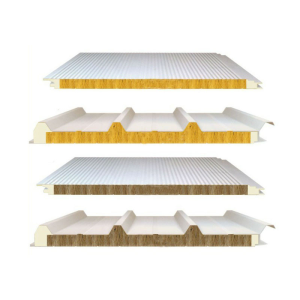
PU, PIR and Rock Wool Cores Do Not Fail the Same Way
PU, PIR, and rock wool panels earn different fire classifications for different reasons. PU foam is a closed-cell polymer foam with lower char stability under direct flame. PIR changes the reaction chemistry by increasing the isocyanate index, which creates a more stable char layer and slower heat release. Rock wool is non-combustible fiber and gets its fire performance from the fiber itself, not from a chemical reaction. That distinction changes production parameters. PU requires careful temperature control to avoid blowing agent evaporation and foam collapse. PIR requires a longer exotherm management window and more heat removal from the belt. Rock wool requires a clean adhesive feed, consistent slitting, and compression that holds the slab without crushing it.
| Core material | Typical density | Fire behavior in the panel | Main production constraint |
|---|---|---|---|
| PU | 38 to 45 kg/m³ | Char forms but the panel retains combustible mass | Rapid expansion; easiest line filling |
| PIR | 40 to 48 kg/m³ | More stable char and lower smoke tendency | Higher exotherm; tighter cure control |
| Rock wool | 80 to 140 kg/m³ | Non-combustible fiber; high melting point | Slitting, corrugating, adhesive and compression |
Rock wool is not the only mineral wool core used in panel lines. <Glass Wool Sandwich Panel Production Line: Applications, Advantages and Production Challenges> covers why glass wool panels have different acoustic and moisture behavior, and where the production challenges start when the line switches between mineral wool batches.
Metering and Mixing Precision Decide Whether Fire-Rated Cores Pass
Fire-rated panel performance is not only a chemistry decision. It is a metering and mixing decision. The polyol and isocyanate ratio must stay inside a narrow window because off-ratio foam changes density, cell structure, and flame behavior. In a PIR run, the isocyanate index is already pushed high; a small drift can push the reaction past the point where the belt can remove heat fast enough. The metering unit needs to hold accuracy within roughly ±0.5%, and the mixing head must deliver a uniform pour pattern across the full panel width. I check the traversing head pattern before I look at throughput numbers. If the pour pattern has a thin edge, that edge will not have the same density as the center and will not behave the same way in a fire test. Rock wool lines depend less on chemical ratio and more on adhesive volume control and compression force, but the same principle applies: one variable repeats across every square meter, so an error at the point of application becomes a systemic defect.
If your program involves a dual-core line or a fire test requirement that is not fully defined, it is worth confirming the metering strategy and the belt temperature plan before your layout is fixed. Send your panel width, core range, and target standard to info@haifengmachine.com and we will flag the configuration points that usually cause start-up delays.
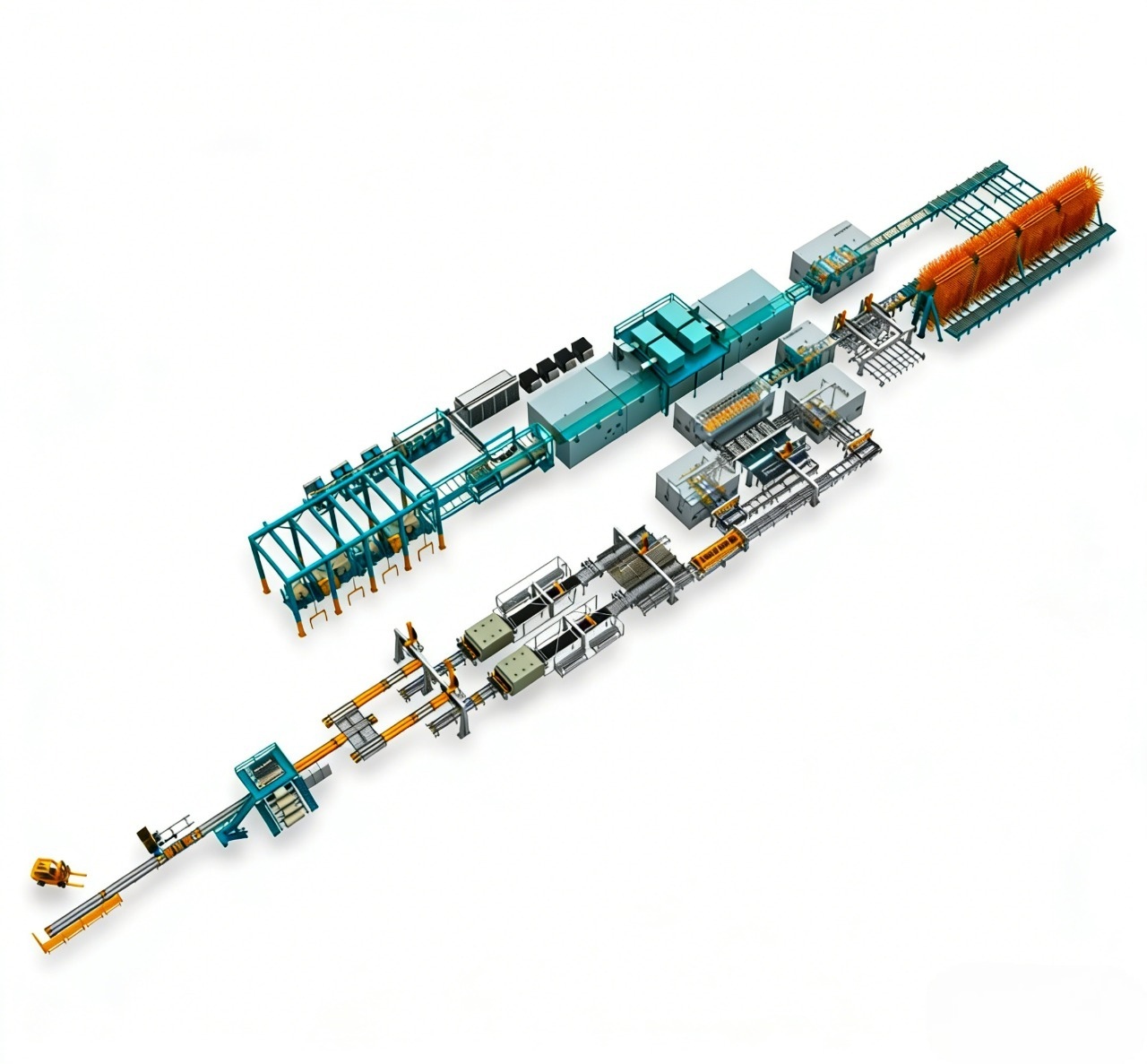
A Turnkey Fire-Rated Sandwich Panel Production Line Must Include These Systems
A line that actually passes inspection needs more than a roll former and a saw. I list the systems I care about first:
- High pressure metering unit matched to the blowing agent and the core formulation.
- Double belt laminator with independent heating zones and pressure control.
- Traversing pouring head with width compensation and anti-edge-banding logic.
- Mineral wool preparation module with slitting, corrugating, and adhesive application for dual-core plants.
- Inline thickness and density monitoring with feedback to the metering unit.
- Cutting and stacking equipment that holds panel squareness without tearing a hot, still-curing edge.
The payoff shows up in the second shift. I have seen lines without inline density feedback drift for hours because no one noticed a viscosity change in the polyol. The panels looked identical, but a fire test later found uneven density distribution. Inline monitoring closes that gap before the panel leaves the belt.
You Should Confirm the Core and Line Configuration Before You Buy
Buyers most often lose time, not money, by choosing a line before the core is final. The panel is the easy part. The line behavior for PU, PIR, and rock wool is different enough that a machine configured for one will not automatically produce a certified panel in another. If your project has a fixed fire rating target, a specified panel thickness range, and a production volume, those three numbers should drive the line configuration, not the reverse.
Haifeng Polyurethane Machinery has spent 40 years in polyurethane processing and wrote China’s PU pouring machine industry standard, but the practical value is simpler: the engineering team works from your core and certification target first. Send your panel width, thickness range, fire certification standard, and expected daily output to info@haifengmachine.com or call +86 576 8650 9188. We will confirm the metering, lamination, and core handling configuration before you commit to a layout.
These Are the Questions Buyers Most Often Ask About Fire-Rated Sandwich Panel Lines
Does a rock wool core automatically make a sandwich panel fire rated?
No. The core contributes the largest share of fire performance, but the full panel has to pass as a system. The steel facings, adhesive, joint profile, and panel thickness all change the test result. A rock wool panel with a low-density slab or uneven adhesive coverage can still fail the assembly test. The line must keep the wool slab dimensionally stable and bonded across the full surface. If the slab compresses unevenly, the panel carries a hidden weak plane that shows up only under load or fire exposure.
Which core should I choose if the specification only lists one fire test?
It depends on the test and the building part. For a wall assembly test, both PIR and rock wool can be valid, but they pass through different mechanisms. PIR works through char stability and lower smoke release. Rock wool works through non-combustibility and a high melting point. If the specification calls for a non-combustible core with no ambiguity, rock wool is the safer route. If the specification allows combustible insulation with reaction-to-fire classification, PIR usually gives a thinner panel and faster line speed. I would not choose between them without seeing the exact test clause and the required panel thickness.
How do I know whether the line can switch between PU and PIR?
In lines I have commissioned, the first thing I check is the metering unit’s maximum isocyanate throughput and the belt cooling capacity. PIR uses a higher isocyanate index, so the same panel volume calls for more isocyanate per minute. If the metering pumps were sized only for PU, the line will starve on PIR at full speed. The second check is the temperature removal rate. PIR generates more heat during curing. Without extra belt cooling or a longer cure length, the panel will leave the belt with a soft center. Formulation change is not enough; the machine capability has to match the reaction.
What should I specify first when comparing sandwich panel production line quotes?
The single question really separates into three. First, what core or core range must the line produce? Second, what fire classification must the finished panel pass? Third, what daily output and panel width range does the plant need? Those three answers change the metering size, the double belt length, the curing capacity, and the mineral wool handling modules. A quote without those constraints is just a machinery list. I recommend sending those three answers with your inquiry so the line configuration covers the worst case instead of the easiest one. If your project has a specific fire rating target, send your panel width, thickness range, and target standard to info@haifengmachine.com or call +86 576 8650 9188. We will confirm the configuration before you commit to a layout.
If you’re interested, check out these related articles:
Polyurethane Foam Machines: Types, Principles & Applications
How to Choose a PU Shoe Injection Machine
How to Upgrade an Old PU Shoe Production Line