Polyether foam vs polyester foam is usually framed as a property trade-off, but on a continuous foaming line the choice also changes how every station must run. Polyether polyols flow easily and tolerate a wide process window. Polyester polyols arrive more viscous, sit inside a shorter reactivity band, and punish metering drift in ways that show up as split buns or coarse faces. A line tuned for one family will not run the other without changes to temperature, pump settings, and mixing head setup. This article walks through the production differences that matter.
Polyether and Polyester Foam Polyol Chemistry
Polyether and polyester foams start with different backbone chemistry, and the difference shows up on the line before the foam reaches the fall plate. Polyether polyols are built by ring-opening polymerization of propylene oxide and ethylene oxide onto a starter such as glycerol or sorbitol. The ether linkages rotate freely, which gives a low glass transition temperature and a relatively low polyol viscosity. Polyester polyols are condensation products of a dicarboxylic acid, usually adipic acid, and a glycol such as diethylene glycol or ethylene glycol. The ester linkage is more polar and stiffer, so polyester polyols carry higher viscosity and build higher tensile and tear strength in the finished foam.
That molecular foundation creates the familiar trade-off. Ether linkages resist hydrolysis, so polyether foam ages better in humid or wet service. Ester linkages are attacked by moisture over time, so polyester foam can lose strength and embrittle in warm humid environments. In exchange, polyester foam usually delivers finer cells, higher oil resistance, and better mechanical strength straight out of the oven. The continuous line does not feel those final properties directly. It feels viscosity, reactivity, exotherm, and surface tack, and those are the variables that determine line setup.
Continuous Foaming Line Behavior With Polyether and Polyester Foam
On a continuous foaming line, polyether and polyester systems do not demand the same machine even when the isocyanate side is unchanged. Polyether polyols generally reach the metering unit at a viscosity the pumps can handle with little or no heating. Polyester polyols often run several times more viscous at the same temperature, so feed tanks and hoses need heat tracing and the metering pumps work against higher back pressure. A polyester stream that is too cold will shear unevenly or cavitate the pump before the mixing head ever sees it.
Reactivity also separates the two families. Polyether flexible slabstock systems usually tolerate a wider catalyst window and produce a stable rise profile across the conveyor. Polyester systems, especially fine-cell grades for cosmetic sponge or textile lamination, can accelerate once catalyzed and collapse into a dense, coarse block if conveyor speed or pump output is slightly off. I have watched a polyester run fail because the line speed stayed at the setting that had worked all month on polyether. The chemistry was fine; the line conditions were the problem.
| Process variable | Polyether foam | Polyester foam |
|---|---|---|
| Polyol viscosity | Lower, usually pump-friendly | Higher, often needs heating and heat-traced lines |
| Mixing behavior | Wider shear tolerance | Needs more controlled shear to open cells finely |
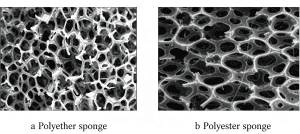
| Cell structure | Open cells, coarser unless nucleated | Finer, more uniform cells with proper nucleation |
| Humidity aging | Good, ether linkage resists hydrolysis | Poor in warm humid service, ester linkage degrades |
| Typical line failure mode | Soft blocks, density drift, bottom densification | Split buns, coarse faces, late moisture-related failures |
Metering, Mixing Head, and Temperature Adjustments for Each Polyol
Metering is where most polyether-to-polyester switchovers go wrong, because the recipe screen still shows the same ratio and the operator reuses the same pump speeds. The hidden variable is viscosity. A polyether polyol at 25°C may meter within tolerance through a standard pump set; a polyester polyol at the same temperature can be too thick for the pump to track flow accurately, and the result is a ratio that drifts across the block.
Three adjustments matter. First, raise the polyol holding temperature so the polyester polyol reaches the pump at a viscosity the metering element can handle. In production, polyester polyol service usually requires jacketed tanks and heat-traced feed lines. Second, verify metering stability under actual back pressure. Continuous slabstock can generate scrap for minutes before an operator notices drift, so closed-loop servo compensation is worth more on polyester than on polyether. Third, reset the mixing head for higher shear and adjusted nucleation. Polyester systems need finer air loading and more controlled mixing to open uniform cells; polyether systems often run well with lower shear and less aggressive nucleation.
Ratio drift in continuous slabstock is expensive because the scrap is generated continuously rather than at the end of a cycle. <Polyurethane Foam Machine Types: The Scrap Cost of Inaccurate Metering> explains how closed-loop corrections pay for themselves on long runs and why a one-percent metering error can turn a shift into waste.
If your program involves switching between polyether and polyester on the same continuous line, it is worth confirming the metering loop response under high-viscosity operation before finalizing the BOM. Share your polyol type and current back pressure range with our technical team at info@haifengmachine.com, and we can check whether your existing pump and heat tracing will hold ratio.

Why Does Polyester Foam Feel Coarser When a Line Switches From Polyether?
The coarse cell problem is usually nucleation, not the polyol chemistry itself. Polyester formulations for fine-cell sponge and textile lamination depend on a dense bubble population at the mixing head. If air loading is left at the polyether setting, the bubble count drops, cells coalesce, and the block face looks pitted. The fix is to reset air injection or nucleating agent feed to match the new formulation instead of carrying over the old setting.
What Happens If Ratio Drift Is Left Uncorrected on Polyester Foam?
Polyester foam punishes ratio error differently from polyether. On the isocyanate-rich side, a polyester block turns brittle and loses tear strength quickly. On the polyol-rich side, it feels soft and later fails hydrolysis testing. Because the ester linkage is already moisture-sensitive, a ratio fault that would be tolerable in polyether can become a field failure in polyester service. Checking the metering flow against the recipe every shift is the cheapest way to catch this before a full block is scrapped.
Continuous Line Equipment Selection by Polyol Family
Equipment selection should follow the plant’s dominant polyol family, not a single ideal foam grade. A plant that will run polyether flexible foam most of the year can build leaner: less heating capacity, standard metering pumps, lower-shear mixing, and a simpler conveyor. A plant that must switch between polyether and polyester needs a heated polyol system, pumps sized for high-viscosity service, an adjustable mixing head, and recipe control that stores separate settings for each family.
Specify the metering skid first. Polyester polyol service benefits from gear pumps or high-pressure piston pumps with closed-loop flow compensation, because viscosity shifts with temperature and a fixed speed setting can drift. On Haifeng high-flow continuous block machines, servo closed-loop metering holds the A/B ratio stable across continuous runs, and that stability matters more for polyester than for a forgiving polyether recipe. The mixing head should also offer adjustable shear and nucleation so the same head can switch between the two families without a full rebuild.
Floor space and support equipment also shift with the polyol choice, and that is where traditional equipment can hide costs. <PU Foam Machine vs Traditional Foam Equipment: What to Know> covers the practical split between metered polyurethane machines and older drum-and-stir methods, and why heat tracing and closed-loop metering change the quality math.
The Polyol Decision Before Line Specification
Choosing a polyol family after the equipment is bought is a costly way to learn process boundaries. A team that runs polyester occasionally on a polyether-only line will fight heated feeds, pump cavitation, and block cure problems. The opposite mistake, overbuilding for polyester when the plant will run polyether almost exclusively, adds heating and pumping cost that never pays back.
Before finalizing the line specification, pin down the primary polyol family, the expected density range, and the production volume per shift. If the plan involves both families, the control system must store separate recipes and the metering loop must hold ratio under high-viscosity conditions. If you are not sure whether your current line is suitable, send your polyol type, target density, and current line speed to the Haifeng technical team at info@haifengmachine.com or call +86-577-8666 0000. Share the formulation data sheet from your polyol supplier, and we will confirm which line changes are needed before you commit to a batch.
Common Production Questions About Polyether and Polyester Foam
Can the same continuous foaming line run both polyether and polyester foam?
Yes, but only if the line was specified for both. The minimum package includes a heated polyol tank and traced feed lines, metering pumps sized for high-viscosity polyester, an adjustable mixing head, and recipe control with separate temperature and pump setpoints for each family. Without those, the line will run polyether well and polyester poorly. Cleaning between product switches also matters more when polyester is involved, because the polyol can leave residue in the head and feed lines.
Why does polyester foam sometimes fail months after production in humid service?
The failure is usually written into the chemistry at the production stage, not caused by the customer. Ester linkages hydrolyze when warm moisture attacks the polymer chain. If the block was produced with poor ratio control or inadequate coverage of the polyol, that flaw stays hidden until the foam sees humid conditions and then shows up as crumbling, tackiness, or compression set loss. This is why polyester foam should not be sold into wet or humid applications without clear conditioning.
When should a plant choose polyester foam over polyether foam?
It depends on the end-use environment and the performance requirement. Choose polyester when the part needs high tensile strength, fine cell structure, oil resistance, or abrasion resistance and will not sit in warm humidity for long. Cosmetic sponges, textile lamination, and some acoustic foams lean this way. Choose polyether when the part will face moisture, repeated compression, or long outdoor aging. If the application sits in both worlds, run a hydrolysis age test before committing.
What is the first check when a polyether line starts running polyester?
In the programs we have supported, the first check is polyol temperature at the pump inlet, before changing anything else. A polyester polyol that is too cold will be too viscous to meter correctly, even if the ratio setting looks right. Confirm the traced line is actually hot, then watch the pump pressure and the cream line on the conveyor. If the temperature is correct but the block face is still coarse, send your current air loading, pump settings, and target density to info@haifengmachine.com and we will help trace the issue from the mixing head back to the metering skid.
If you’re interested, check out these related articles:
Energy Consumption of PU Shoe Production Lines
How to Start a Rain Boot Manufacturing Plant
Advantages of Polyurethane Safety Shoes