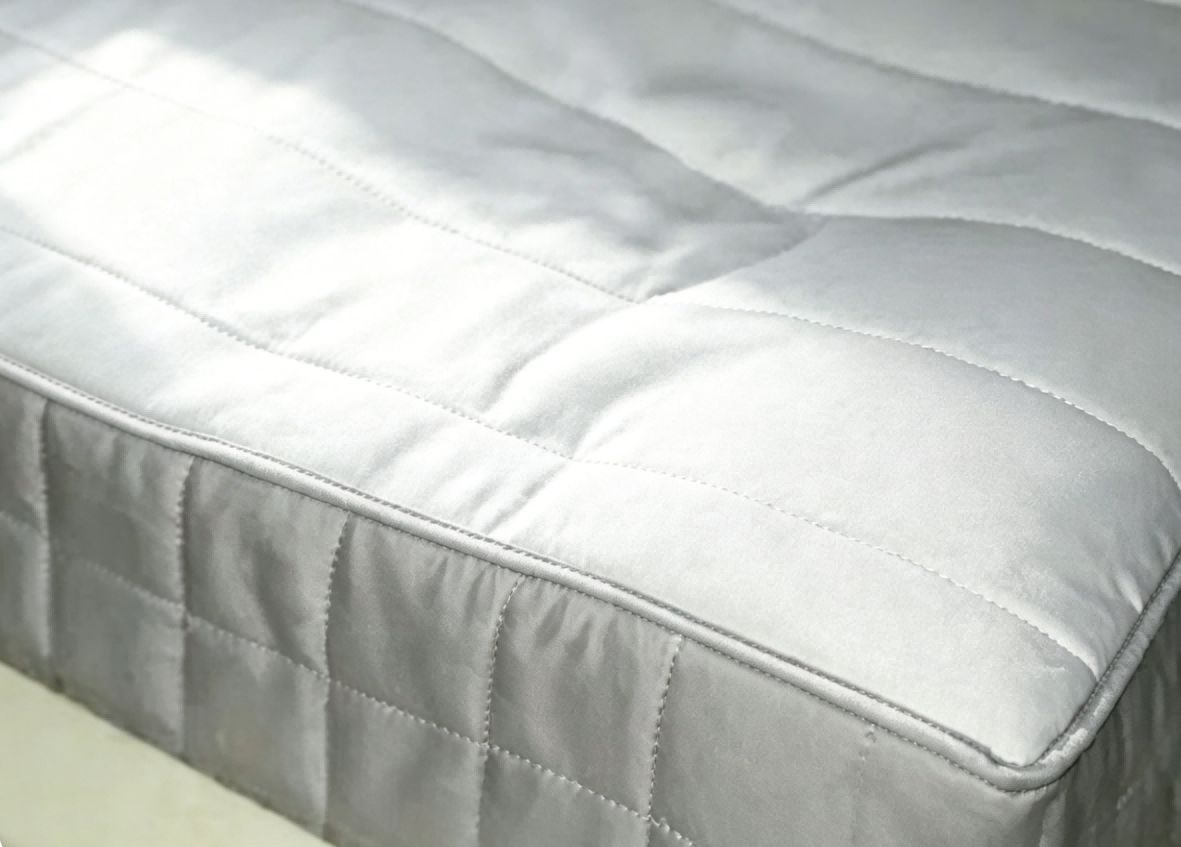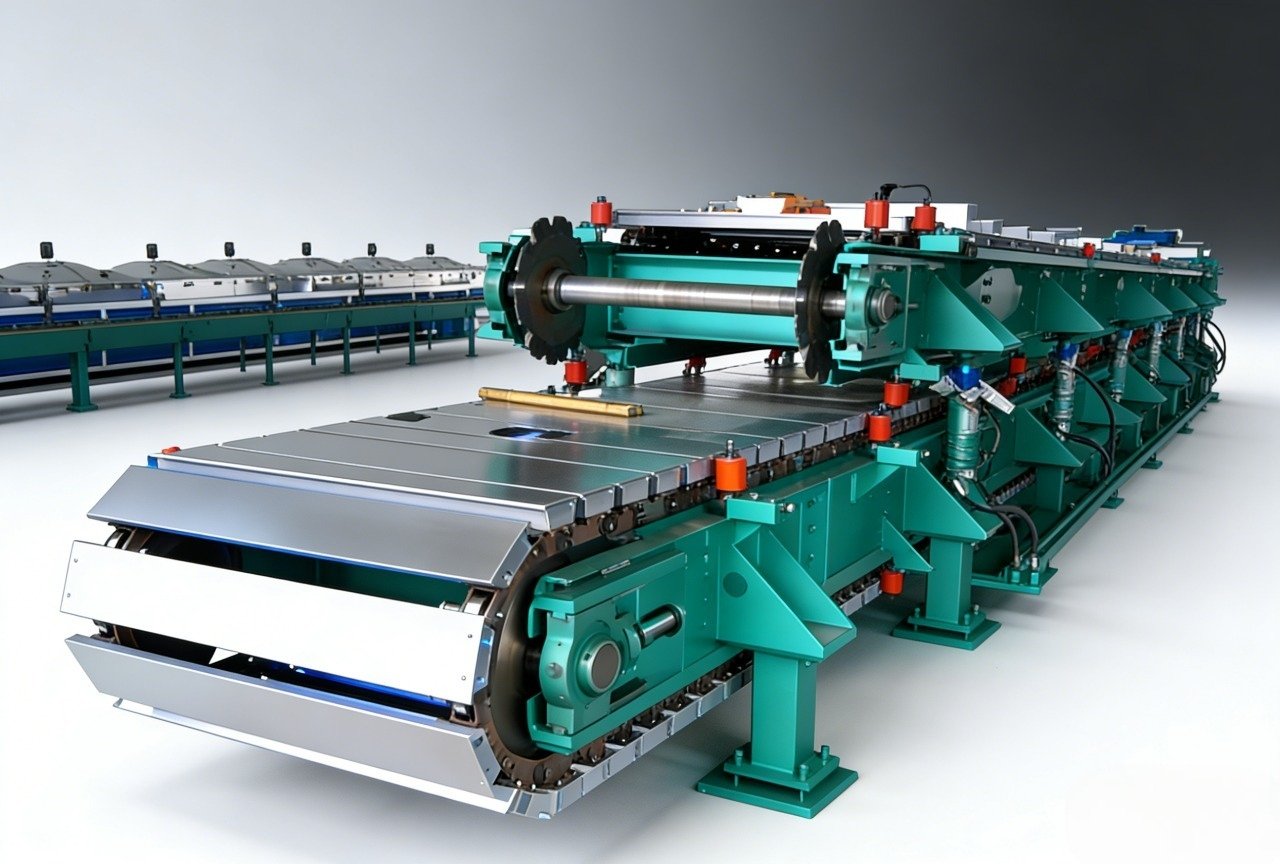
Most box-foam failures are not visible at the pour station. A block can leave the mold with a cool surface and still hold a center temperature high enough to degrade foam, split the core, or smolder hours later. This article explains how to monitor core temperature, set curing time and storage spacing with data instead of touch, and where the machine controls the exotherm.
Why Core Temperature Is the Control Number in Polyurethane Box Foam
A box-foam block is not a simple molded part. It is a large, freshly reacting mass of polyurethane wrapped in its own insulation. Heat generated by the isocyanate-polyol reaction, especially the water reaction that also produces carbon dioxide, leaves the surface quickly but leaves the center slowly. The result is a temperature gradient: the outside can feel near room temperature while the middle continues to rise.
The core temperature matters because it drives three separate outcomes at once. First, it determines whether the polymer reaches the conversion needed for stable physical properties. Second, it sets the danger of thermal degradation if the block gets too hot. Third, it controls how long the block must rest before cutting, stacking, or shipping.
In large water-blown blocks, the core temperature commonly rises for several hours after pouring. The peak is not a fixed formula number; it changes with water content, isocyanate index, block dimensions, ambient temperature, and mold insulation [1]. That is why no single touch test can replace a probe reading.
How the Exotherm Curve Actually Behaves
The exotherm curve in box foaming follows a repeatable shape, but the peak time shifts with every production variable. Cream time, rise time and gel time happen in the first minutes, while the center may not reach its maximum temperature until much later. In thicker blocks, the delay can be measured in hours rather than minutes.
Several conditions push the exotherm toward a dangerous peak:
| Variable | Effect on core temperature | Practical check |
|---|---|---|
| Water content | More water adds more carbon dioxide and more reaction heat | Compare the formula sheet with actual water additions |
| Isocyanate index | A shift from the target index changes reaction completeness and heat release | Log the set ratio and any manual ratio adjustment |
| Block thickness or mass | Larger mass retains more heat and loses less from the surface | Split the block or reduce pour size when the peak climbs |
| Pour pattern | Uneven distribution creates local hot regions | Probe several points, not only the block center |
| Mold or box insulation | A closed or heavily insulated box traps heat | Use open-top boxes and controlled draft during initial cure |
| Ambient and material temperature | Higher starting temperature gives the reaction a head start | Record room and raw-material temperature before each pour |
An off-ratio pour changes heat release before it changes any density reading. The metering station should therefore be treated as a safety variable, not only a quality variable.
An off-ratio pour shifts the exotherm before it shifts density, so the metering station belongs in the safety review as much as the quality review. <Polyurethane Foam Machine Types: The Scrap Cost of Inaccurate Metering> covers how small metering errors become scrap and thermal-control problems.
Measuring Core Temperature Without Guessing
Surface temperature is not core temperature, and a single center probe is better than none but still not enough. In production, a five-point pattern is more useful: one probe near the top, one near the bottom, one at the geometric center, and two offset points between the center and each side wall. The goal is to find the hottest zone, not to confirm a comfortable number.
Probe depth matters. A probe inserted too shallow reads only the cooled outer layer. A probe inserted too deep through the bottom can read the box surface or the pallet, not the foam. For consistent data, use marked insertion depths and keep the same pattern across every block of the same size.
The log should be tied to the production record. A peak temperature without a batch identifier is not useful for corrective action.
| Log item | Why it is needed |
|---|---|
| Block ID and pour time | Connects the thermal curve to the formula and operator |
| Probe positions and depths | Makes readings comparable block to block |
| Peak core temperature and time to peak | Shows whether heat is rising too high or too late |
| Ambient temperature during curing | Explains faster or slower cooling |
| Water content and index for the batch | Separates formula causes from storage causes |
| First temperature below the cut threshold | Determines actual safe cutting time |
| Shift and operator responsible | Supports consistent handling and review |
Monitoring also has to continue through the early storage period. The risk window does not end when the skin cools; it ends when the core temperature has passed its peak and is falling on a steady, recorded trend.
Correct temperature diagnosis depends on the same recipe, shot and batch records that control quality. <Polyurethane Foam Machine: Types, Working Principle and Applications> covers how machine configuration, mixing and pour control shape the process data worth keeping.
Curing Rules After the Block Is Stripped
Curing is not one event. It is a sequence: initial gel, demold, core cooling, firm-to-cut, and full through-cure. Cutting too early produces cell distortion, poor compression set, and surfaces that later show permanent deformation under load. The standard test methods for flexible urethane foam measure exactly these properties, and they cannot be met reliably if the block is processed before the center has cooled enough [2].
Safe cutting time depends on block size and formula. A thin prototype block may be ready in hours, while a thick production block may require a day or more. The correct rule is not a clock number copied from another plant. It is the measured core temperature at the chosen cutting threshold, plus a stable downward trend.
After cutting, the foam continues to develop properties as residual isocyanate reacts and physical structure stabilizes. Exposure to high humidity during early curing can affect the reaction and should be controlled where the product specification requires tight hardness or compression-set performance. Cold storage alone also does not accelerate through-cure; it only slows the reaction.
Curing records should capture: pour time, strip time, peak core temperature, time at peak, cooling rate, ambient conditions, and cut time. These records turn an invisible thermal process into something auditable.
Storage Safety: The Continuing Risk Window
Storage is where curing continues and where most box-foam fire risk concentrates. A freshly stripped block still contains heat, and placing blocks face-to-face, stacking them too early, or restricting airflow can allow the core to climb again instead of falling.
The first priority is separation. Blocks should be kept in a single layer with an air gap between them until the core temperature has fallen below the plant limit. This rule applies even if the block surface feels cool, because the core is the controlling condition.
The second priority is airflow. Natural ventilation is better than storage against a wall, and mechanical extraction is better when large blocks are stored in volume. The area should be free of foam dust, paper, plastic film, solvents, and other combustibles that can ignite from a smoldering block.
The third priority is stacking age. A hot block moved into a stack becomes a heat source for every block around it. Stacking should be blocked by a recorded core-temperature threshold, not by shift pressure.
| Storage check | Pass condition |
|---|---|
| Block separation | Single layer with visible air gap between blocks |
| Air movement | Ventilation or spacing allows heat to leave each face |
| Stacking | No stacking until the core temperature falls below the written limit |
| Labeling | Pour time, peak temperature, and probe position shown on the block |
| Combustible control | No foam dust, paper, film, solvent, or oily rags near storage |
| Monitoring | Peak and falling trend confirmed at the next shift |
| Fire response | Extinguishing equipment accessible and the storage zone not attended remotely overnight |
The storage rules are not only housekeeping preferences. Fire codes address the storage of combustible materials and liquids, and a polyurethane block that is still chemically active after an exotherm must be treated as an energetic material until its temperature trend is under control [3].
Storage failures often repeat the same pattern as continuous-line defects: a small deviation becomes a large loss after hours of unattended operation. <Continuous PU Foam Production Line Maintenance: How to Prevent Costly Downtime and Defects> covers the monitoring and maintenance habits that reduce late-appearing failures.
When the same block still runs hot
If the peak appears at the same elapsed time and the storage conditions are already correct, the problem is not the warehouse. Send the five-point temperature log, block dimensions and formula details to info@haifeng-automation.cn or WhatsApp +86 13566296633. We can help identify whether the cause is metering ratio drift, pour pattern, block mass, or box insulation. This is exactly where a turnkey line supplier should be involved early.
Raw Material Storage Before Pouring
The exotherm also begins with material condition. Polyol should be stored within the supplier band, protected from freezing and from excessive heat. Isocyanate is especially sensitive to moisture. Any water entering an isocyanate container starts a reaction, creates pressure, and can change the product before it ever reaches the meter.
Isocyanate drums and totes should be resealed after use, blanketed with dry air or nitrogen where the plant standard allows, and kept away from steam cleaning, condensation, and outdoor rain exposure. A drum left open overnight in a humid plant is a formulation change, not an untouched material.
Operators also need current training. Under the EU restriction on diisocyanates, industrial and professional users must complete training on safe handling and use before working with these products [4]. The same principle applies broadly even outside the EU: raw-material storage and polyurethane reaction safety are operator skills, not optional awareness points.
Get a Box-Foaming Safety Review From the Equipment Side
If your plant has no exotherm log, or you regularly split batches to stay below a core-temperature limit, the problem may be machine sizing, box design, or pour control rather than a warehouse issue. Send block dimensions, density, water content, index, ambient temperature and the latest temperature log to info@haifeng-automation.cn or WhatsApp +86 13566296633. Haifeng Polyurethane Machinery can help recalculate batch size, mixing and pouring control, and turnkey line design. In your message, include the core-temperature history and the storage arrangement from the last three production days.
Frequently Asked Questions
What is a safe maximum core temperature for polyurethane box foam?
There is no universal number. The safe peak depends on the formulation, block size, and whether the foam is flexible or rigid. Use the material supplier’s curing profile, then watch for trend changes and the highest measured point in the block rather than applying a fixed limit from another product [1].
How long should a box-foam block cool before cutting?
The time depends on block thickness, density and formulation. A large block may need many hours or longer, while a small block may cool quickly. The reliable indicator is the measured core temperature at the specified cut threshold, not the surface temperature and not a fixed production clock [2].
Why does the center stay hot after the surface feels cool?
Polyurethane foam is a strong thermal insulator. Heat generated in the center must travel through the foam to the surface, and that path resists heat flow. As a result, the outside can feel cool while the core is still near its peak or just beginning to fall.
Can box-foam blocks smolder or catch fire in storage?
Under the right failure conditions, yes. Large hot blocks, close stacking, poor airflow, and nearby combustibles can combine into a smoldering risk that develops after strip. That is why fire codes emphasize clearance, ventilation, housekeeping, and temperature-based stacking control [3].
What raw material storage mistakes affect the exotherm or fire risk?
The most dangerous mistakes are moisture contamination of isocyanate, overheated or frozen polyol, open drums left in humid air, and condensation introduced during transfer. These errors change the reaction before pouring and can create pressure or quality problems in addition to thermal risk [4].
How should I track core temperature when producing many blocks?
Assign every block an ID, use the same probe positions and depths, record peak temperature and time to peak, and keep the log with the batch record. Review the data at shift change so that a rising trend is corrected before the next production run.
References
[1] D. Klempner and V. Sendijarevic, Handbook of Polymeric Foams and Foam Technology, 2nd ed. Munich, Germany: Hanser Publishers, 2004.
[2] ASTM International, ASTM D3574-17: Standard Test Methods for Flexible Cellular Materials—Slab, Bonded, and Molded Urethane Foams, West Conshohocken, PA, USA, 2017.
[3] National Fire Protection Association, NFPA 30: Flammable and Combustible Liquids Code, Quincy, MA, USA: NFPA, 2024.
[4] European Chemicals Agency, Diisocyanates — Restriction Under REACH, ECHA. [Online]. Available: https://echa.europa.eu/diisocyanates
If you’re interested, check out these related articles:
What Is Dual Density PU Shoe Technology
PU Edge-Sealed Rock Wool Sandwich Panel Line: Why Edge Sealing Matters
Advantages of Foam Filled Tires for Mining