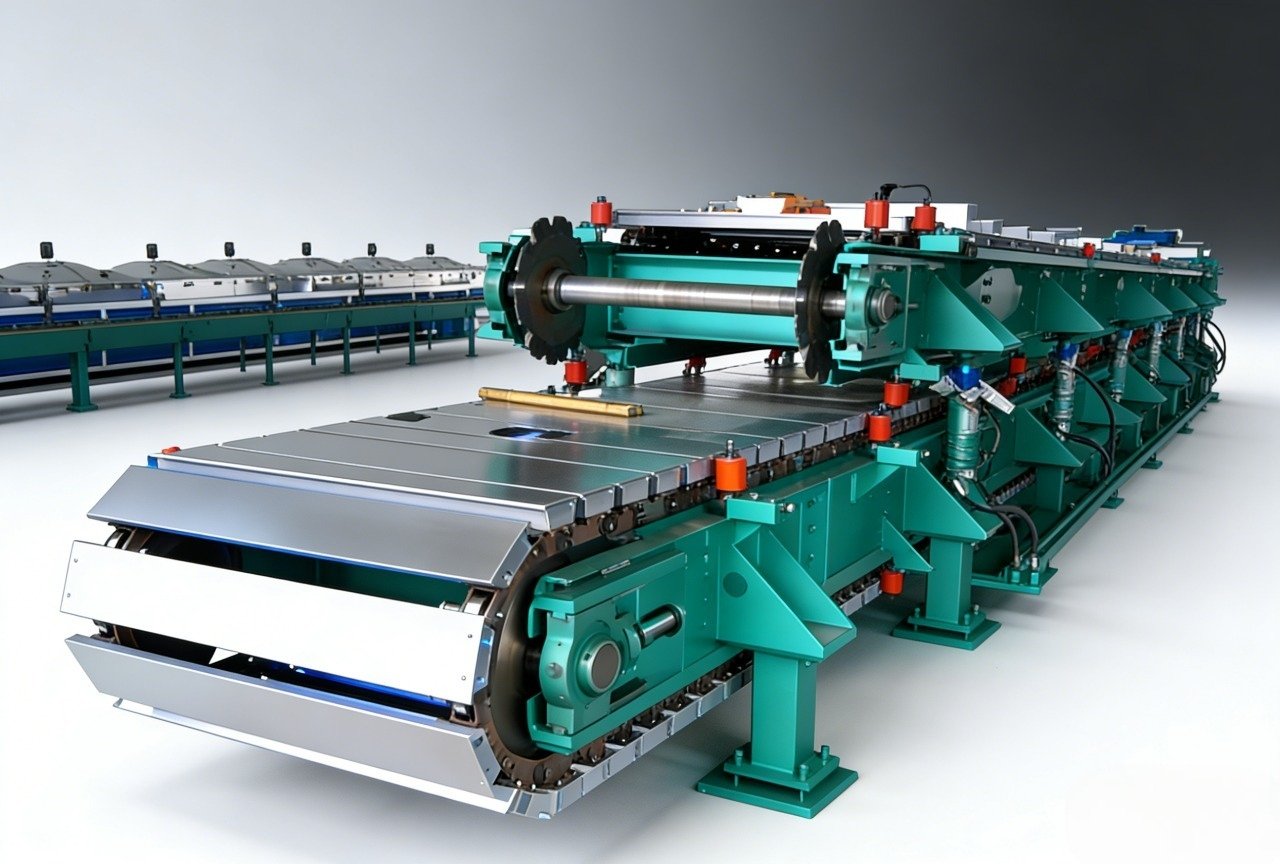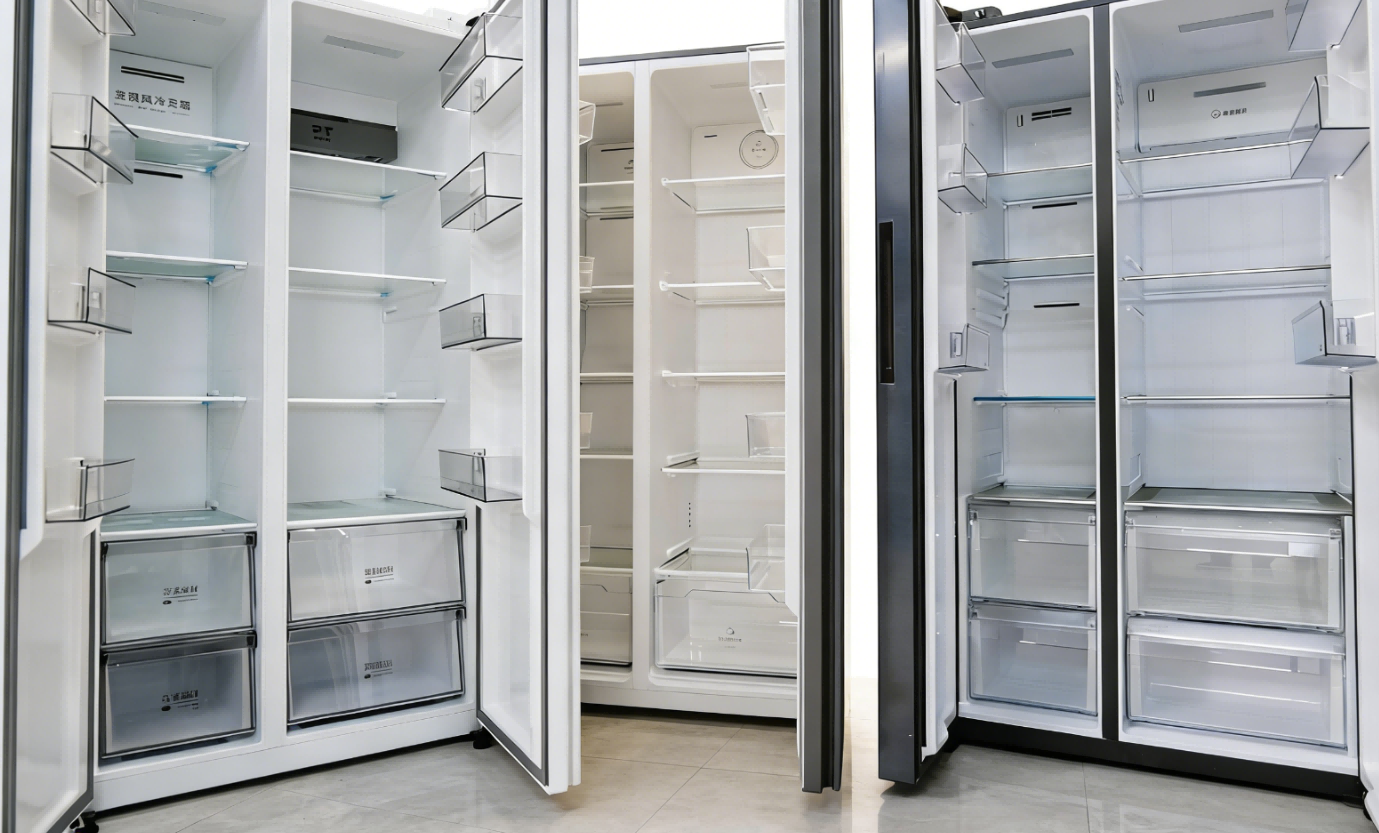
Most RIM cells do not fail because the mixing head is undersized. They fail because the metering unit, mold carrier, temperature-control loop, and data system were specified as separate purchases and forced to work together during ramp-up. The result is a cell that reaches nominal cycle time during runoff but drifts once production starts, temperature changes, or a second shift changes the material drum.
This guide walks through the equipment decisions that determine whether a turnkey RIM production cell runs predictably: part requirements, material boundaries, metering, controls, mold handling, layout, safety, and acceptance.
What a Turnkey RIM Cell Actually Includes
A turnkey RIM production cell is not a metering machine with a mold clamp bolted next to it. It is an integrated system with defined interfaces between material supply, metering, mixing, mold carrier, part handling, extraction, safety, and data recording.
The cell should be delivered and accepted as one system, with the supplier responsible for the machine-supplied utilities, control interlocks, and performance at the agreed operating window. If you allow each subsystem to carry its own acceptance standard, you will own the integration risk.
Start with Part Requirements, Not Equipment Lists
The best starting point for a RIM cell is a product-and-process data sheet, not a machine catalog.
For each part, define:
- Shot mass and mixing ratio
- Filled or unfilled system
- Viscosity at processing temperature
- Demold time and required cure time
- Part weight tolerance and surface-quality limits
- Mold size, projected area, and number of cavities
- Required parts per hour, including mold open/close and demolding
- Manual or robot demold
- Traceability requirements
These facts determine whether the cell needs a single mixing head, multiple heads, a rotary table, a shuttle carrier, or a fixed platen line. Without them, the conversation defaults to “what size machine do you have,” which is the wrong filter.
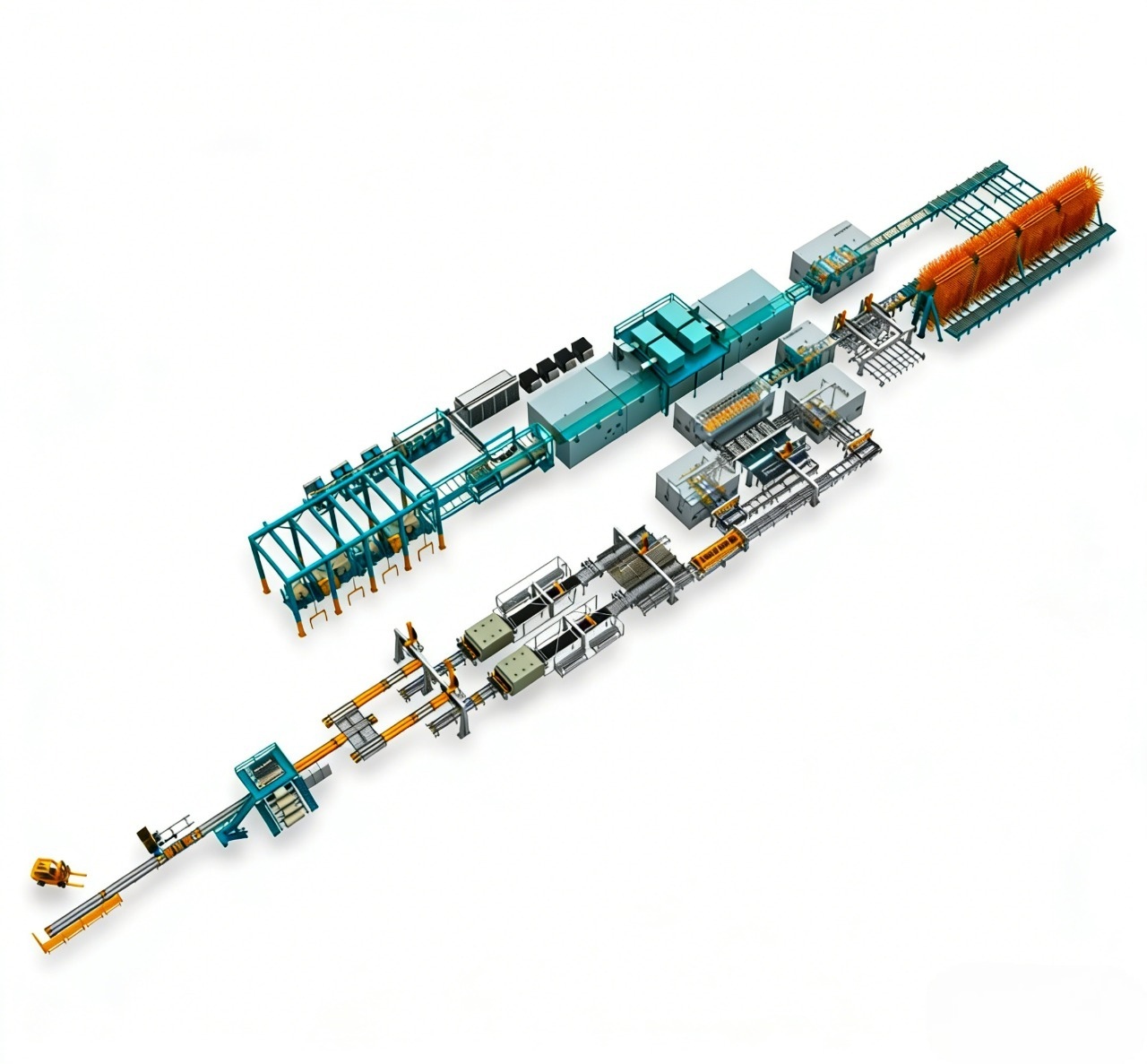
Material System Boundaries and Conditioning
The material system often matters more than the metering unit.
A turnkey cell should include material feed from drums, intermediate day tanks, conditioning, recirculation, and return lines. The equipment boundary must state precisely where the supplier’s scope ends: raw-material container, feed pumps, day tank, or plant utility connection.
For filled or reactive systems, temperature conditioning and continuous recirculation are not optional. A drum sitting in a cold warehouse will drag material temperature below the designed processing range, and ratio control will not fix the resulting viscosity shift.
Metering and Mixing Unit Selection
The core of the cell is high-pressure impingement mixing. Correct impingement depends on nozzle geometry, component viscosity ratio, pressure balance, and shot-size stability [1]. If any one of those moves outside the design window, the mix quality changes even though the machine still cycles.
Select the metering unit on the required continuous operating range, not the maximum specification. A machine that can inject 3,000 g/s does not automatically run cleanly at 300 g/s. Small shots are harder to meter and mix because the shot time is short, acceleration time matters, and the mixing chamber may not reach stable condition.
For a production cell, specify:
- Minimum and maximum shot size per cycle
- Required throughput against the mold count
- Metering accuracy under normal production conditions
- Allowable ratio drift across an hour, not just across one shot
- Fill time and pressure window from the mold-flow analysis
- Filler content and abrasive-wear considerations
If the cell must run filled or abrasive systems, metering path, needle wear, and sealing surfaces become the main availability constraint. Polyurethane RIM Machine: A Manufacturer’s Selection Guide covers RIM machine sizing, mixing-head options, and the selection questions to answer before you write the purchase specification.
Ratio, Temperature and Pressure Control Architecture
A turnkey RIM cell should control three interdependent variables: component ratio, material temperature, and mixing pressure.
Ratio control starts with stable suction conditions and recirculation pressure. If the feed pump cavitates or the recirculation valve hunts, the metering pumps cannot hold a steady output regardless of servo control quality. Specify low-level alarms, feed pressure monitoring, and recirculation return temperature.
Temperature control should cover the tank, recirculation loop, metering lines, and mixing head. A well-designed cell keeps the material at a stable temperature across the entire circuit, not only at the day tank. The target band depends on the formulation, but the design should allow the setpoint to be held without manual correction during production.
Pressure balance between the polyol and isocyanate streams is essential for impingement mixing. The control system should record both pressures during every shot, not only alarm at a high limit. A slow pressure drift is often the first sign of filter loading, pump wear, or a partially blocked nozzle.
Small metering errors become visible as scrap only after the mold opens. Polyurethane Foam Machine Types: The Scrap Cost of Inaccurate Metering covers how metering drift and poor mixing translate into part defects and material waste.
Mold Handling and Demolding Sequence
The mold carrier determines how much of the theoretical cycle time becomes actual output.
A fixed platen press may be mechanically simple, but it wastes cycle if demolding and mold preparation happen while the mixing head waits. A rotary table, shuttle system, or sliding carrier should be specified from the part cycle time, not from the machine delivery capacity.
Define the complete sequence before equipment order:
- Mold open and part removal
- Mold surface inspection and release-agent application
- Insert placement, if used
- Mold close and lock
- Mixing head approach and fill
- Cure/demold wait
- Next cycle start
The cell should be designed so the metering unit and operator are not the bottleneck. If mold preparation takes longer than injection and cure, adding a faster metering machine changes nothing.
For large parts, the carrier must resist mold-opening force during injection and foaming expansion. Specify clamp force from cavity pressure and projected area, with a margin that reflects the actual formulation behavior.
Layout, Utilities and Safety
Design the cell around a formal risk assessment. ISO 12100:2010 provides the general framework for risk assessment and risk reduction [2]. For reaction moulding machines and plants, EN 1612:2019 adds requirements for the specific hazards of material mixing, injection, and cleaning [3]. If safety-related control functions are used, such as guarding interlocks, light curtains, or two-hand start, the control-system segment should be designed to ISO 13849-1 [4].
In practice, a RIM cell needs:
- Direct extraction at the mixing head and mold area
- Spill containment for isocyanate and polyol
- Clearly marked emergency stops at load, unload, and operator stations
- Interlocked gates that do not allow the head to move while open
- Safe cleaning mode with reduced pressure and controlled solvent handling
- Service access without entering the guarded production zone
Utilities should be fixed early. Three-phase power, compressed air quality, cooling water, extraction air volume, and nitrogen or dry-air blanketing for moisture-sensitive materials all affect cell performance. If the utility demand is estimated late, the cell layout will be forced around available connections instead of process logic.
Automation, Recipe and Traceability
A turnkey cell should capture more than cycle count. The control system should record, per shot:
- Recipe name and version
- Mixing ratio setpoint and measured values
- Component pressures
- Material temperatures
- Shot time and shot size
- Alarm and interlock events
- Operator or mold identifier
Recipe management and batch records should be treated as quality records under ISO 9001:2015 [5]. This is not only for recalls. The data is how you find out whether a hardness variation started with a recipe change, a temperature drift, or a metering pump fault.
MES or ERP integration should be defined before programming starts. If the cell must report parts per hour, scrap codes, or material consumption, those fields need to exist in the PLC and HMI from the beginning. Adding them after commissioning usually means another round of software changes and retesting.
For high-pressure injection into closed molds, fill control and venting logic must match the metering sequence. High Pressure PU Foam Injection for Automotive Interiors covers high-pressure PU foam injection process considerations, including fill control and equipment integration.
FAT, SAT and Ramp-Up Criteria
Acceptance should be based on a production-like window, not a single demonstration shot.
At the factory acceptance test, the cell should run enough consecutive cycles to show thermal stability and repeatability across the material system you will actually use. That means the correct grade, filler content, and processing temperature. A successful FAT with a low-viscosity substitute material proves very little for a filled production formulation.
Define measurable acceptance criteria before the test:
- Ratio accuracy and repeatability over the run
- Shot-size repeatability
- Mixing quality on production parts
- Demold and cycle time at target mold count
- Alarm and interlock function verification
- Data recording integrity
At the site acceptance test, run the cell in its real utility and operator environment. The SAT should include a shift-change or operator-handoff scenario, because that is where many integration problems first appear.
Common Integration Failures to Design Out
Several failures appear repeatedly in turnkey RIM projects:
- Feed pressure ignored: metering errors are blamed on pumps when the real issue is cavitation or an undersized feed line.
- Temperature observed, not controlled: the HMI shows temperature, but nobody alarms on the return line or the mixing head.
- Adapters break the interlock: a local modification to the mold carrier bypasses a guard or changes the fill position without updating the PLC.
- Recipe fields added post-commissioning: traceability becomes a manual logbook instead of a machine record.
- Performance tested at maximum output only: the cell is accepted at top speed but production runs small or complex shots at the edge of the window.
Design the cell so these failures are caught during FAT and SAT, not during the first month of production.
Decision Checklist Before You Buy
Before you issue a turnkey RIM cell inquiry, confirm:
- [ ] Part shot mass, ratio, and material system are defined
- [ ] Required parts per hour and mold count are calculated from the full cycle
- [ ] Minimum and maximum shot size fall inside the machine’s continuous operating range
- [ ] Mole ratio, temperature, and pressure control loops are specified
- [ ] Mold carrier and demolding sequence are sized for the part, not the machine
- [ ] Utilities and safety boundaries are fixed
- [ ] Recipe, alarm, and shot-record fields are defined
- [ ] FAT and SAT criteria are measurable and based on production material
Talk to a RIM Integration Engineer
A turnkey cell is an integration project before it is a machine purchase. If you have a part drawing, a material data sheet, and a target cycle time, send them to info@haifeng-automation.cn with the subject line “RIM cell review.” Include the required parts per hour, mold dimensions, and any filled-system constraints. We can help you turn the equipment choices into a single acceptance-bounded scope.
FAQ
How is a turnkey RIM cell different from buying a RIM metering machine?
A metering machine purchase ends at the mixing head. A turnkey cell includes material conditioning, metering, mixing, mold handling, controls, safety, and acceptance as an integrated scope. The difference is who owns the interfaces.
What should be specified first, machine size or part throughput?
Part throughput. The required shot size, cycle time, and mold count determine the metering range, mixing-head configuration, and mold carrier layout. Buying a machine size first often creates a mismatch at the edges of the operating range.
When is a rotary table better than a fixed platen?
A rotary table helps when demolding, mold cleaning, or insert placement takes longer than the injection and cure sequence. A fixed platen can work when the cycle is simple and offline mold preparation is not required.
What is the most overlooked cause of ratio drift?
Feed-pressure instability. Cavitation, an undersized feed line, a fouled filter, or a hunting recirculation valve can disturb the metering pumps before the control system has a chance to correct the flow.
What makes a good FAT for a turnkey RIM cell?
A FAT run with the actual production material, at target temperature, over enough consecutive cycles to show thermal stability, ratio repeatability, and shot-size consistency. The criteria should be written into the purchase order before testing begins.
References
[1] C. W. Macosko, RIM: Fundamentals of Reaction Injection Molding, Hanser Publishers, 1989.
[2] ISO 12100:2010, Safety of machinery — General principles for design — Risk assessment and risk reduction.
[3] EN 1612:2019, Plastics and rubber machines — Reaction moulding machines and plants — Safety requirements.
[4] ISO 13849-1:2023, Safety of machinery — Safety-related parts of control systems — Part 1: General principles for design.
[5] ISO 9001:2015, Quality management systems — Requirements.
If you’re interested, check out these related articles:
What Machines Are Needed for a PU Safety Shoe Production Line?
Inside a Continuous PU Foam Line: Foam Production