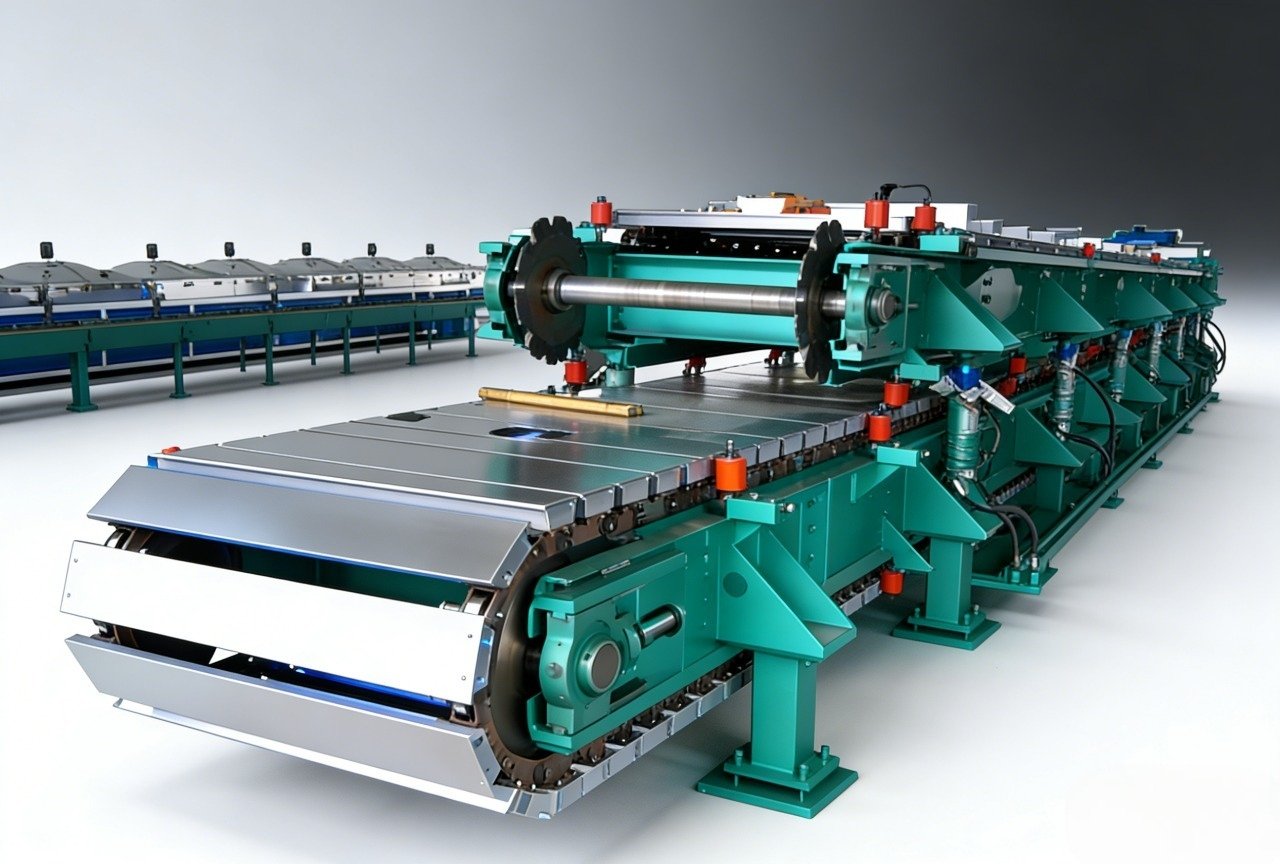
The acronyms look similar, but the plant-level difference is not naming—it is where the reinforcement enters the process and what the metering, mixing, mold, and clamping equipment must tolerate. A RIM machine is often understood as a high-pressure polyurethane metering machine. An LFI cell is more like a fiber-spraying work cell paired with a compression press. That distinction drives cost, cycle time, part quality, and how much wear the fluid path will see.
How the Four Processes Actually Differ
RIM, or reaction injection molding, feeds two low-viscosity reactive components—typically a polyol blend and an isocyanate—through high-pressure metering into an impingement mixing head, then into a closed mold. Because the material remains low-viscosity during mold filling, the mold and clamp do not need to resist high filling pressure. RRIM, or reinforced reaction injection molding, does the same job but suspends milled glass, mineral filler, or short fibers in one or both liquid streams to raise stiffness, dimensional stability, and heat deflection [1].
SRIM, or structural reaction injection molding, moves the reinforcement out of the liquid stream. A dry glass mat, continuous strand mat, or shaped fiber preform is placed in the mold first. The low-viscosity reactive resin is then injected to wet out the preform. The process must fill the fibers without washing them out of position. LFI, or long fiber injection, chops continuous glass roving directly at the mixing head and sprays or lays the chopped glass together with the reactive polyurethane mixture into an open mold. A compression press then closes the mold to form the part.
| Process | Reinforcement location | Liquid stream condition | Typical process priority |
|---|---|---|---|
| RIM | No reinforcement | Unfilled, low viscosity | Fast, precise closed-mold filling |
| RRIM | Milled or short fiber in component stream | Filled, higher viscosity, abrasive | Wear-resistant metering and mixing |
| SRIM | Dry preform already in mold | Unfilled, low viscosity | Gentle wet-out without fiber movement |
| LFI | Continuous roving chopped at the mixhead | Combined at discharge | Uniform glass distribution and compression |

The practical split is this: RIM favors cycle speed and surface detail. RRIM adds stiffness but moves abrasion and viscosity risk into the metering equipment. SRIM maximizes structural performance but depends heavily on preform quality and fill control. LFI offers long-fiber toughness and relatively low tooling pressure, but the fiber chopper becomes a second process variable that must be maintained like a metering pump.
Equipment Architecture: What Changes from Process to Process
Metering and Mixing
RIM and RRIM rely on high-pressure impingement mixing, generally using self-cleaning mixheads, servo or lance-cylinder metering, and closed-loop ratio control. The metering circuit for RRIM needs hardened pumps, liners, and mixhead chambers because suspended glass is abrasive. SRIM can use high-pressure or low-pressure injection depending on part size and resin reactivity, but the fill rate and gate arrangement matter more than mixing energy. LFI uses a specialized mixhead that chops roving and combines it with the polyurethane stream at the point of discharge [2].
High-pressure impingement mixing is not automatically better than low-pressure mechanical mixing; it depends on whether the process needs a self-cleaning head, rapid ratio switching, or gentler wet-out. <High Pressure vs. Low Pressure Polyurethane Foam Machine: How to Choose the Right One for Your Production> covers this trade-off in selection terms.
Mold and Automation
RIM and RRIM usually run in closed molds with presses sized to hold the mold shut against the internal foaming or injection pressure. SRIM adds preform handling: the preform must be cut, pre-shaped, placed, and often held by pins or vacuum during injection. LFI changes the production logic further. A robot or CNC gantry moves the mixing head over an open mold to distribute the glass-PU mixture, followed by a compression press to consolidate and cure the part. The clamp force for LFI is often lower than a structural injection press, but the automation path and head trajectory directly affect part thickness and fiber distribution.
Material Handling
RRIM requires filler handling and suspension stability. The filled component must be continuously recirculated or agitated so the glass does not settle in the day tank, piping, or pump inlet. LFI requires roving storage, tension control, chopper maintenance, and glass-length verification. SRIM requires dry preform inventory and moisture control, because water on glass acts as a blowing and chain-extension disturbance when the resin arrives.

Process Control That Determines Part Quality
Across all four processes, the same meter-mix discipline applies. Temperature control, component ratio stability, and degassing or nucleation determine whether the part repeats. In RIM, a small ratio error can show up as hardness shift, residual tack, or density variation. In RRIM, the same error is compounded by filler settling and pump wear. In SRIM, poor temperature control can change resin viscosity enough to create dry spots or preform displacement. In LFI, chopper speed, glass length, and head path must stay synchronized with output.
Small ratio errors in foamed systems often appear as density shifts. Density measurement follows the principle of ISO 845 [3]. For flexible molded foam, properties such as compression set and tear are evaluated according to ASTM D3574 [4]. These test methods do not fix the process, but they make the effect of ratio drift visible quickly.
The same closed-loop metering and calibration discipline applies whether you are filling a RIM mold, a sandwich panel, or an elastomer casting. <PU Foam Injection Machine: Key Components & Calibration Best Practices> covers the calibration routines that keep ratio drift small.
For a line-specific metering window and fiber-handling review, send your part drawing, target cycle time, and reinforcement type to info@haifeng-automation.cn or WhatsApp +86 13566296633. A short technical note is enough to start the conversation.
Selection Decision Framework
Start with four questions before comparing machine quotes:
- What is the part size, and how much structural fiber does it need?
- Is the part exposed to abrasion, impact, or heat that would require reinforcement?
- What is the annual volume and required cycle time?
- How much tooling and automation investment can the project support?
| Requirement | Start with | Key reason |
|---|---|---|
| High surface detail, fast cycle, unfilled part | RIM | Low-viscosity filling and self-cleaning mixhead |
| Stiffness improvement without major tooling change | RRIM | Reinforcement rides in the liquid stream |
| Structural composite with high glass content | SRIM | Preform provides strength and orientation |
| Large, tough, fiber-reinforced panels | LFI | Long chopped glass and compression forming |
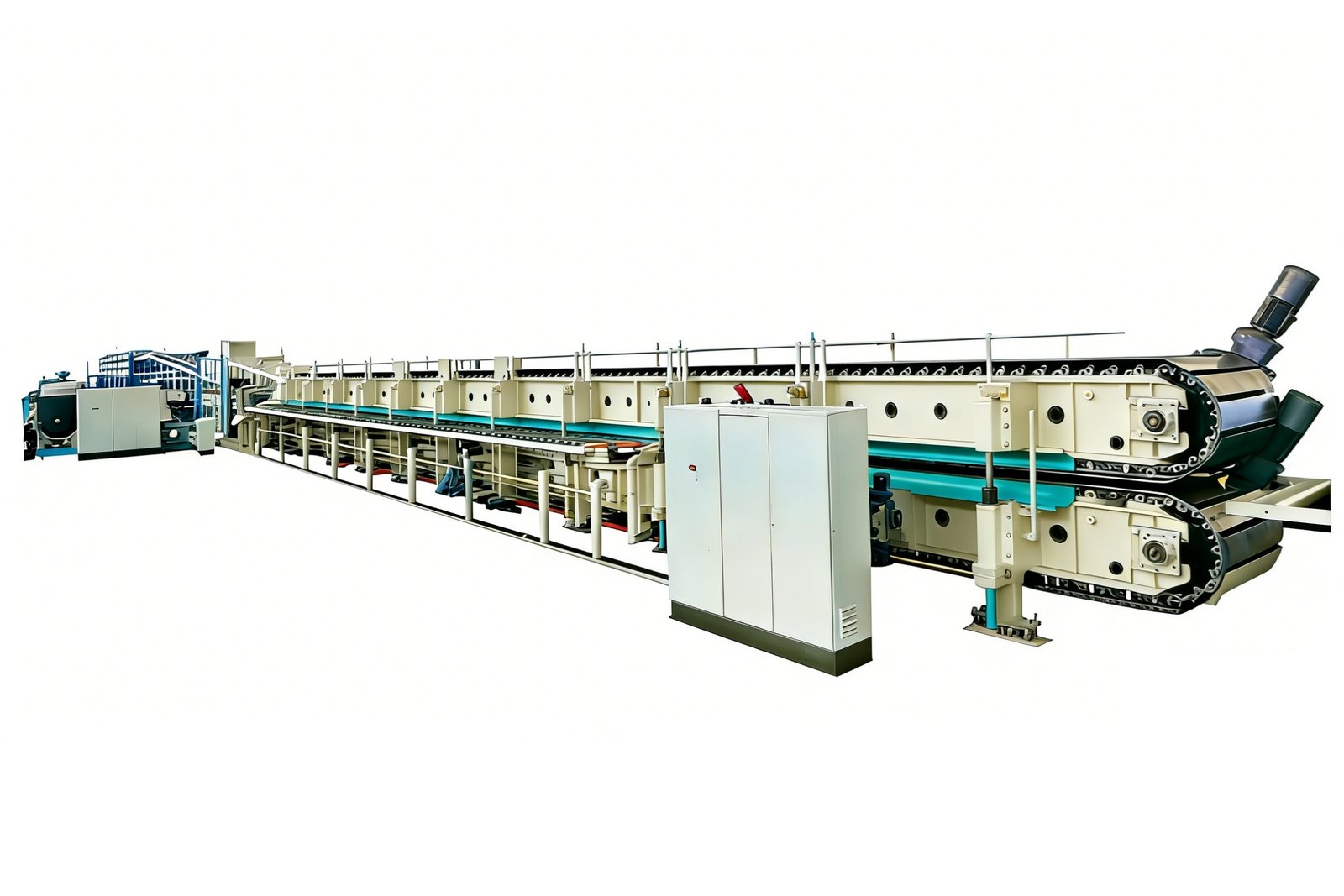
Many buyers mistakenly choose a process because they already understand one acronym. The better starting point is the part drawing: where the load path is, where the glass must be, and whether the surface is cosmetic. A part that requires long fibers oriented across a large panel will not be made well on a standard RIM metering unit. Likewise, a small precision RIM part does not need the fiber-handling overhead of an LFI cell.
Process choice often collapses into machine architecture questions: metering accuracy, mixing-head technology, output range, and whether the line must run high-pressure or low-pressure. <Polyurethane Foam Machine Selection: A 2026 Buyer’s Guide> covers these selection checks in more detail.
End CTA
RIM, RRIM, SRIM, and LFI all look like polyurethane equipment from the outside, but the metering, reinforcement handling, and automation differ enough to change project cost and repeatability. Haifeng Polyurethane Machinery supplies high-pressure and low-pressure metering machines, mixing heads, and turnkey production cells for filled, unfilled, and fiber-reinforced polyurethane processing. To discuss a specific part or production-volume target, contact the engineering team at info@haifeng-automation.cn or WhatsApp +86 13566296633.
FAQ
Which process gives the highest fiber content?
SRIM and LFI generally allow higher fiber content than RRIM. SRIM starts with a dry preform, so glass content can be designed into the preform rather than limited by pumpable viscosity. LFI also supports high glass loading because the fiber is chopped at the head, not pumped through the metering circuit.
Can one machine produce all four processes?
Not practically. A RIM machine can sometimes run RRIM if the fluid path is hardened for filler. SRIM may be possible on a low-pressure or high-pressure metering unit with proper mold and preform handling. LFI requires a specialized chopper-equipped mixhead, roving supply, robotics, and a compression press, so it is a dedicated work cell.
What is the most common cause of ratio drift?
Common causes include pump wear, inlet pressure instability, temperature variation, and partially plugged filters or recirculation lines. In RRIM, filler settling and abrasive wear accelerate ratio drift. Closed-loop calibration against a known reference is the first diagnostic step.
Does RRIM require special pumps?
Yes. Suspended glass or mineral filler abrades pump internals, mixhead chambers, and seal surfaces. Hardened components, adequate recirculation, and regular wear inspection are required. The same filler also raises viscosity, so the metering unit must be sized for the actual filled material, not the unfilled formulation.
What first step should I take before selecting a process?
Start with the part load case, required fiber content, annual volume, and tooling budget. Then define the metering window instead of starting from a machine brochure. This narrows the choice to RIM, RRIM, SRIM, or LFI before equipment sizing begins.
References
[1] G. Oertel, Polyurethane Handbook, 2nd ed. Munich, Germany: Hanser, 1994.
[2] D. Randall and S. Lee, The Polyurethanes Book. New York, NY, USA: Wiley, 2002.
[3] ISO 845:2006, Cellular plastics and rubbers — Determination of apparent density, ISO, Geneva, Switzerland, 2006.
[4] ASTM D3574-17, Standard Test Methods for Flexible Cellular Materials—Slab, Bonded, and Molded Urethane Foams, ASTM International, West Conshohocken, PA, USA, 2017.
[5] J. H. Saunders and K. C. Frisch, Polyurethanes: Chemistry and Technology, Part II: Technology. New York, NY, USA: Interscience, 1964.
If you’re interested, check out these related articles:
PU Shoe Machine Maintenance Checklist
PU Shoe Machinery Manufacturer China Guide
Cost of Setting Up a PU Safety Shoe Factory
Polyurethane Foam Machine Selection: A 2026 Buyer’s Guide