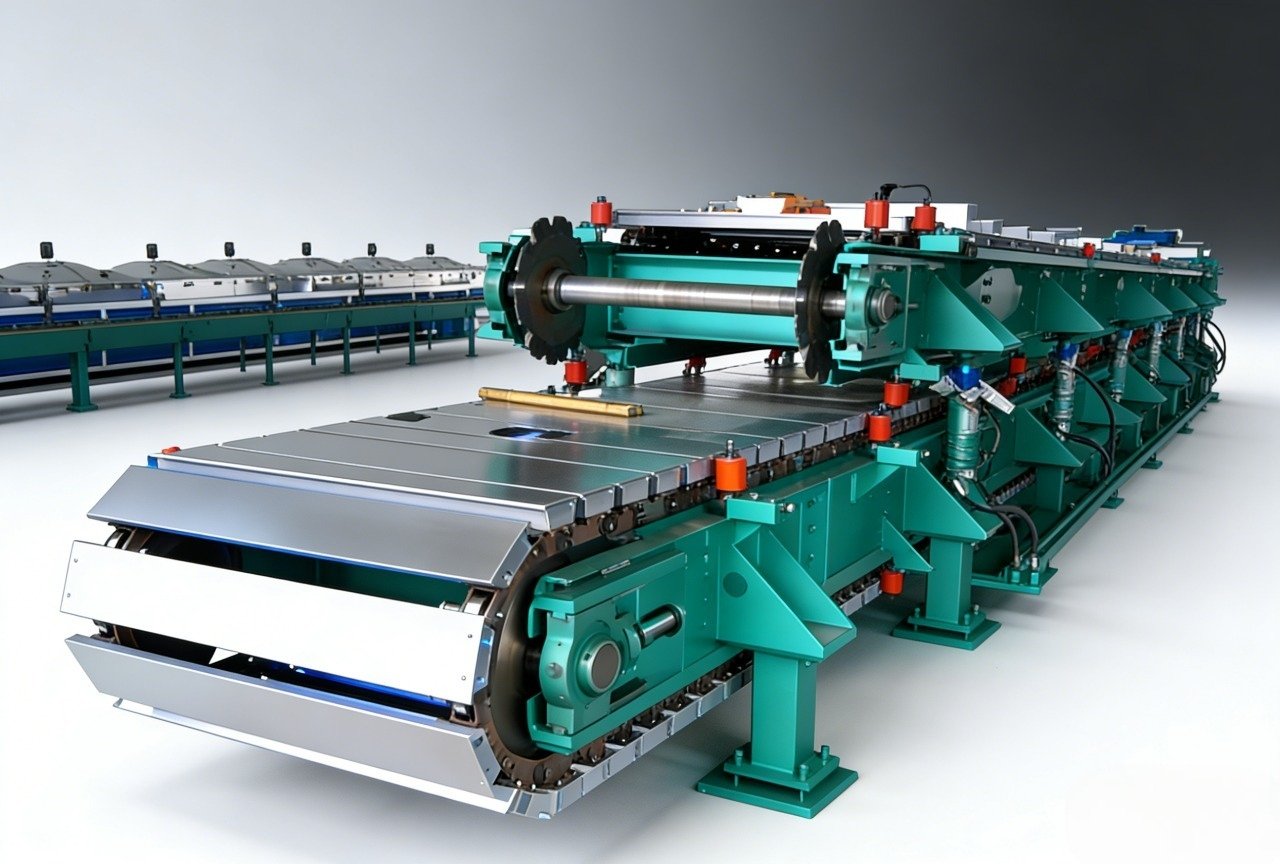
A buyer holds two quotations: one for a low-pressure foaming machine, one for a high-pressure model. Both suppliers promise precise metering and uniform mixing. The decision looks like a pressure-class choice. It is not. Pressure class is a consequence of two different mixing philosophies, and the correct question is which mixing philosophy matches your material, shot size, and cycle time.
The Real Difference Is Mixing Energy, Not Pressure
Low-pressure machines use dynamic mixing. Metering pumps deliver polyol and isocyanate into a chamber where a motor-driven screw or pin mixer mechanically shears the two components. Mixing quality depends on mixer speed, chamber geometry, fill level, and residence time. Because the mixer does the work, the system does not need extreme transfer pressure. The tradeoff is that reactive material stays in the head, so the chamber must be flushed or mechanically cleaned before the mixture gels.
High-pressure machines use impingement mixing. The two components are pressurized and injected through opposed nozzles into a small chamber. Turbulent collision does the mixing. No rotating shaft touches the reacting mass, and the chamber can be cleaned by a piston or air blast, often without solvent. The tradeoff is that mixing energy comes from velocity and pressure balance, so the process is more sensitive to viscosity mismatch, pressure imbalance, and ratio control at the moment of impact.

If you are comparing these two mechanisms for an elastomer rather than a low-viscosity foam, <Guide to Low-Pressure Foaming Machines for PU Elastomers> covers the pump sizing and vacuum degassing requirements that change the low-pressure selection.
Where Low-Pressure Machines Fit Best
Low-pressure units are strongest when the formulation is difficult, not only when the output is small. Filled systems, high-viscosity polyols, abrasive additives, and short-pot-life elastomers can be mixed mechanically because the mixer can keep doing work even when the material does not atomize well. This is why low-pressure machines appear in shoe-sole lines, elastomer casting, imitation wood, and small-batch foam molding. They also tend to accept a wider ratio adjustment range and frequent recipe changes when the head is cleaned correctly.
They are not automatically simple. The mechanical mixer is a wear part. Cleaning time depends on formula, flush design, and pot life. Small shots demand more attention to pump minimum flow than larger continuous outputs do.
Haifeng’s own LJJ-series low-pressure machines, for example, specify a metering accuracy of ±0.5% within their operating window. That number matters only if the selected output range keeps the pumps in their linear range and the mixer is cleaned on the prescribed interval.
Need a low-pressure unit matched to a filled or high-viscosity formula? Send the material TDS and worst-case shot size to info@haifeng-automation.cn or WhatsApp +86 13566296633. The better answer depends on viscosity curve and minimum flow more than on machine class alone.
Where High-Pressure Machines Earn Their Higher Cost
High-pressure impingement works best in clean, fast, repeated cycles with well-behaved formulations. Automotive seat cushions, steering wheels, and similar molded foam parts use short shots at high cadence. Because the mixing chamber is small and self-cleaning, changeover can be quick and solvent consumption lower. The higher capital cost is easier to justify when cycles are short, output is high, and the material stays inside the impingement window.
Heavily filled or very high-viscosity components may not atomize correctly. High-pressure mixing also puts more demand on pressure balance and nozzle sizing. If pressure or ratio moves outside the window, mixing quality falls before the operator sees a temperature or pressure alarm.
Cost, Output, and Quality Trade-Offs
There is no universal rule that high pressure mixes better. The comparison must be made against a specific formulation and target cycle.
| Variable | Low-pressure | High-pressure |
|---|---|---|
| Mixing mechanism | Mechanical dynamic mixer | Impingement mixing |
| Cleaning | Solvent flush or mechanical cleaning | Self-cleaning chamber; less solvent in many cycles |
| Viscosity/filler tolerance | Broad; handles filled and high-viscosity systems | Narrower; favors low-viscosity, unfilled or lightly filled systems |
| Best production mode | Small-to-medium shots, frequent changeovers, custom parts | High-cadence short cycles, continuous or large standard output |
| Main wear/risk | Mixer wear, flush time, minimum-flow control | Nozzle/chamber wear, pressure balance, ratio stability at impact |
| Relative capital | Usually lower | Usually higher |

Selection Variables That Matter More Than Pressure Class
Before comparing machines, confirm both sides of the formulation: hydroxyl number by ISO 14900 [1] and isocyanate content by ISO 14896 [2]. These two values determine the target ratio, not the other way around.
The variables that should dominate the decision are:
- Material viscosity and filler content. Measure viscosity at the lowest processing temperature. High filler or abrasive content usually pushes toward low pressure.
- Mixing ratio and tolerance. The wider the ratio span or the tighter the tolerance, the more the metering system matters than the pressure class.
- Shot size or output range. Compare minimum and maximum flow. If the machine cannot meter accurately at the smallest shot, no class choice fixes ratio drift.
- Cleaning and pot life. If pot life is short or solvent use is restricted, high pressure may reduce cleaning burden, but only if the formula can be impingement-mixed.
- Record-keeping. Modern lines need shot, recipe, and batch traceability. Both classes can support it, but the control architecture must be specified.
Any machine comparison should also include a safety risk assessment under ISO 12100 [3], especially for high-pressure injection and solvent handling.
A Step-by-Step Selection Method
- Collect TDS data for polyol, isocyanate, curative, color, and additives. Determine viscosity at processing temperature, filler content, pot life, and target ratio [1][2].
- Define the worst-case production window: smallest shot, largest shot, fastest cycle, longest continuous run, and highest ambient temperature.
- Calculate component flow rates from total output and mixing ratio. Check minimum and maximum flow against each pump’s linear range. Do not assume nominal output equals usable output.
- Decide which mixing mechanism can survive the hardest case. If the worst shot is small and filled, lean low-pressure. If the worst cycle is fast and low-viscosity, high-pressure may be simpler.
- Compare cleaning, maintenance, and startup time. Ask for a defined flushing or cleaning cycle and its solvent consumption [3].
- Write the acceptance test. Require ratio stability over the worst-case shot, mixing uniformity on a cut sample, and no bubbles or density drift. For flexible foams, test to ASTM D3574 [4].
- Buy the operating window, not the maximum specification.
If the application is custom molding with short shots and mold carriers, <Low Pressure PU Foam Injection Machine for Custom Molding: Process & Parameters> covers shot-size parameters, cycle timing, and integration with turntables or molding lines.
Once the machine class is chosen, <PU Foam Injection Machine: Key Components & Calibration Best Practices> covers the calibration and component-level checks that keep either class in tolerance.
Request a Machine-Class Recommendation
Send the following to info@haifeng-automation.cn or WhatsApp +86 13566296633:
- Polyol and isocyanate TDS, including viscosity curves
- Mixing ratio and filler or abrasive content
- Smallest and largest shot size, or required output
- Cycle time or line speed
- The defect you are trying to eliminate: ratio drift, bubbles, density spread, or cleaning time
Haifeng Polyurethane Machinery can review the process data and propose either a low-pressure or high-pressure configuration with a defined acceptance window.
Frequently Asked Questions
Do I always have to choose one class, or can a plant use both?
Many plants use both. A high-pressure line for high-volume standard parts and a low-pressure unit for short-run, filled, or high-viscosity jobs is common. The class decision should be made per product family, not per factory.
What output level makes high pressure worth it?
There is no single output number. High-pressure economics improve when cycles are short, cleaning time is expensive, and the formula is impingement-friendly. A high-output line with a poorly matched formula is still a bad match.
Can a low-pressure machine process filled or abrasive materials?
It is usually the better starting point because the mechanical mixer can continue to disperse solids. Pump wear, seal life, and mixer maintenance still need to be evaluated against filler loading and particle size.
Which machine is easier to clean?
High-pressure mixing heads are generally easier to clean between cycles because they are self-cleaning. Low-pressure heads require flushing or mechanical cleaning. However, total downtime also includes startup, pump purging, and material changeover, so the answer depends on the line sequence.
Does high pressure always mix better?
Not necessarily. High-pressure impingement can mix extremely well inside its viscosity, ratio, and pressure-balance window. Outside that window, a low-pressure dynamic mixer is often more forgiving.
References
[1] ISO 14900:2017, Plastics — Polyols for use in the production of polyurethane — Determination of hydroxyl number, International Organization for Standardization, Geneva, 2017.
[2] ISO 14896:2009, Plastics — Polyurethane raw materials — Determination of isocyanate content, International Organization for Standardization, Geneva, 2009.
[3] ISO 12100:2010, Safety of machinery — General principles for design — Risk assessment and risk reduction, International Organization for Standardization, Geneva, 2010.
[4] ASTM D3574-17, Standard Test Methods for Flexible Cellular Materials—Slab, Bonded, and Molded Urethane Foams, ASTM International, West Conshohocken, PA, 2017.
If you’re interested, check out these related articles:
How Long Does a PU Shoe Machine Last
How Polyurethane Foam Machines Work: Types and Applications
Maintenance Guide for Tire Foam Filling Machines