



Most quotations for a low-pressure PU foaming machine open with two numbers: maximum output and maximum mixing ratio. Neither tells you what the machine does at the point where you will actually run it. Twelve engineering questions close that gap. They move the conversation from brochure ratings to a qualified operating window, meaning the range of output, ratio and material condition inside which the machine holds its stated accuracy. Ask them in writing, get the answers in writing, and the acceptance test at the end of the project has something concrete to measure.
Start With the Working Point, Not the Maximum Output
Every quotation lists a maximum output and a maximum ratio range. Both figures describe the edge of the machine’s capability, not the middle, and the middle is where production runs. A metering pump sized to deliver high flow at full stroke works at a fraction of its displacement when the shot is small. At that point, leakage past the gears or the valve timing is no longer negligible against the volume actually delivered, and the ratio tolerance that looked tight on the datasheet widens without anything appearing to change.
The first question asks what qualified operating window the supplier will state in writing. The window is the combination of output, mixing ratio, material viscosity and temperature inside which the quoted accuracy holds. Outside it the machine may still run, but the supplier is no longer committing to the same tolerance. Ask for the window in your production units: output in grams per second, ratio as a numeric range, viscosity at your tank temperature, and the tolerance that applies across the whole window rather than at one demonstration point.
A stated accuracy figure means little until the window sits beside it. The LJJ series low-pressure foaming machine from Haifeng, for instance, is quoted at ±0.5 percent metering accuracy; the question worth asking any supplier is over which output and ratio range that number is held, and how it is verified. A supplier who can answer that has thought about the working point. One who cannot is quoting a peak.
The second question is yours to answer first: what output do you need at the working point? Many plants quote the largest shot they ever run and specify the machine around it. That is how a line ends up with equipment that is accurate at a flow it reaches twice a shift and vague at the flow it runs all day. Give the supplier a working output and a separate peak, then ask for the tolerance at both.
The third question covers mixing ratio. List every formula you intend to run, including colour and additive variants, and give the full range rather than the grade you produce most often. A machine that holds ratio at 1:2 can behave differently at 1:1.1, where one pump sits close to its minimum displacement, or at 1:4, where the minor component is metered in very short strokes. Ask what the tolerance is at each end of your range and how the ratio is verified there.
| Record | Method context | Responsible use | Do not infer |
|---|---|---|---|
| Datasheet maximum output | Highest quoted flow, usually at one ratio and one test material | Confirms the pumps and drives can move that flow | That ratio tolerance holds at your low working point with a filled polyol |
| Single-point factory ratio check | One material, one temperature, one ratio, short run | Confirms the metering loop and control logic work on that material | Coverage of your second formula, a colder day tank, or a higher filler load |
| REACH Annex XVII entry 74 | Regulation on diisocyanate training for industrial and professional users [1] | Establishes a training obligation for people handling the components | Anything about metering accuracy, machine design, or output |
None of these records is wrong. Each is narrower than it looks, and the gap between what a number proves and what a buyer assumes is where specification disputes start. Ask for the material and the conditions behind every figure in the quotation.

How Low Can It Go and How Fast Does Ratio Settle at Start-Up
The fourth question asks for the minimum continuous output. Below some flow rate, valve timing, small amounts of air in the lines and the resolution of the pump control start to dominate the volume delivered. Ask for the figure and then ask what changes below it: a wider tolerance, a different pump size, or nothing at all. An honest answer here tells you more about the supplier than any accuracy claim.
The fifth question is start-up. After a stop, the mixing chamber and the line feeding it hold material that was not mixed at the intended ratio. On restart, the first shots are off-ratio until fresh material reaches the head and the chamber is fully displaced. Ask how long that takes, expressed in seconds or in grams of purge, and what the ratio error is during the interval. On a line making many short runs, that purge volume becomes a scrap allowance per cycle and a real cost per colour change. On a line making long runs, it barely registers.
Mixing-chamber behaviour is what separates one low-pressure design from another, because the chamber is where ratio tolerance is either held or lost before the material reaches the mold. <Polyurethane Foam Machine: Types, Working Principle and Applications> covers how the main foam machine types work in principle.
Pump Type, Viscosity and Filled Materials
The sixth question is which pump type is proposed and why. Gear pumps give smooth, pulse-free delivery and suit low to medium viscosity components. Piston pumps deliver positive displacement and clear ratio certainty per stroke, at the cost of pulsation that the mixing head and the line volume have to absorb. Screw pumps handle high viscosity and filled material with less shear. None of these is better in the abstract; the right answer follows from your viscosity, your filler and your output range.
| Pump type | Fits when | Low-flow behaviour | Watch for |
|---|---|---|---|
| Gear | Low to medium viscosity, unfilled or lightly filled | Smooth delivery; tolerance depends on internal clearances | Wear accelerates with abrasive filler |
| Piston | Positive displacement needed at higher pressure | Good ratio certainty per stroke | Pulsation; line volume and damping matter |
| Screw | High viscosity, heavy filler loading | Stable, low-shear delivery | Higher cost; longer cleaning |
Viscosity is not a fixed property of a material. It changes with temperature, shear rate and filler content, and the number on a technical data sheet is measured at one temperature with a named method. Ask which viscosity the supplier sized the pump for and at what temperature, then check whether that matches the coldest condition your day tank actually reaches in winter.
The seventh question is wear. Abrasive fillers attack pump internals, valve seats, seals and the mixing chamber, and the damage shows up first as a slow ratio drift rather than a sudden failure. Ask which parts see the filler, request the wear part list with prices, ask for a realistic life estimate in your material, and ask how the circuit protects itself when filler settles in a line overnight.
Temperature, Day Tanks, Agitation and Degassing
The eighth question is how the machine holds component temperature. Temperature affects the process twice: it changes viscosity, so a fixed pump speed delivers a different mass when the polyol is cold, and it changes reaction speed, so the same shot behaves differently in the mold. When both components shift together, ratio can stay inside tolerance while shot weight moves. That is why a ratio chart on its own is not proof of a stable process.
Ask whether the loop uses a jacket, a heat exchanger or a separate thermoregulator, where the sensor sits (in the tank or in the line to the head), what ambient range the design assumes, and what happens when a cold drum is added mid-shift.
The ninth question is day tank size and agitation. Size the tank against consumption per shift and the refill interval you can accept, then check whether the refill station can swap a container without stopping the line. Filled polyol settles, so the agitator has to keep filler in suspension without dragging air into the material. Ask for the agitator type and speed range, not just its presence on the specification.
The tenth question is degassing. If your parts cannot tolerate pinholes, ask whether vacuum is applied at the tank, at the mixing head, or both, what vacuum level and hold time the supplier recommends for your viscosity, and how the loop is protected from foam carry-over. Vacuum on the isocyanate side needs its own review of seals and materials.
Whatever the degassing arrangement, the isocyanate side carries a handling obligation that is independent of the machine: diisocyanates fall under REACH Annex XVII entry 74, which requires industrial and professional users to complete training before working with them [1]. That requirement says nothing about metering quality, but it belongs in the operating procedure that ships with the equipment.
Flush Sequence, Solvent and Changeover Time
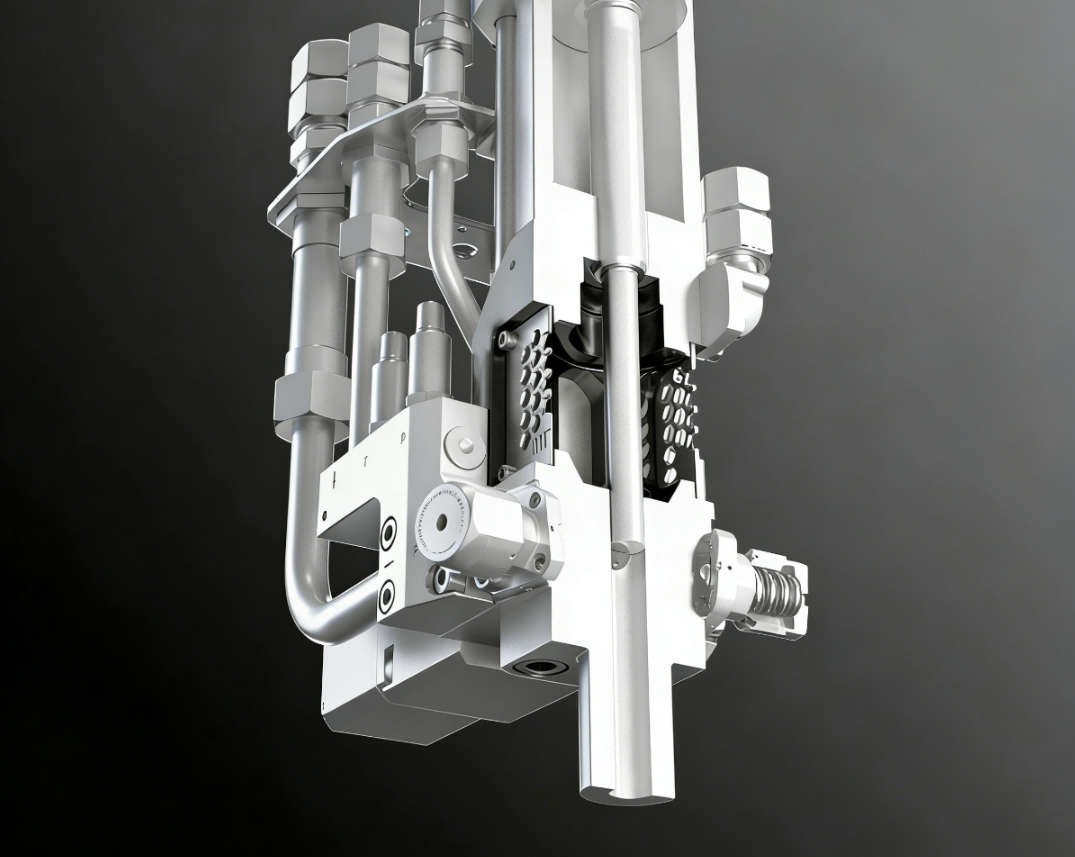
The eleventh question is cleaning. Low-pressure machines usually clear the mixing chamber by flushing, and the flush is both a consumable cost and dead time in the cycle. Ask for the exact sequence (air, solvent, air, and how long each step runs), the solvent volume per cycle, where the waste goes, and how many minutes pass from the last good part to the next good one. On a line making many short runs, flush time can exceed pour time, and the solvent bill can outgrow the electricity bill.
Some designs reduce solvent use with a mechanical clean-out or a disposable static mixer element. The trade is straightforward: disposable elements add a part to stock and a cost per change, while mechanical cleaning needs attention from the maintenance team. Ask which option is fitted and what it costs per thousand shots before you compare machine prices.
What FAT Should Measure and What Records Stay With the Batch
The twelfth question is what will be measured before the machine ships, by what method. A ratio check on one material at one temperature is a start, not an acceptance test. Ask for these items explicitly:
- Shot weight repeatability at the working output, from a series of timed shots weighed individually, reported as a spread rather than a best run.
- Ratio verified by weight, from the mass of each component consumed over a fixed number of shots, not read from the screen.
- Output at the working point and at the minimum continuous output you intend to use.
- Temperature stability at the tank and at the line, recorded over a run long enough for the control loop to cycle at least once.
- Alarm and interlock behaviour when inlet pressure drops, a pump stalls, or a tank runs low.
- Record set: recipe, shot counter, timestamps and alarm history exported as a file, not only displayed on the HMI.
Put the acceptance numbers in the purchase order before the test and agree who signs the report. A machine that meets a written window at your material is a different asset from one that met a demonstration at the supplier’s.
A calibration routine is only as good as the components it checks, and a metering fault that shows up as ratio drift often begins in a pump, a valve or a temperature sensor. <PU Foam Injection Machine: Key Components & Calibration Best Practices> covers the component-level checks behind a calibration routine.

Turning the Twelve Answers Into an RFQ
The twelve questions only earn their keep if they come back as commitments. Put them into the inquiry as fields, so every supplier answers the same thing in the same units.
| Field | What to ask for | Why it matters |
|---|---|---|
| Working point | Output at your most common shot, plus the peak | A single maximum hides the range you run daily |
| Qualified window | Ratio range, viscosity range, tolerance inside the window | Defines what the supplier will stand behind |
| Material data | Viscosity at a stated temperature, filler type and loading | Pump and wear decisions depend on it |
| Minimum output and settle time | Lowest continuous output, purge to stable ratio | Becomes a scrap and cycle-time allowance |
| Flush and changeover | Sequence, solvent per cycle, minutes from last good part to next | Drives consumable cost on short runs |
| Acceptance method | FAT items, instruments, numbers, record set | Converts claims into a test you can witness |
A vague line invites a vague machine. Compare these two versions of the same request:
Reject this RFQ line: “Low-pressure foaming machine, maximum output 60 g/s, ratio 1:1 to 1:4, suitable for rigid and flexible foam.”
Replace it with: “Low-pressure foaming machine for [polyol type] at [viscosity] mPa·s at [temperature] with [filler type and loading]; isocyanate at [viscosity] mPa·s at [temperature]; working output [g/s], peak [g/s]; ratio range [range]; ratio tolerance [± percent by weight] across the full working output range; minimum continuous output [g/s]; purge to stable ratio [grams]; FAT method and acceptance numbers as agreed.”
The reply you want is a table with units, not a paragraph of adjectives. When two suppliers fill the same table, the comparison becomes a reading exercise instead of a judgement call.
Selection criteria only work when they are applied consistently across machine families. <Polyurethane RIM Machine: A Manufacturer’s Selection Guide> covers how a manufacturer evaluates metering and mixing equipment for a different polyurethane process.
Send the Working Point Before You Compare Quotations
Before quotations are compared, send the data the numbers depend on: the material TDS with viscosity at your tank temperature, filler type and loading, the output you run most of the day plus the peak, the full ratio range across your formulas, shot size and cycle time, the smallest shot you ever run, and your flush and changeover constraints. With those in hand, a supplier can quote a qualified window instead of a headline rating, and you can see where a requested point falls outside a standard configuration before the purchase order exists. Haifeng Polyurethane Machinery builds low-pressure metering systems to a stated window and will quote against your material data. Send the details to info@haifeng-automation.cn or message WhatsApp 86 13566296633.
FAQ
Is a low-pressure machine accurate enough for demanding foam parts?
It can be, provided the machine is sized around your working point rather than its maximum rating. The limits appear at very low output, at the extreme ends of a wide ratio range, and when a cold day tank changes viscosity faster than the temperature loop can correct. Ask for the tolerance across your full operating window and confirm it during the acceptance test with your own material.
What output range should I specify if the product mix keeps changing?
Specify the window you run today plus the headroom you expect within two years, and ask for the tolerance across that whole range. A machine covering a broad range often holds its tightest tolerance in a narrower band inside it, which is acceptable if the band matches your volume production. If the range is very wide, two metering sizes or a second machine can be cheaper than one oversized unit run far below its design point.
Do I need vacuum degassing on a low-pressure machine?
It depends on how visible a pinhole is on your part, on filler loading, and on how much air the handling steps introduce. Unfilled material poured from a clean closed system may need nothing beyond careful tank practice. Filled systems, open refills and thick sections benefit from vacuum at the tank or at the head. Ask for the recommended vacuum level and hold time for your viscosity, and review seal materials on the isocyanate side before adding vacuum there.
How long should a factory acceptance test run?
Long enough for the temperature loop to complete at least one cycle and for a refill event to occur if refills happen during production, which usually means several hours rather than a few minutes. Within that run, a series of consecutive shots at the working point plus a short run at minimum output gives the most useful evidence. What separates a strong FAT from a weak one is not duration but whether the acceptance numbers and the reporting method were agreed before the test began.
References
[1] Commission Regulation (EU) 2020/1149 of 3 August 2020 amending Annex XVII to Regulation (EC) No 1907/2006 as regards diisocyanates, Official Journal of the European Union, 2020.
If you’re interested, check out these related articles:
How Does a Foam Filled Tire Machine Work
PU Shoe Manufacturing Process Step by Step
How Many Workers Are Needed for a PU Shoe Production Line
PU Shoe Machinery Manufacturer China Guide
How to Design a PU Shoe Factory Layout

