Most PU spray foam machine selection errors begin long before anyone compares nozzle sizes or pump ratings. They start with material viscosity, temperature compensation, and ratio drift. A machine that sprays a clean fan pattern during a sales demo can produce soft spots and off-ratio foam on a production line once ambient temperature shifts or a polyol batch changes. For manufacturers, the purchasing decision should be led by metering stability and heating path control, not by pressure alone. This article covers the checks I work through with production managers before a spray machine specification is finalized.
Starting With Material Conditions Before Comparing PU Spray Machines
A PU spray foam machine is a ratio-controlled metering device first and a pump system second. If the polyol and isocyanate are not at stable viscosity and temperature before they reach the metering pumps, every downstream setting is built on a shifting foundation. Cold polyol thickens, low-viscosity isocyanate can absorb moisture, and a poorly conditioned day tank can send a different product hour to hour. The purchase decision should therefore begin with raw material conditioning: heated day tanks, recirculation loops, and moisture-sealed isocyanate handling.
Material behavior controls spray results more than pump horsepower does. <How Polyurethane Foam Machines Work: Types and Applications> covers the basic machine categories and why metering and conditioning sit ahead of the spray gun in process order.
Many buyers ask about pressure first. I ask what viscosity range they run in January and in August. That difference tells me whether the heating path and recirculation design are sufficient before we talk about nozzle size or output. A machine without heated, traced hoses may atomize well at the supplier’s demo temperature and then deliver a heavier, slower-reacting layer when the plant is cold. The documentation you want from a supplier is not only a pump curve; it is the temperature control map from day tank to gun.
Checking Ratio Drift and Temperature Compensation on a PU Spray Foam Machine
Metering accuracy is where foam chemistry starts. A one percentage point shift in component ratio can shift final foam density by more than 3 kg/m3. If a machine controls ratio at ±1 percent, that is not the same as holding that tolerance through a full production day. Temperature compensation is what keeps the metering pumps honest as material viscosity changes.
| Verification point | What to confirm | What goes wrong if ignored |
|---|---|---|
| Ratio control range | Confirm the machine holds your target ratio at your actual viscosity, not vendor reference fluid | Off-ratio foam, soft spots, density drift |
| Temperature control | Check hose and gun heating zones, not just the tank setpoint | Pre-cure, uneven cell structure, longer demold |
| Coating thickness tolerance | Test with production material, not a low-viscosity calibration fluid | Uneven insulation or padding, excess trim |
| Output at line speed | Confirm net output at the required viscosity and cycle time | Missed takt time, manual touch-up |
| Isocyanate moisture guarding | Check sealed day tank and dry air or nitrogen protection | Gel particles, blocked filters, gun wear |
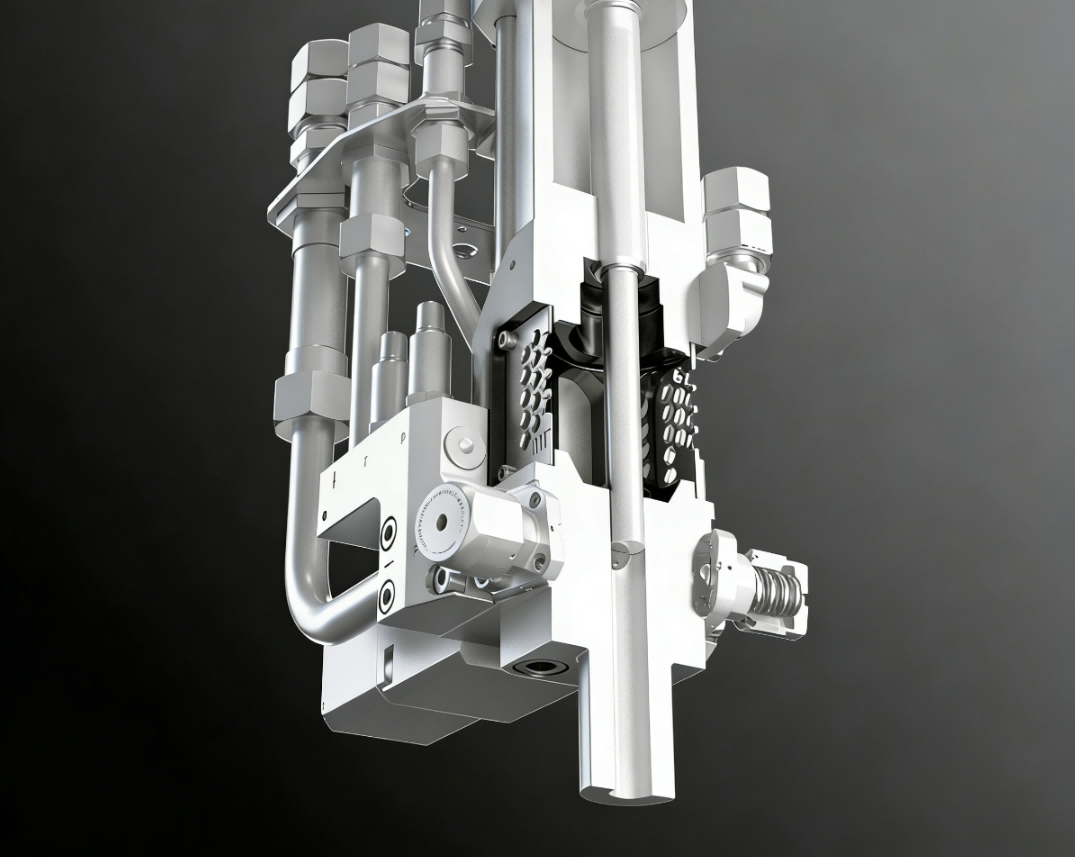
A sound spray machine specification includes more than nominal flow. Haifeng spray equipment controls raw material metering within ±1 percent and offers ratio adjustment from 0.8:1 to 1.2:1, but the number that matters on a humid production day is whether the isocyanate side stays dry enough to avoid gel formation. I have seen lines lose half a shift to blocked gun filters because the moisture guard was treated as an accessory instead of a process requirement.
Understanding Spray Gun and Heating Path Limits
The spray gun can only atomize what the metering system sends it. If the material arrives at the gun with a temperature spread, the fan pattern may look acceptable while the coating weight varies part to part. Spray coverage of 50 to 100 m2 per hour sounds useful, but it only means something when coating thickness, viscosity, and gun standoff distance are specified alongside it.
For complex curved surfaces, a six-axis robot with a repeat positioning accuracy of ±0.05 mm is more decisive than a larger pump. The robot maintains standoff distance and travel speed, which lets coating thickness variation stay within ±0.1 mm when the metering system adjusts flow to robot speed. A fixed flow system on the same part will naturally deposit more material on slow passes and less on fast passes.
If you are deciding between low pressure and high pressure for the same part, <High Pressure PU Foam Machine: Technical Specifications & Industry Applications> lays out the technical conditions where high pressure pays for itself.
Matching a PU Spray Foam Machine to Line Speed and Part Geometry
Output is not a single number. A machine rated for 100 m2 per hour may deliver less when your material viscosity is high or your part geometry includes recessed surfaces. Start with material demand. A 1 mm wet layer over 0.1 m2 at a material density of 1.2 g/cm3 needs about 120 g of material per part. If the line runs 30 parts per hour, net material demand is 3.6 kg/hour. The selected machine should have at least 20 to 30 percent headroom after accounting for spray stops, color changes, and warm-up.
Calculating Net Output for a Spray Machine
Use the part area, not the conveyor footprint, when calculating output. Multiply area in square meters by wet layer thickness in millimeters and by material density in grams per cubic centimeter. One square meter at 1 mm thick and 1.2 g/cm3 is 1.2 kg of wet material. Divide by cure time and add spray loss, then convert to an hourly rate. The result is the machine’s true material demand.
What to Do When Viscosity Changes Seasonally
Seasonal viscosity changes are not a signal to replace the machine. They are a signal to check preheat, recirculation, and hose tracing. If a supplier cannot tell you how the recirculation loop behaves at your winter viscosity, that answer is required before purchase. The same logic applies to high-humidity seasons.
If your parts include deep recesses or varying wall thicknesses, confirm that the selected spray gun can reach all surfaces while holding the same coating tolerance before BOM finalization. Email your part drawing and target coverage rate to info@haifengmachine.com.
Before you commit to a spray line, <Polyurethane Foam Machine Selection: A 2026 Buyer’s Guide> walks through how the buying decision changes across machine types and production scales, which is useful when spray, pour, and injection options are all on the table.
Confirming PU Spray Foam Machine Parameters Before You Commit
Spec sheets do not tell you how a machine behaves with your material, in your plant, on your shift pattern. The least expensive way to avoid buying the wrong spray machine is to run three checks with your own polyol and isocyanate: a ratio verification at operating temperature, a short spray trial on a production-like part, and a viscosity check at your lowest expected plant temperature. Those checks expose most of the failures that later show up as scrap.
At Haifeng Polyurethane Machinery, we confirm the metering, heating, and gun configuration before the order is placed. Send your part geometry, viscosity range, and required output to info@haifengmachine.com, or call +86 577 6276 0000 with the data and we will confirm the right PU spray foam machine parameters for your line.
Answering Common Questions About PU Spray Foam Machines
How do I know if a low pressure spray machine is enough for my product?
Low pressure is enough when the material viscosity stays within the gun’s atomization limit and the production speed does not require high pressure impingement mixing. If your part is flat or lightly contoured, and your output target is moderate, a well-controlled low pressure spray machine can hold coating tolerance without the extra energy demand of a high pressure system. The real question is whether the heating path and ratio control can stay stable at your shop’s coldest operating condition.
Why does my coating thickness change when the weather gets colder?
It depends on how much heat reaches the material before it arrives at the gun. Cold polyol thickens, the metering pump’s slip changes, and the spray fan becomes heavier. If the hose and gun heating zones are not controlled independently, the operator may compensate by changing gun speed and create a wider thickness spread. The answer is usually not a larger pump; it is a complete temperature control path from day tank to nozzle.
Is a robot really necessary for a PU spray foam line?
A robot is not a display feature; it is a repeatability investment. On flat panels with a fixed gun standoff, a consistent conveyor speed may be enough. On curved surfaces, recesses, or parts where overspray affects cost, the robot’s repeat positioning accuracy keeps standoff and travel speed under control. If the metering system also adjusts flow to robot speed, coating thickness variation drops below what a fixed flow manual setup can realistically hold.
What should I send with my equipment inquiry to get an accurate specification?
In projects I have supported, the shortest path to an accurate quote is a one-page data sheet with four items: part geometry or drawing, target wet layer thickness, the viscosity of both components at room temperature, and required output per hour. Add the coldest plant temperature if you can. Without those, any supplier is guessing at the heating and metering configuration. Share your part data and required coverage rate at info@haifengmachine.com and we will confirm the specification against your production conditions.
If you’re interested, check out these related articles:
The Ultimate Guide to Low-Pressure Foaming Machines for PU Elastomers
PU Foam Spray Machine: Applications in Automotive, Construction & Waterproofing